
Orthodontics vs Ceramic Crowns: Time, Tooth Reduction and Who Suits
Published: 2022-02-18 · Updated: 2026-11-22 · Medically reviewed by Katsuaki Takeuchi, DDS (Director; Board-certified oral surgeon, Japanese Society of Oral and Maxillofacial Surgeons)
What you will learn
- How orthodontic treatment and ceramic "orthodontics" (cosmetic dentistry) differ
- Comparing treatment time, how much tooth is removed, and the effect on the bite
- Which one may suit you, and how they can be combined
Have you ever wondered, "I want straighter teeth, but should I choose orthodontics or cosmetic dentistry?" Both improve appearance, but the approach is very different.
Orthodontic treatment moves the teeth themselves to align them and correct the bite. Ceramic "orthodontics" in cosmetic dentistry, on the other hand, involves reshaping the teeth and covering them with ceramic crowns to adjust their shape, angle and color. In this article we introduce the features of each and give a guide to who each may suit.
What is ceramic "orthodontics" (cosmetic dentistry)?
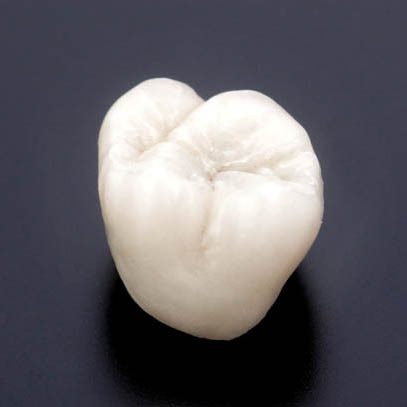
Cosmetic dentistry focuses on making the color and shape of the teeth look attractive while keeping their chewing function. For crooked teeth, the teeth are reshaped and covered with ceramic or zirconia crowns so that they look aligned. This is sometimes called "ceramic orthodontics" in Japan. Treatment usually takes from a few weeks to a few months, depending on the number of teeth.
Advantages of ceramic restorations
The main advantage is that appearance can be improved in a short time. Teeth that have become discolored after root canal treatment, teeth with many fillings, and teeth that differ in shape from left to right can also be given a matching shape and color with crowns. Ceramic has a smooth surface that is resistant to staining and plaque.
Disadvantages of ceramic restorations
Even healthy teeth need to be reshaped, and if the angle of a tooth is changed a lot, the nerve may need to be removed. Tooth structure that has been removed does not grow back. If only the front teeth are treated, the bite itself does not change. Also, as the gums recede over the years, the border between the crown and the tooth root may become visible, and crowns may crack or need to be remade.
What is orthodontic treatment?
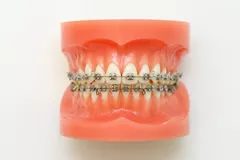
Orthodontic treatment uses appliances to apply gentle, continuous force to the teeth, moving them little by little to align them and correct the bite. It addresses the cause of the misalignment itself and aims to balance the bite, not just improve appearance.
Advantages and disadvantages of orthodontic treatment
A major advantage is that the alignment and bite can be corrected using your own teeth, with as little tooth reduction as possible. Straighter teeth are easier to brush, which also helps prevent cavities and gum disease. By extracting teeth and moving the front teeth back, a protruding mouth can also be expected to improve considerably. In some cases, the gap left by a missing tooth can be closed by moving neighboring teeth.
On the other hand, teeth cannot be moved quickly, so full orthodontic treatment takes a year or more. There are also points to be aware of, such as pain when teeth move, the risk of cavities around the appliance, and the need for retention after treatment.
Which suits you? A guide to choosing
- Ceramic restorations may suit: people with mild crowding or gaps and no bite problems, and people who also want to improve discolored teeth or teeth with many crowns
- Orthodontic treatment suits: people who do not want their teeth reshaped, who also want to correct their bite, who want to reduce a protruding mouth, or who have severe crowding
You do not have to choose just one; the two can be combined. For example, after aligning the teeth and bite with orthodontics, only discolored front teeth or small teeth can be finished with ceramic, which makes it easier to achieve an even appearance while removing less tooth structure. Aligning the teeth first with orthodontics can also reduce the amount of tooth that needs to be removed for ceramics.
Summary
Ceramic restorations can improve appearance in a short time, but they require the teeth to be reshaped and do not change the bite. Orthodontic treatment takes longer, but it uses your own teeth to correct both the alignment and the bite. Which is better depends on the condition of your mouth and what you want, so at your consultation we explain the strengths and weaknesses of each.
ESCA Dental & Orthodontic Clinic is in the ESCA underground shopping mall, a 1-minute walk from the Shinkansen exit of JR Nagoya Station. Appointments by phone (+81-52-452-1255), online booking (Japanese) or LINE.
Main risks and side effects
- During orthodontic treatment, you may feel pain or discomfort as the teeth move
- If brushing is not thorough, the risk of cavities and gum disease increases
- Ceramic restorations require healthy teeth to be reshaped, and the nerve may need to be removed
- Crowns may need to be remade if they crack or if the gums recede and the border becomes visible
Orthodontic treatment and ceramic crowns are self-paid (not covered by insurance). Please see our fee table for standard fees.
Frequently asked questions
Q. How long do ceramic restorations take?
It depends on the number of teeth and whether nerve treatment is needed, but a few weeks to a few months is typical.
Q. Does the bite change after ceramic restorations?
Improving the appearance of the front teeth does not change the bite of the back teeth. If you also want to correct your bite, orthodontic treatment is more suitable.
Q. Can ceramics be used to finish after orthodontic treatment?
Yes. After aligning the teeth with orthodontics, only the teeth whose color or shape bothers you can be finished with ceramic.
Medical review
This article was reviewed by Katsuaki Takeuchi, DDS (Director; Board-certified oral surgeon, Japanese Society of Oral and Maxillofacial Surgeons), ESCA Dental & Orthodontic Clinic. It provides general information; please consult a dentist about your own condition.
Appointments and questions
Mon–Fri 10:00–13:00 / 14:30–19:30 · Sat & Sun 10:00–13:00 / 14:00–18:00 (open every other Sunday) · Closed on national holidays. Our staff mainly speak Japanese.