
Temporary Teeth in Ceramic Treatment: Role, Look and Daily Care
Published: 2022-03-15 · Updated: 2026-11-22 · Medically reviewed by Katsuaki Takeuchi, DDS (Director; Board-certified oral surgeon, Japanese Society of Oral and Maxillofacial Surgeons)
What you will learn
- Why temporary teeth are placed during ceramic treatment
- Why it matters to check appearance and bite with the temporary teeth
- Eating and brushing with temporary teeth, and what to do if one comes off
Spring is a season when people feel like starting something new, and more people come to us for consultations about orthodontics or ceramic treatment to improve the alignment or color of their teeth.
A worry we often hear from people considering ceramic treatment is, "Will my teeth look bad while I have temporary teeth?" In this article we explain the role of the temporary teeth placed during ceramic treatment and how to look after them.
What are temporary teeth?
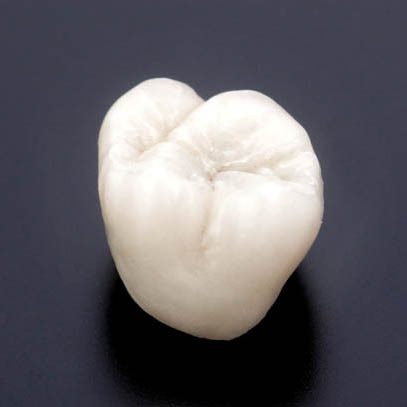
Temporary teeth are teeth placed for a short time until the final crown is ready. At dental clinics they are sometimes called "TEK". For ceramic crowns, the teeth are reshaped and impressions are taken, and a dental technician makes each crown individually, so it takes several days to complete. During that time, temporary teeth made of resin are placed so the reshaped teeth are not left uncovered.
The role of temporary teeth
Temporary teeth have important roles besides improving appearance.
The first is protecting the reshaped teeth. If a tooth that still has its nerve is left uncovered after being reshaped, it may become sensitive or bacteria may get in. Covering it with a temporary tooth prevents these problems.
The second is keeping the teeth in position. If a tooth is missing or left reshaped for a long time, the neighboring teeth or the opposing teeth may move. With a temporary tooth in place, the teeth are kept from shifting.
The third is adjusting the bite and the condition of the gums. Before a bridge or similar is placed, temporary teeth may be used to create a temporary bite and gradually shape the gums.
Checking the finished look with temporary teeth
In ceramic treatment of the front teeth, temporary teeth play a very important part. At the temporary stage, you can check the shape, length, brightness, bite and ease of speaking in your daily life.
By adjusting the temporary teeth to your wishes, such as "a little shorter" or "a slightly rounder shape", and then making the final ceramic based on that shape, it helps reduce the feeling that "this is not what I imagined" when the work is finished. At our clinic, we pay attention to appearance from the temporary stage and try to make them look as natural as possible.
In some cases, we limit ceramics to the teeth that need them, brighten the surrounding teeth with whitening, and then choose the color of the ceramic to match.
Other situations where temporary teeth are used
Temporary teeth are also used outside ceramic treatment. For example, they can temporarily restore appearance when a visible tooth such as a front tooth is chipped or lost, or prevent sensitivity in a reshaped tooth while a crown is being made. Also, metal crowns can make it hard to attach orthodontic appliances, so they are sometimes replaced with temporary teeth just for the period of orthodontic treatment.
Looking after your temporary teeth
Temporary teeth are made of resin and are not as strong as the final ceramic. They are also attached with a weaker adhesive so that they can be removed and put back. So please keep the following in mind.
Avoid biting hard foods (rice crackers, nuts, ice and so on) or sticky foods (chewing gum, caramels, mochi and so on) on the side with the temporary tooth. When brushing, gently brush where the temporary tooth meets the gum. When using floss, pulling it up can dislodge the temporary tooth, so slide it out sideways. Strongly colored foods such as coffee and curry may also stain temporary teeth.
If a temporary tooth comes off or chips, keep the piece and contact us soon. Please do not try to stick it back yourself with glue or similar.
Summary
Temporary teeth are an important step that protects the reshaped teeth, keeps the teeth and bite in position, and lets you check the final look. Please feel free to tell us anything that bothers you while you have temporary teeth. If you are considering ceramic treatment, please start with a counseling session.
ESCA Dental & Orthodontic Clinic is in the ESCA underground shopping mall, a 1-minute walk from the Shinkansen exit of JR Nagoya Station. Appointments by phone (+81-52-452-1255), online booking (Japanese) or LINE.
Main risks and side effects
- Ceramic can chip or crack if strong force is applied
- More tooth may need to be removed than with other materials
- After treatment, the teeth may be sensitive to cold for a while. Cavities can also form through gaps around fillings or crowns (secondary caries)
- Temporary teeth are weaker than the final teeth and may chip or come off
Ceramic treatment is self-paid (not covered by insurance). Please see our fee table for standard fees. Temporary teeth used in self-paid treatment may also not be covered by insurance.
Frequently asked questions
Q. How long will I have temporary teeth?
It depends on the treatment, but as a guide, about 1 to 2 weeks from the impression until the ceramic is ready. It may be longer if the bite or gums are being adjusted.
Q. Can I eat normally with temporary teeth?
You can eat, but temporary teeth are weaker than the final teeth, so avoid biting hard or sticky foods on that side.
Q. What should I do if a temporary tooth comes off?
Keep the temporary tooth and contact us soon. Please do not try to stick it back yourself with glue or similar.
Medical review
This article was reviewed by Katsuaki Takeuchi, DDS (Director; Board-certified oral surgeon, Japanese Society of Oral and Maxillofacial Surgeons), ESCA Dental & Orthodontic Clinic. It provides general information; please consult a dentist about your own condition.
Appointments and questions
Mon–Fri 10:00–13:00 / 14:30–19:30 · Sat & Sun 10:00–13:00 / 14:00–18:00 (open every other Sunday) · Closed on national holidays. Our staff mainly speak Japanese.