
Types of Orthodontic Appliances: Front, Lingual and Clear Aligners
Published: 2023-02-01 · Updated: 2026-11-22 · Medically reviewed by Katsuaki Takeuchi, DDS (Director; Board-certified oral surgeon, Japanese Society of Oral and Maxillofacial Surgeons)
What you will learn
- Types and features of orthodontic appliances: front braces, lingual braces, clear aligners and more
- Comparing appearance, how easily teeth can be moved, and ease of care
- Points for choosing the right appliance, and risks common to all
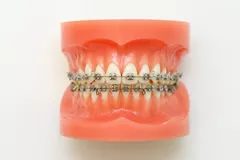
When people hear "orthodontic treatment", many picture silver wires. Today you can choose from several types, including white, less noticeable appliances, appliances attached to the back of the teeth, and removable clear aligners.
Each appliance has advantages and points to be careful about, and some suit certain alignments better than others. In this article we introduce the main types of orthodontic appliances, their features, and points for choosing.
Front braces (wire orthodontics)
This is the most common method: small parts called brackets are bonded to the front of the teeth, and a wire is passed through them to move the teeth. It is easy to make fine movements in various directions, and it suits a wide range of alignments, including severe crowding and treatment with extractions.
Metal brackets
These are durable and transmit the force to move the teeth well. Because they are silver, they tend to show when you smile.
White or clear brackets
These brackets are made of ceramic or plastic and blend in with the color of the teeth. They are less noticeable than metal, and even less so when combined with a white wire. Some types use a small amount of metal in the part that holds the wire. With either type of front braces, plaque tends to build up around the appliance, so careful brushing is needed.
Lingual braces (on the back of the teeth)
In this method, brackets and wires are attached to the back (tongue side) of the teeth. Because the appliance can hardly be seen from the front, it is chosen by people whose work involves meeting others and by those who do not want the appliance to be seen. You can have both upper and lower teeth done on the back, or only the more visible upper teeth on the back and the lower teeth on the front.
Points to be careful about are that the appliance touches the tongue, so speaking may feel difficult or strange until you get used to it, and that it often costs more than front braces.
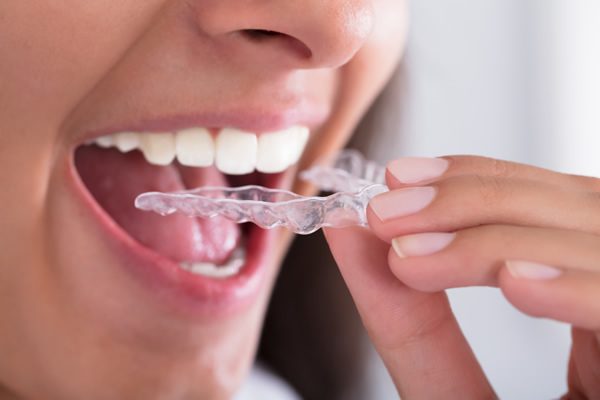
Clear aligners
In this method, the teeth are moved by switching to a series of clear aligners, each shaped slightly differently. A big advantage is that they are hard to notice and can be removed for eating and brushing, making care easy. Because they contain no metal, they are also chosen by people with metal allergies.
On the other hand, if they are not worn for about 20 to 22 hours a day, the teeth do not move as planned and treatment may take longer. Depending on the alignment, wire braces may be more suitable, or the two may be combined. Aligners are also often used for partial orthodontics to align only the front teeth.
Appliances for children
While a child's jaws are still growing, treatment may use removable appliances to widen the dental arch or guide jaw growth. Creating space in advance for the adult teeth to line up can be expected to reduce the chance of extractions later in life. The right time to start differs depending on the child's growth.
Points for choosing an appliance
- Appearance: how unnoticeable you want it to be
- Alignment: how severe the crowding is, whether extractions are needed, and whether there are bite problems
- Lifestyle: whether you can manage the appliance yourself, whether your work involves speaking, and whether you play sports
- Cost and time: the total cost and how often you need to visit
With any appliance, the risks are the same: pain when the teeth move, the risk of cavities and gum disease, and teeth shifting back after treatment. It is important to choose not only on appearance, but by checking with your dentist whether the appliance suits your alignment.
Summary
Orthodontic appliances include front braces, lingual braces, clear aligners and appliances for children, and they differ in appearance, how easily they move the teeth, and ease of care. The most important thing is to choose an appliance that suits your alignment and lifestyle. At the consultation, we explain and compare the advantages and points to be careful about for each appliance.
ESCA Dental & Orthodontic Clinic is in the ESCA underground shopping mall, a 1-minute walk from the Shinkansen exit of JR Nagoya Station. Appointments by phone (+81-52-452-1255), online booking (Japanese) or LINE.
Main risks and side effects
- During orthodontic treatment, you may feel pain or discomfort as the teeth move
- If brushing is not thorough, the risk of cavities and gum disease increases
- The tooth roots may become shorter (root resorption) or the gums may recede. After treatment, teeth may move back if the retainer is not used
- Depending on the appliance, speaking or closing the mouth may be temporarily difficult
Orthodontic treatment is self-paid (not covered by insurance). The cost depends on the appliance and treatment period, so we explain it after a detailed examination (see our fee table for standard fees).
Frequently asked questions
Q. Which appliance is the least noticeable?
Lingual braces attached to the back of the teeth can hardly be seen from the front. Clear aligners are also hard to notice unless someone looks closely.
Q. Can I have orthodontic treatment if I have a metal allergy?
You may be able to choose clear aligners, which contain no metal, or appliances with little metal. If you have an allergy, please tell us before starting.
Q. Can I change appliances partway through?
Depending on the alignment and how treatment is progressing, appliances can sometimes be combined, for example by switching from wires to clear aligners. Please consult us.
Medical review
This article was reviewed by Katsuaki Takeuchi, DDS (Director; Board-certified oral surgeon, Japanese Society of Oral and Maxillofacial Surgeons), ESCA Dental & Orthodontic Clinic. It provides general information; please consult a dentist about your own condition.
Appointments and questions
Mon–Fri 10:00–13:00 / 14:30–19:30 · Sat & Sun 10:00–13:00 / 14:00–18:00 (open every other Sunday) · Closed on national holidays. Our staff mainly speak Japanese.