
What Happens at a Dental Check-Up? What Is Checked and How Often
Published: 2026-08-13 · Updated: 2026-11-22 · Medically reviewed by Katsuaki Takeuchi, DDS (Director; Board-certified oral surgeon, Japanese Society of Oral and Maxillofacial Surgeons)
What you will learn
- Five things we check at regular check-ups
- Why check-ups matter most when you have no symptoms
- How often to come, and the benefits of continuing check-ups
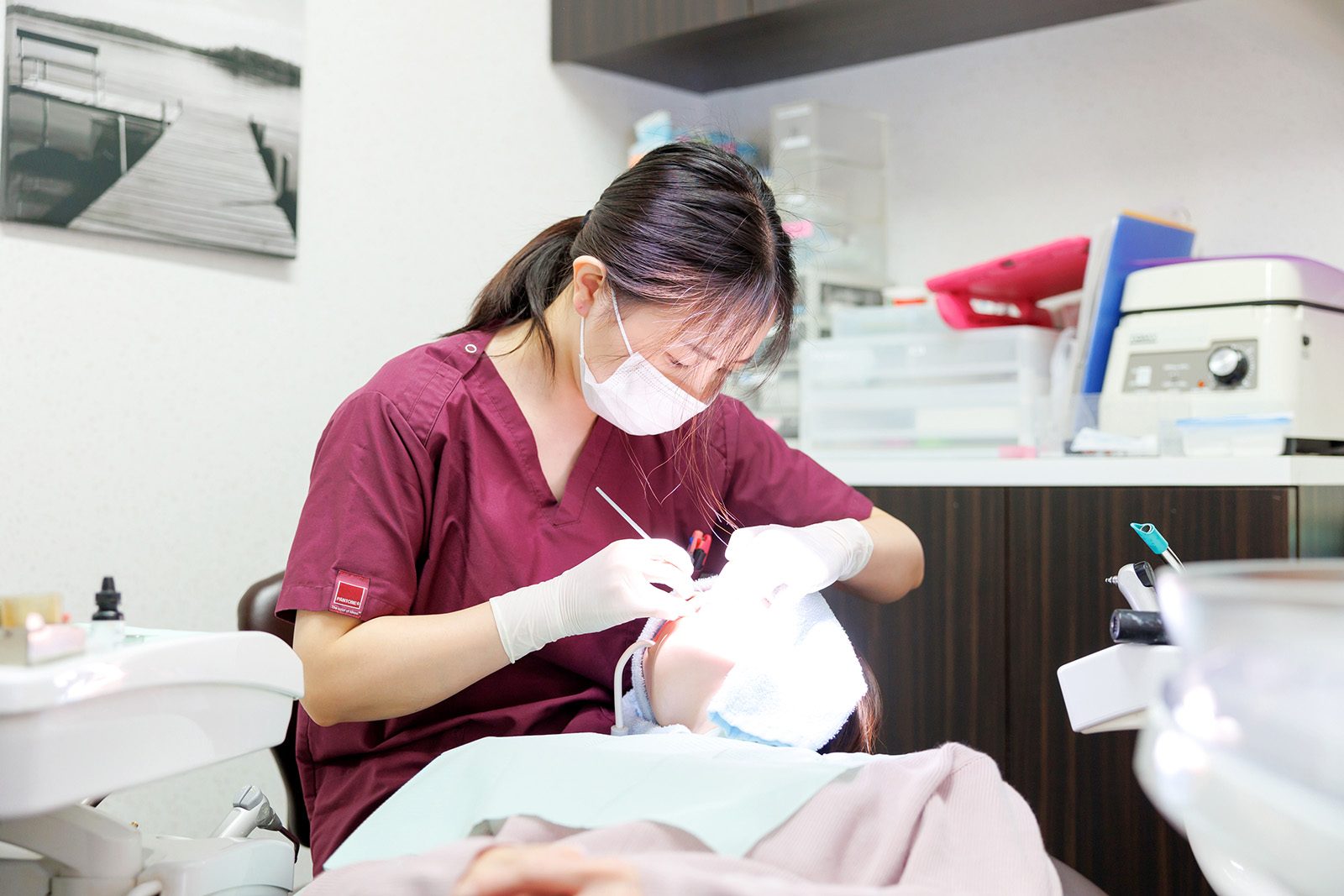
Have you ever wondered, "What do they actually do at a dental check-up?" or "Do I need to go if I have no symptoms?"
At regular check-ups, we do not only clean your teeth; we also check many parts of your mouth. In this article, we explain what a check-up involves and how often to come.
Five things we check at regular check-ups
1. Tooth decay
We check for small cavities that are hard to notice yourself and for any changes around previously treated teeth. When needed, we also take X-rays to check areas that are hard to see, such as between the teeth.
2. Gums (gum disease)
We check for swelling and bleeding of the gums and the depth of the gum pockets. Gum disease can progress without pain, so regular checks are important.
3. Tartar and plaque
We check for debris and tartar that everyday brushing cannot fully remove, and remove them with a cleaning.
4. Treated teeth
Treatment does not mean a tooth is fine forever, so we also check previously treated teeth for gaps, chips or recurring decay.
5. The whole mouth (soft tissues, tongue and bite)
We also check the soft tissues such as the inside of the cheeks and the tongue for any changes of concern, and check for problems with the bite or the way the teeth are wearing.
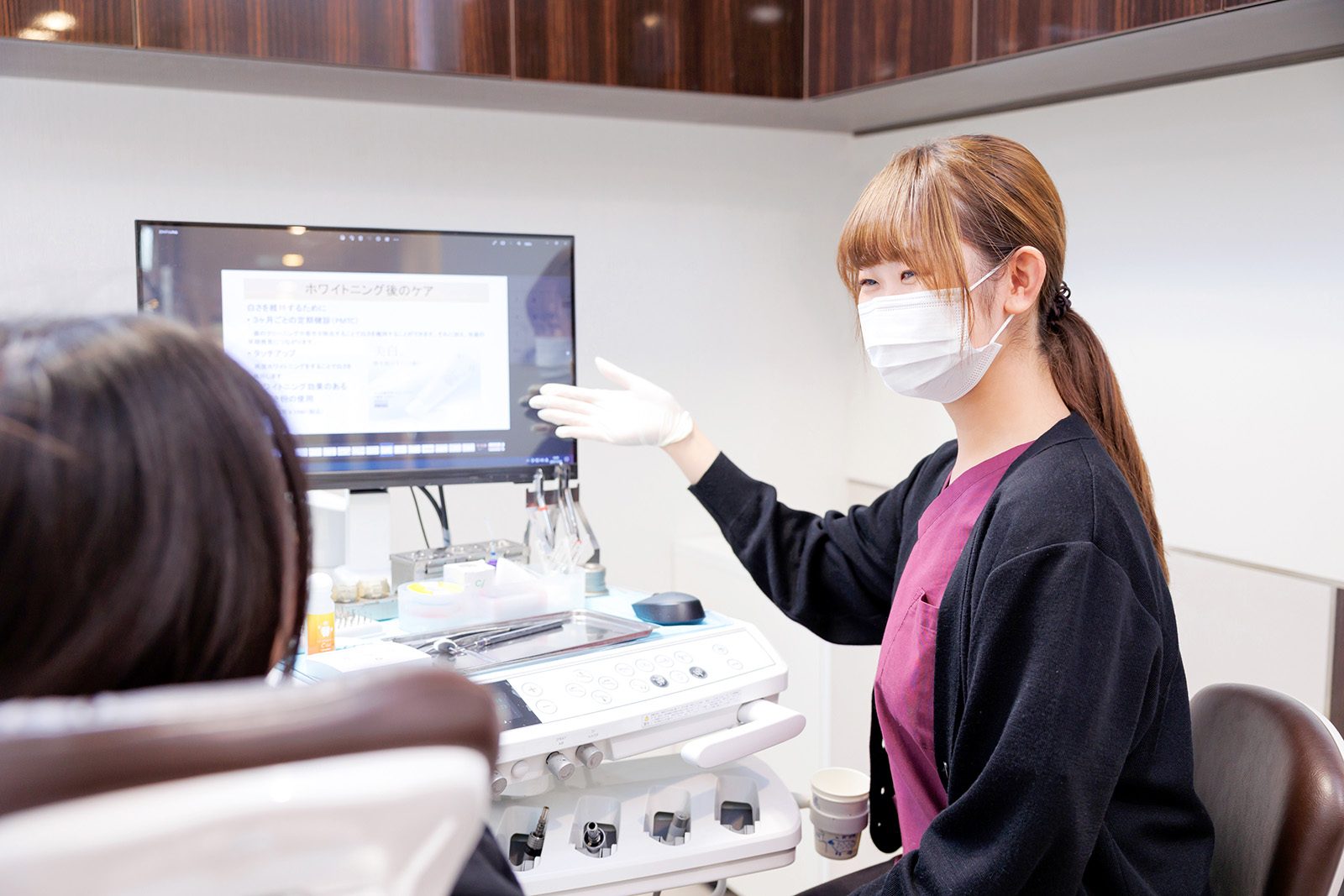
The flow of a regular check-up (an example)
- Interview: we ask about any concerns and changes in your health or medication
- Examination: checking tooth decay, gums and bite, and X-rays and intraoral photos as needed
- Cleaning: tartar removal and cleaning of the tooth surfaces
- Fluoride application (to prevent tooth decay)
- Brushing advice and guidance on when to come for your next check-up
Check-ups matter most when you have no symptoms
Regular check-ups are not only for treating something after symptoms appear. They are time to "make sure nothing has gotten worse" and "notice problems before they get worse."
In the early stages, both tooth decay and gum disease rarely hurt. If you wait until it hurts, treatment may become more extensive or require more visits. Finding problems early has benefits such as less drilling and fewer visits and lower costs.
Rather than thinking "It doesn't hurt, so I don't need to go," we recommend thinking "I have no symptoms now, so this is the time to get checked."
How often to come
It depends on the condition of your mouth, but about once every 3 to 6 months is a guide. For people at higher risk of tooth decay or gum disease, people wearing appliances on their teeth, and people with many treated teeth, we may recommend a slightly shorter interval. At your check-up, we let you know the interval that suits you.
Tips for keeping up with check-ups
We recommend booking your next appointment on your way out, putting it in your smartphone calendar, or choosing easy-to-remember times such as the change of seasons (spring, summer, autumn, winter). Our clinic is a 1-minute walk from JR Nagoya Station, making it easy to visit on your way home from work or while shopping.

The benefits of having check-ups
- Finding cavities while they are small, so less of the tooth needs to be drilled
- Checking how gum disease is progressing and reviewing your care before it gets worse
- Removing tartar and stains so your mouth feels fresh
- Learning your brushing habits (the areas where you tend to leave plaque)
- Finding problems with treated teeth early
The main causes of tooth loss in adulthood are tooth decay and gum disease. For both, finding them early and responding increases the chance of saving your teeth. Think of regular check-ups as "inspections for your mouth" to protect your teeth in the future.
Summary: protect your oral health with check-ups
Regular check-ups are important time for finding tooth decay and gum disease early and responding before they get worse. If you have not been to the dentist for a while, why not start with a check-up?
ESCA Dental & Orthodontic Clinic is in the ESCA underground shopping mall, a 1-minute walk from the Shinkansen exit of JR Nagoya Station. Appointments by phone (+81-52-452-1255), online booking (Japanese) or LINE.
Frequently asked questions
Q. Are regular check-ups covered by insurance?
Examinations for tooth decay and gum disease, tartar removal and similar care are covered by Japanese public health insurance. For those who would like a detailed self-paid examination (dental check-up program), we explain the content and cost.
Q. How long does a check-up take?
It depends on the condition of your mouth, but about 30 minutes to 1 hour is a guide. If there is a lot of tartar, the cleaning may be split over two visits.
Q. Is it all right if I have not been to the dentist for a while?
Of course. Even if it has been a long time, let's start by checking the condition of your mouth. If anything concerns you, please do not hesitate to tell us.
Related pages
Medical review
This article was reviewed by Katsuaki Takeuchi, DDS (Director; Board-certified oral surgeon, Japanese Society of Oral and Maxillofacial Surgeons), ESCA Dental & Orthodontic Clinic. It provides general information; please consult a dentist about your own condition.
Appointments and questions
Mon–Fri 10:00–13:00 / 14:30–19:30 · Sat & Sun 10:00–13:00 / 14:00–18:00 (open every other Sunday) · Closed on national holidays. Our staff mainly speak Japanese.