
Types of Dental Anesthesia, How Long They Last and Aftercare
Published: 2024-09-05 · Updated: 2026-11-22 · Medically reviewed by Katsuaki Takeuchi, DDS (Director; Board-certified oral surgeon, Japanese Society of Oral and Maxillofacial Surgeons)
What you will learn
- Three local anesthetics used in dentistry (topical, infiltration and nerve block) and how long they last
- Three situations where anesthesia works less well, and why
- Points to note after anesthesia, and our care to reduce pain and anxiety
Many people feel anxious about anesthesia in dental treatment, thinking "I'm scared of injections" or "What if the anesthesia doesn't work?" Knowing about anesthesia may ease some of that anxiety.
The anesthesia used in dentistry is usually local anesthesia, which works only on the area being treated and its surroundings, so you stay conscious during treatment. In this article, we explain the types of dental anesthesia, how long they last, when anesthesia works less well, and points to note afterwards.
Three local anesthetics used in dentistry
Topical anesthesia
This anesthetic is applied to the surface of the gums to ease the sharp prick when the needle goes in. It comes as gels, liquids and sprays, and our clinic uses a gel. A few minutes after it is applied, the area becomes numb. It lasts about 10 to 20 minutes.
Infiltration anesthesia
In this method, the anesthetic is injected into the gums around the tooth being treated so that it soaks into the bone and acts on the nerves inside. It is the most common anesthesia in dentistry and is used for a wide range of treatments, such as treating tooth decay and extracting teeth. It varies with the amount used and the individual, but the effect usually lasts about 2 to 3 hours.
Nerve block anesthesia
In this method, the anesthetic is injected near the base of a nerve so that it numbs the wide area that nerve supplies. The bone around the lower back teeth is hard, and infiltration anesthesia may not work well there, so this method is used for treating lower back teeth and extracting wisdom teeth. The tongue and lips become numb over a wide area, and depending on the person, the effect may last about 5 to 6 hours.
Three situations where anesthesia works less well
1. When there is strong inflammation
When inflammation from tooth decay or gum problems is strong and the tooth or surrounding area is swollen, anesthesia works less well. This is thought to be because inflamed tissue becomes acidic, making it harder for the anesthetic to work. Strong inflammation also makes the injection itself more likely to hurt. In such cases, we may first calm the inflammation with medication before treatment.
2. When the bone is hard or thick (especially the lower back teeth)
The lower jawbone is harder and thicker than the upper jawbone, so the anesthetic soaks in less easily, and anesthesia may work less well for the lower back teeth. Bone condition varies from person to person, so the effect can differ between people. When it works less well, we may combine it with nerve block anesthesia.
3. When you are very tense or anxious, or not feeling well
When you are very tense or anxious, you become more sensitive to pain and feel even small stimuli strongly, so the anesthesia may seem to work less well. The same can happen when you are not feeling well or have not slept enough.
The most effective way to avoid situations where anesthesia works less well is to get treatment early, before tooth decay or inflammation gets severe. Also, if you feel pain even after anesthesia, do not put up with it; let us know, for example by raising your hand. We can add more anesthetic.
Points to note after anesthesia
Until the anesthesia wears off, your lips, cheeks and tongue will feel numb. You might bite and injure them or burn yourself on hot food without noticing, so wait until the anesthesia wears off before eating. Children in particular often bite their lips or cheeks after anesthesia, so parents should keep an eye on them after treatment.
Also, depending on the treatment, activities that increase blood flow, such as bathing, intense exercise and drinking alcohol, can cause pain or bleeding. Avoid them on the day of surgical treatment such as an extraction. For ordinary treatment of tooth decay, there is often no need to worry much, but please ask if you are concerned.
Our care to reduce pain and anxiety
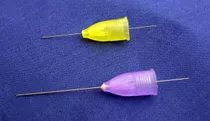
At our clinic, we take care to ease the discomfort of anesthesia, for example by applying topical anesthesia first and then injecting the anesthetic slowly with a thin needle. Some people would rather not have anesthesia, but it has the advantage of letting you receive treatment calmly without worrying about pain. If you are unsure whether to have anesthesia, please feel free to talk to our staff. For people with especially strong anxiety about dental treatment, we may be able to offer intravenous sedation, in which a sedative is given through a drip so that you are treated in a drowsy, relaxed state.
About pain in orthodontic treatment
Anesthesia is not used in orthodontic treatment, but pain or discomfort may occur as the teeth move. With braces, a pressing pain is said to be common for a few days to 1 to 2 weeks after the appliance is adjusted, and with aligner-type appliances, for about 2 to 3 days from the day you switch to a new aligner. Pain varies from person to person and usually settles with time. While it hurts, eat soft foods or food cut into small pieces. If you have any worries, please talk to us at your adjustment visit.
Summary
Dental anesthesia includes topical, infiltration and nerve block anesthesia, which are used according to the area being treated and the condition of the tooth. Anesthesia may work less well when there is strong inflammation, for lower back teeth, or when you are very tense. If you feel the anesthesia is not working well, do not put up with it; let us know. After anesthesia, wait until feeling returns before eating. If you are anxious about anesthesia or pain during treatment, please feel free to consult us.
ESCA Dental & Orthodontic Clinic is in the ESCA underground shopping mall, a 1-minute walk from the Shinkansen exit of JR Nagoya Station. Appointments by phone (+81-52-452-1255), online booking (Japanese) or LINE.
Main risks and side effects
- After anesthesia, numbness continues for several hours. Take care not to bite your lips or cheeks or burn yourself
- In rare cases, the anesthetic may cause palpitations, feeling unwell, or an allergic reaction. Please tell us about any medical conditions, medications, or past episodes of feeling unwell
- With intravenous sedation, drowsiness or unsteadiness may remain for a while after treatment, so you cannot drive on the day of treatment
- In orthodontic treatment, pain or discomfort may occur as the teeth move, and the roots may become shorter (root resorption)
Frequently asked questions
Q. How long does it take for anesthesia to wear off?
Infiltration anesthesia usually lasts about 2 to 3 hours, and nerve block anesthesia may last about 5 to 6 hours. It varies with the amount used and the individual.
Q. What should I do if I feel the anesthesia is not working?
Do not put up with it; let us know, for example by raising your hand. We can add more anesthetic or change the method.
Q. Can I have dental anesthesia during pregnancy?
The local anesthetics used in dentistry are thought to have almost no effect on the baby when used in normal amounts. If you are pregnant, please let us know before treatment.
Related pages
Medical review
This article was reviewed by Katsuaki Takeuchi, DDS (Director; Board-certified oral surgeon, Japanese Society of Oral and Maxillofacial Surgeons), ESCA Dental & Orthodontic Clinic. It provides general information; please consult a dentist about your own condition.
Appointments and questions
Mon–Fri 10:00–13:00 / 14:30–19:30 · Sat & Sun 10:00–13:00 / 14:00–18:00 (open every other Sunday) · Closed on national holidays. Our staff mainly speak Japanese.