
Dental Implant Treatment: Steps from Exam to Maintenance
Published: 2026-08-17 · Updated: 2026-11-22 · Medically reviewed by Katsuaki Takeuchi, DDS (Director; Board-certified oral surgeon, Japanese Society of Oral and Maxillofacial Surgeons)
What you will learn
- What are dental implants? How they differ from dentures and bridges
- The treatment steps, from consultation to maintenance
- Options when bone is lacking or many teeth are missing, and the main risks
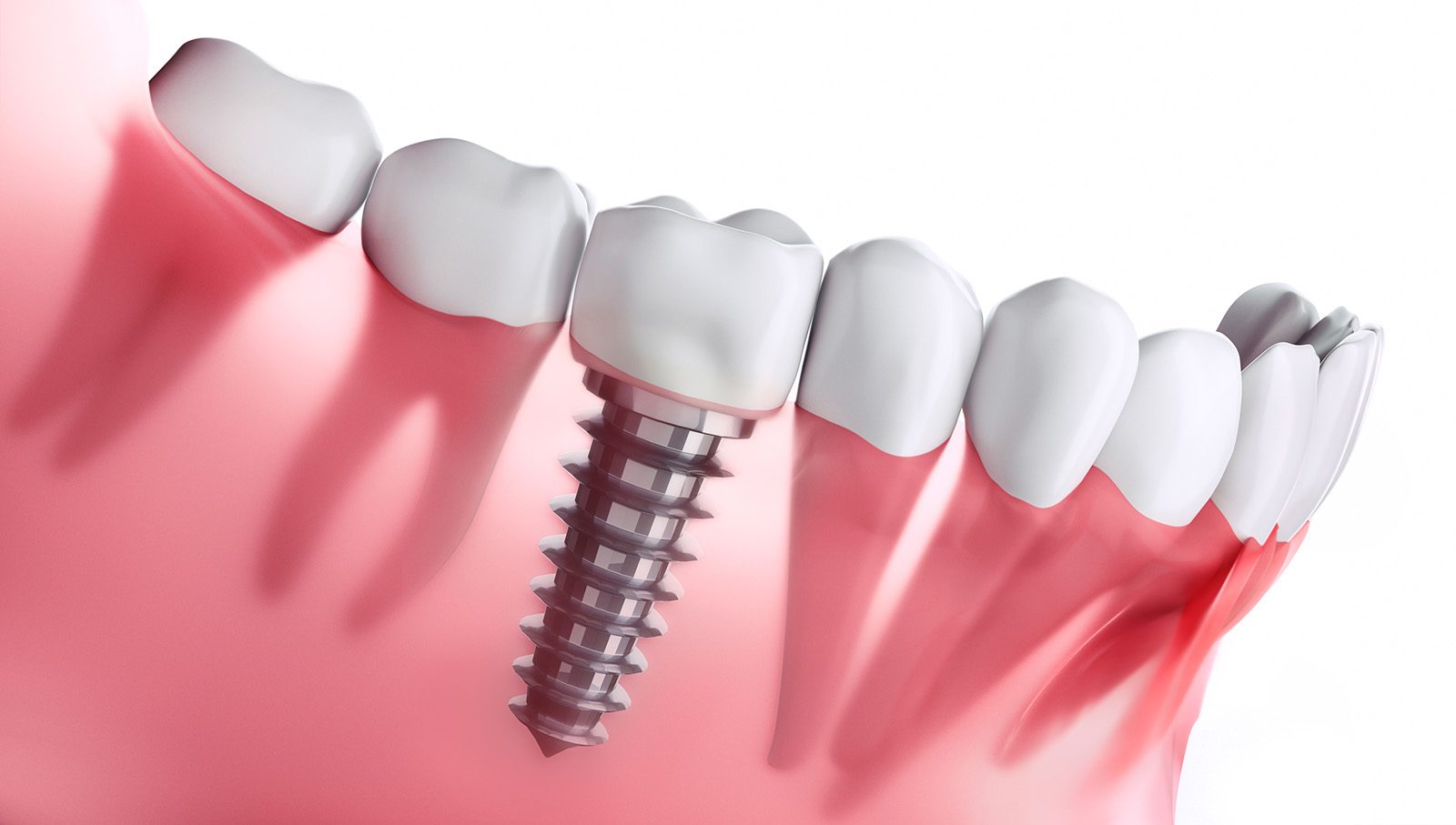
When a tooth is lost to a cavity, gum disease or injury, the ways to replace it are dentures, bridges and dental implants.
In this article, we explain how implant treatment differs from the other options and walk through the steps from examination to maintenance after treatment.
What are dental implants? How they differ from dentures and bridges
A dental implant is a treatment in which an artificial titanium tooth root (the implant body) is placed in the jawbone where a tooth was lost, and an artificial tooth (the restoration) is attached on top.
- Implants: no need to drill the neighboring teeth, and the aim is a bite that feels close to natural teeth. Surgery is required, and it is self-paid treatment (not covered by insurance)
- Bridges: the teeth on both sides are drilled and used as supports, replacing the missing tooth like a bridge. Often covered by Japanese public health insurance, but it places a burden on the supporting teeth
- Dentures: removable, and can be used even when many teeth are missing. They can be made under Japanese public health insurance, but chewing force is weaker than with natural teeth
Every option has its benefits and points to note. We will consider the option that suits you together, based on the condition of your mouth, your wishes and your general health.
Steps in implant treatment
1. Consultation and examination
We ask about the condition of your mouth and your wishes. Using X-rays and CT, we check the amount and quality of jawbone and the position of nerves and blood vessels in 3D, and consider where to place the implant. We also check any medical conditions and medications.
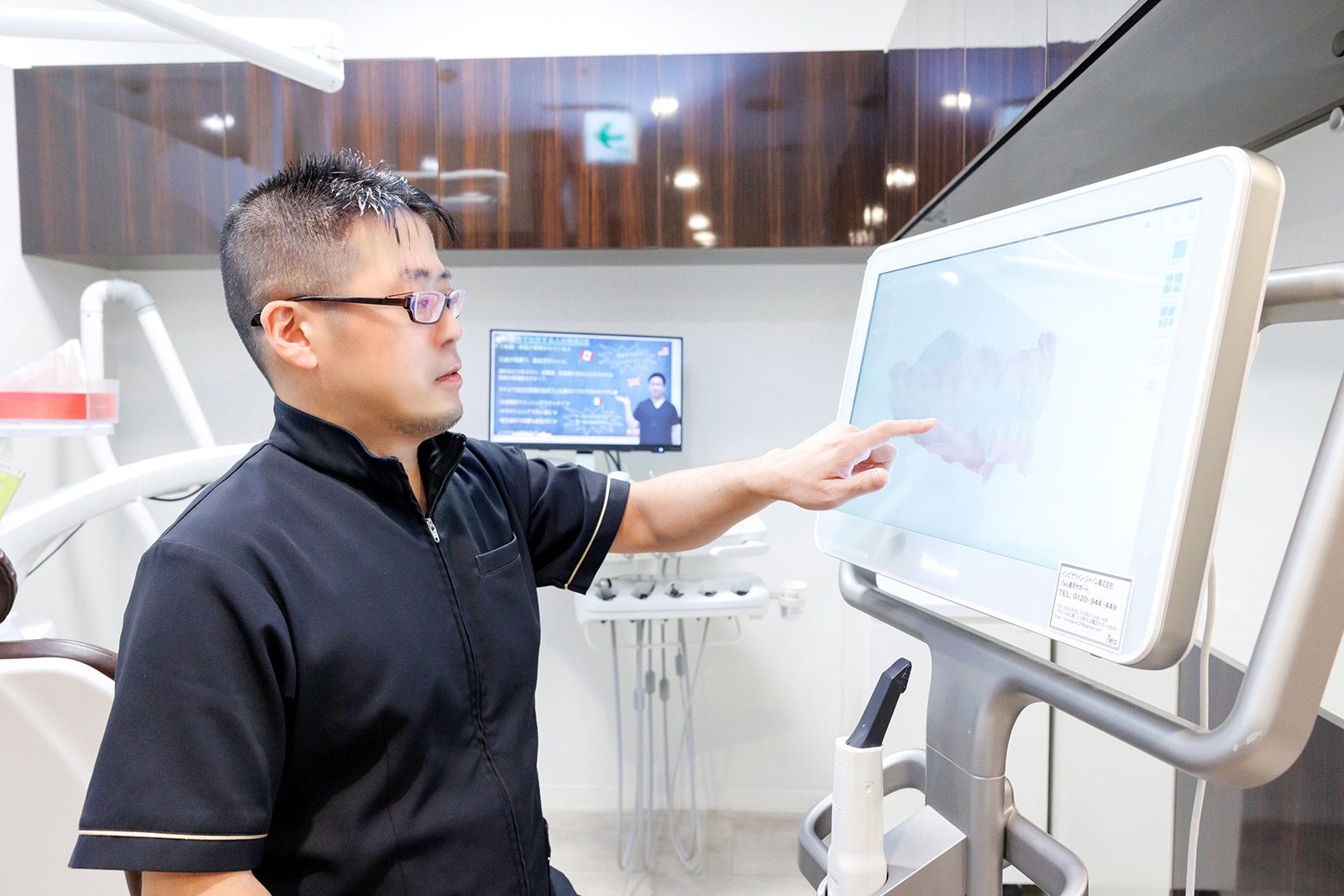
2. Treatment plan and surgical guide
Based on the CT data, we plan the length, depth and angle of the implant. We take impressions to make an implant surgical guide (a device like a mouthpiece) that helps place the implant in the planned position during surgery.
3. Implant surgery (first surgery)
Under local anesthesia, the implant body is placed in the jawbone. For people who are afraid of dental treatment, IV sedation can also be used.
4. Waiting for the implant to bond with the bone, and second surgery
We wait several months until the implant has firmly bonded with the jawbone (the period depends on the condition of the bone). After that, if necessary, the gum is opened and a part for attaching the artificial tooth is connected.
5. Impressions and fitting the artificial tooth
We take precise impressions and make the artificial tooth (the restoration). Once it is fitted, we check and adjust the bite, shape, color and how easy it is to clean.
6. Regular maintenance
To use your implants for a long time, daily self-care and regular cleaning and bite checks are essential. Inflammation of the gums around an implant can cause bone loss and make the implant loose, so we recommend a check about once every 3 to 6 months.
When bone is lacking or many teeth are missing
An implant needs enough bone, of good enough quality, to be stable. If bone is lacking, we may perform procedures to increase bone (socket lift, sinus lift, GBR and so on).
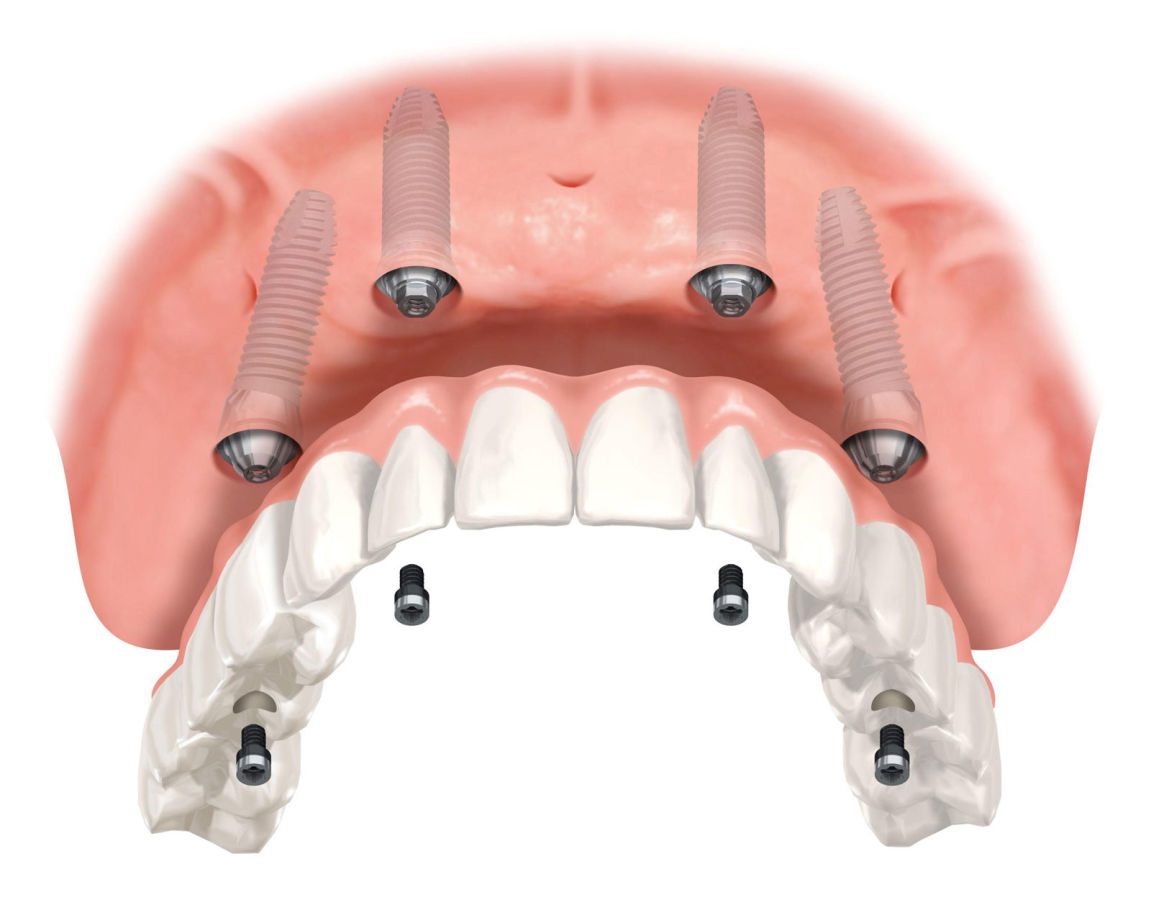
For people with no teeth or many missing teeth, there are also methods that use a small number of implants to support a denture, or to support a bridge-like set of artificial teeth (such as All-on-4). Whether these are suitable depends on the amount and hardness of the bone.
Things to check when considering implants
- Medical conditions such as diabetes or osteoporosis, and medications you take (bone medications, blood thinners and so on)
- Whether you smoke (it affects how well the implant bonds with the bone)
- Whether you have gum disease (if so, it is treated first)
- The length of treatment and number of visits
- Cost (including whether procedures such as bone grafting are needed)
Summary: start with an examination and talk with us about the right option
Implants are one way to replace lost teeth. Whether treatment is possible, and whether implants or another option suits you, cannot be known without an examination. If you are having trouble after losing teeth, please feel free to consult us. We offer implant consultations at any time.
ESCA Dental & Orthodontic Clinic is in the ESCA underground shopping mall, a 1-minute walk from the Shinkansen exit of JR Nagoya Station. Appointments by phone (+81-52-452-1255), online booking (Japanese) or LINE.
Main risks and side effects
- Implants require surgery, and swelling, pain and bruising may occur afterward
- Depending on the amount and quality of jawbone, general health conditions (such as diabetes) and smoking, treatment may not be possible, or bone grafting may be needed
- In rare cases, numbness from nerve damage, inflammation of the maxillary sinus (the air space in the upper jaw), or failure of the implant to bond with the bone may occur
- Even after treatment, poor care can lead to inflammation around the implant (peri-implantitis), so regular maintenance is needed
Implant treatment is self-paid (not covered by insurance). Please see our fee table for standard fees. Procedures such as bone grafting are charged separately.
Frequently asked questions
Q. Does implant surgery hurt?
The surgery is done under local anesthesia, so pain during surgery is kept under control. Pain and swelling may appear after the anesthetic wears off, so we prescribe pain relievers. IV sedation is also available for those who feel afraid.
Q. How long does treatment take?
It depends on the bone condition and the number of implants, but a general guide is several months to about six months from surgery until the artificial tooth is fitted. If bone grafting is needed, it may take longer.
Q. How many years do implants last?
This varies greatly depending on the condition of your mouth, daily care and regular maintenance. To keep using them for a long time, it is important to keep the area around the implants clean and have regular checks.
Related pages
Medical review
This article was reviewed by Katsuaki Takeuchi, DDS (Director; Board-certified oral surgeon, Japanese Society of Oral and Maxillofacial Surgeons), ESCA Dental & Orthodontic Clinic. It provides general information; please consult a dentist about your own condition.
Appointments and questions
Mon–Fri 10:00–13:00 / 14:30–19:30 · Sat & Sun 10:00–13:00 / 14:00–18:00 (open every other Sunday) · Closed on national holidays. Our staff mainly speak Japanese.