
What Is MFT (Oral Myofunctional Therapy)? Tongue Habits and Teeth
Published: 2026-11-04 · Updated: 2026-11-22 · Medically reviewed by Katsuaki Takeuchi, DDS (Director; Board-certified oral surgeon, Japanese Society of Oral and Maxillofacial Surgeons)
What you will learn
- What kind of training MFT (oral myofunctional therapy) is
- How tongue habits affect alignment, and a self-check
- Why MFT is combined with orthodontic treatment (preventing relapse)
MFT (Oral Myofunctional Therapy) is training that helps you use the muscles around the mouth, such as the tongue, lips and cheeks, correctly.
Most of us rarely think about where our tongue rests or how it moves when we swallow, but these habits are closely linked to tooth alignment and bite. In this article, we explain the purpose of MFT and how it relates to orthodontic treatment.

The tongue has a correct resting position
When you are relaxed, the ideal is for the tip of the tongue to rest at a position called the "spot," just behind the upper front teeth, with the whole tongue lightly touching the roof of the mouth. The natural state is lips lightly closed and breathing through the nose.
How tongue habits affect alignment
Habits such as pushing the front teeth with the tongue, keeping the tongue low in the mouth, or thrusting the tongue forward when swallowing are called tongue habits (tongue thrust). The force of the tongue may seem small, but because it is repeated hundreds of times a day, it keeps pressing on the teeth for long periods. As a result, it can lead to alignment problems such as the following.
- Open bite: the front teeth do not meet even when the back teeth are closed
- Maxillary protrusion: the upper front teeth stick out (buck teeth)
- Gaps between teeth and other problems with alignment and bite
Also, a habit of keeping the mouth open (mouth breathing) can dry out the mouth and make cavities and gum inflammation more likely.
Do you have any of these habits? A self-check
- You catch yourself pushing your front teeth with your tongue
- Your tongue rests between your upper and lower teeth
- Your tongue comes forward when you swallow
- Your mouth is often open during the day
- Your lips or chin tense up when you swallow food
- People say your "s" and "t" sounds come out like a lisp
If any of these apply, you may have habits in how you use the muscles around your mouth. In children, these are often points that parents notice.
What kind of training does MFT involve?
In MFT, exercises like the following are combined to suit each person's habits. The basis is to check the methods at the dental clinic and then continue a little every day at home.
- Practicing placing the tongue in the correct position (the spot)
- Exercises to strengthen the tongue muscles (sucking the tongue up against the roof of the mouth, lifting it and so on)
- Practicing closing the lips firmly
- Practicing the correct way to swallow
- Practicing using the tongue and the muscles around the mouth in a balanced way
MFT is training that you master gradually by keeping it up. Results and the time needed vary from person to person.
How MFT relates to orthodontic treatment
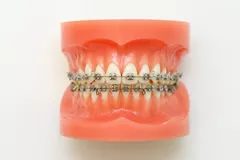
Orthodontic treatment uses appliances to move teeth into the correct position. However, even after alignment is corrected, if a habit of pushing the teeth with the tongue or an incorrect way of swallowing remains, it can cause relapse, where the teeth try to move back to their original positions after treatment.
So in orthodontic treatment, it is important not only to move the teeth but also to correct how the muscles around the mouth that affect alignment are used. In orthodontics for children, there are also methods that combine MFT with mouthpiece-type appliances (such as Pre-Orthodontic Trainers) to address the causes of misalignment.
What you can do at home
Habits such as thumb sucking, lip biting, resting your chin on your hand, and sleeping face down can also affect alignment and jaw growth. Daily habits such as chewing well at meals, swallowing with the mouth closed, and breathing through the nose are also important for developing the muscles around the mouth. If you notice any habits that concern you, please ask us at your checkup.
Summary: if your alignment concerns you, check your oral habits too
MFT is important training that not only strengthens the tongue but helps you use the muscles of the tongue, lips and cheeks correctly. In addition to correcting alignment with orthodontic treatment, learning the correct tongue position and way of swallowing leads to stable alignment after treatment.
If you think you may have a tongue habit or are worried about relapse after orthodontic treatment, please feel free to consult us. ESCA Dental & Orthodontic Clinic is in the ESCA underground shopping mall, a 1-minute walk from the Shinkansen exit of JR Nagoya Station. Appointments by phone (+81-52-452-1255), online booking (Japanese) or LINE.
Main risks and side effects
- MFT requires daily practice, and if it is not kept up, results may be limited
- Orthodontic treatment can cause pain or discomfort as teeth move, an increased risk of cavities and gum disease, shortening of tooth roots, receding gums and so on
- After orthodontic treatment, the teeth may shift back if you do not use a retainer
Orthodontic treatment is self-paid (not covered by insurance). Fees vary depending on the appliance and treatment period, so we explain them after a detailed examination.
Frequently asked questions
Q. From what age can MFT be started?
It is often started from an age when the child can understand and keep up the exercises (around 5 to 6 years old as a guide). Adults may also do it together with orthodontic treatment.
Q. Can MFT alone improve alignment?
MFT is training that corrects habits that cause misalignment. To correct alignment that is already crooked, orthodontic treatment is needed in most cases. We look at the condition of your mouth and suggest how to combine them.
Q. Can tongue habits be corrected even as an adult?
The longer a habit has continued, the more time it takes, but it can be gradually changed through training. We also recommend it for adults, to help prevent relapse after orthodontic treatment.
Medical review
This article was reviewed by Katsuaki Takeuchi, DDS (Director; Board-certified oral surgeon, Japanese Society of Oral and Maxillofacial Surgeons), ESCA Dental & Orthodontic Clinic. It provides general information; please consult a dentist about your own condition.
Appointments and questions
Mon–Fri 10:00–13:00 / 14:30–19:30 · Sat & Sun 10:00–13:00 / 14:00–18:00 (open every other Sunday) · Closed on national holidays. Our staff mainly speak Japanese.