
August 31 Is Vegetable Day: Why Chewing Well Helps Your Mouth
Published: 2026-08-31 · Updated: 2026-11-22 · Medically reviewed by Katsuaki Takeuchi, DDS (Director; Board-certified oral surgeon, Japanese Society of Oral and Maxillofacial Surgeons)
What you will learn
- How chewing food well benefits your mouth
- Simple meal ideas to chew more without thinking about it
- Oral care to keep in mind after eating vegetables

In Japan, August 31 is "Vegetable Day", a play on words: the numbers 8-3-1 can be read as ya-sa-i, the Japanese word for vegetables. Vegetables are on our table every day, and they are closely linked to oral health.
This article explains the benefits of chewing crunchy vegetables well, ways to chew more, and care after eating.
Four good things that happen when you chew well
1. More saliva
Chewing well makes you produce more saliva. Saliva washes away food debris and bacteria, neutralizes the acids that cause tooth decay, and helps repair tooth surfaces that have started to dissolve (remineralization).
2. Stronger jaws and mouth muscles
A habit of chewing well encourages the development of the jawbone and chewing muscles. In children, it is also said to be related to jaw growth and tooth alignment.
3. Less overeating
Eating slowly and chewing well helps you feel full sooner, which can help prevent overeating. Starting a meal with vegetables (sometimes called "veggie first") also helps slow down your eating pace.
4. More enjoyment of flavor
Chewing well releases the taste and aroma of food so you can enjoy your meals more. It also aids digestion.
Meal ideas that naturally increase chewing
- Include crunchy vegetables such as carrots, burdock root and lotus root
- Cut vegetables into slightly larger pieces
- Do not overcook; keep some crunch
- Take smaller bites and do not wash food down with drinks
- Aim for about 30 chews per bite and chew slowly
It is also important to chew with the back teeth on both sides. A habit of chewing on one side only can strain the jaw joints and muscles.

Take good care of your teeth after eating vegetables
Fibrous vegetables tend to get stuck between teeth. After eating, brush carefully and also clean between your teeth with dental floss or interdental brushes.
Be careful not to poke hard with a toothpick, as this can injure your gums. If food always gets stuck in the same place, the cause may be tooth decay, a gap next to a treated tooth, or receding gums.
If chewing feels difficult, see us early
"Hard foods are harder to chew" or "I can only chew on one side" may be signs of tooth decay, gum disease or changes in your bite. Keeping a mouth that can chew properly helps you enjoy your daily meals.
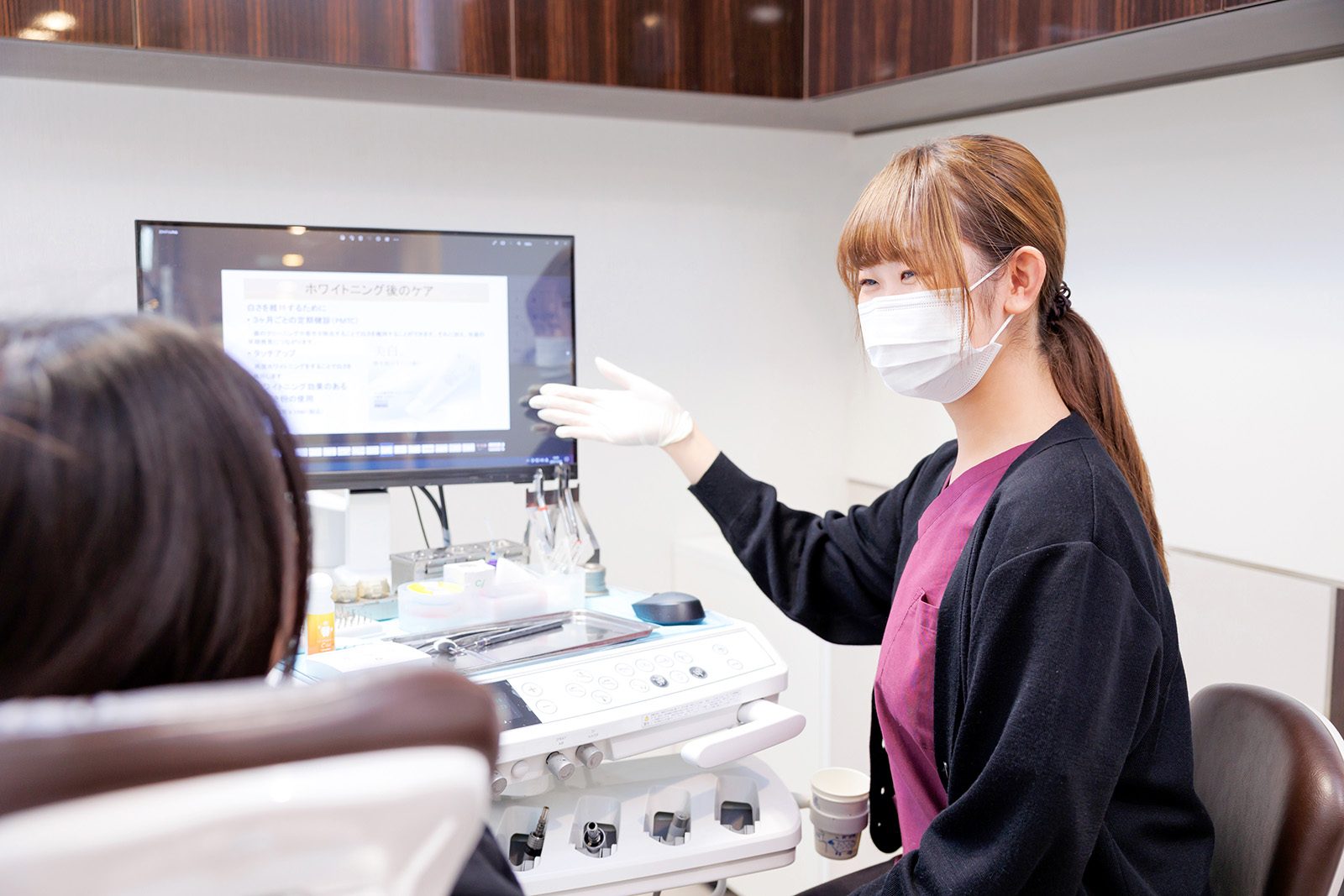
Keep your mouth healthy so you can chew well
To chew well, your teeth and gums need to be healthy. If a decayed tooth hurts, you may start chewing only on the other side without realizing it, which can upset the balance of your bite. If gum disease makes your teeth loose, chewing hard foods becomes difficult.
Finding and treating tooth decay and gum disease early through regular checkups helps you keep enjoying food for years to come.
Enjoy seasonal vegetables
Each season has vegetables with a satisfying crunch: cucumbers, green peppers and corn in summer; lotus root, burdock root and mushrooms in autumn. Seasonal vegetables are rich in flavor and nutrients. Enjoy a variety of textures and build a fun habit of chewing well.
Summary: use Vegetable Day as a chance to chew well
Chewing crunchy vegetables well increases saliva and helps build the foundation of oral health. Do not forget your aftercare. If you have not had a cleaning recently, or you are wondering whether you are chewing properly, please feel free to consult us.
ESCA Dental & Orthodontic Clinic is in the ESCA underground shopping mall, a 1-minute walk from the Shinkansen exit of JR Nagoya Station. Appointments by phone (+81-52-452-1255), online booking (Japanese) or LINE.
Frequently asked questions
Q. Does chewing well reduce tooth decay?
More saliva strengthens its ability to neutralize the acids that cause decay and to wash away debris. However, chewing alone cannot prevent tooth decay, so brushing and using fluoride are also important.
Q. Food always gets stuck in the same place. What should I do?
The cause may be tooth decay, a gap next to a treated tooth, or receding gums. Remove the food gently with floss, and if it keeps happening, have it checked at a dental clinic.
Q. My child swallows food without chewing much.
Try smaller bites, include crunchy foods, and avoid washing food down with drinks. If you are concerned, ask us at your child's pediatric dental checkup.
Related pages
Medical review
This article was reviewed by Katsuaki Takeuchi, DDS (Director; Board-certified oral surgeon, Japanese Society of Oral and Maxillofacial Surgeons), ESCA Dental & Orthodontic Clinic. It provides general information; please consult a dentist about your own condition.
Appointments and questions
Mon–Fri 10:00–13:00 / 14:30–19:30 · Sat & Sun 10:00–13:00 / 14:00–18:00 (open every other Sunday) · Closed on national holidays. Our staff mainly speak Japanese.