
Why Do Some People Get Cavities Easily? 5 Causes and a Self-Check
Published: 2026-10-05 · Updated: 2026-11-22 · Medically reviewed by Katsuaki Takeuchi, DDS (Director; Board-certified oral surgeon, Japanese Society of Oral and Maxillofacial Surgeons)
What you will learn
- Tooth decay forms when bacteria, sugar, tooth quality and time overlap
- Five traits of people prone to decay, and a self-check
- Prevention matched to your own risk, and what a dental clinic can do
Do you brush every day but still get cavities? Do you feel you have more cavities than your family and friends?
The risk of tooth decay involves many things besides brushing, such as diet, saliva and tooth alignment. This article explains the traits of people prone to decay and how to prevent it according to your risk.

Tooth decay forms when four things overlap
Tooth decay is more likely when the following four factors overlap. Reducing even one of them lowers the risk of decay.
- Bacteria: the amount of decay-causing bacteria in the mouth
- Sugar: sugars that feed the bacteria
- Tooth quality: resistance to acid (fluoride, saliva, etc.)
- Time: how long sugar stays in the mouth
Five traits of people prone to tooth decay
1. A lot of plaque is left behind
The spaces between teeth, the grooves of back teeth, and where the teeth meet the gums are places where plaque is often left behind. Use dental floss and interdental brushes as well as a toothbrush.
2. Frequent snacks and sweet drinks
A habit of continually eating sweets or sipping sweet drinks keeps your mouth acidic for longer. The key is to have snacks at set times.
3. Little saliva or a mouth that dries easily
Saliva washes away debris, neutralizes acid and helps restore teeth (remineralization). People who breathe through the mouth, or who have less saliva due to medication, stress or aging, are more prone to decay.
4. Not using enough fluoride
Fluoride makes teeth more resistant to acid. Use fluoride toothpaste every day and rinse just once with a small amount of water after brushing.
5. Tooth alignment or fillings that trap plaque
Overlapping teeth and the edges of fillings and crowns are places where plaque tends to remain. It is important to learn a brushing method suited to your mouth. If tooth alignment makes brushing difficult, orthodontic treatment may be an option to consider.
Self-check: what is your decay risk?
- You have snacks or sweet drinks 3 or more times a day
- You sometimes go to bed without brushing
- You rarely use floss or interdental brushes
- Your mouth is dry when you wake up
- You have had a new cavity or a filling replaced in the past year
- It has been more than a year since your last dental checkup
The more items apply to you, the higher your risk of decay may be. Start by reviewing one thing at a time, beginning with what seems easy.
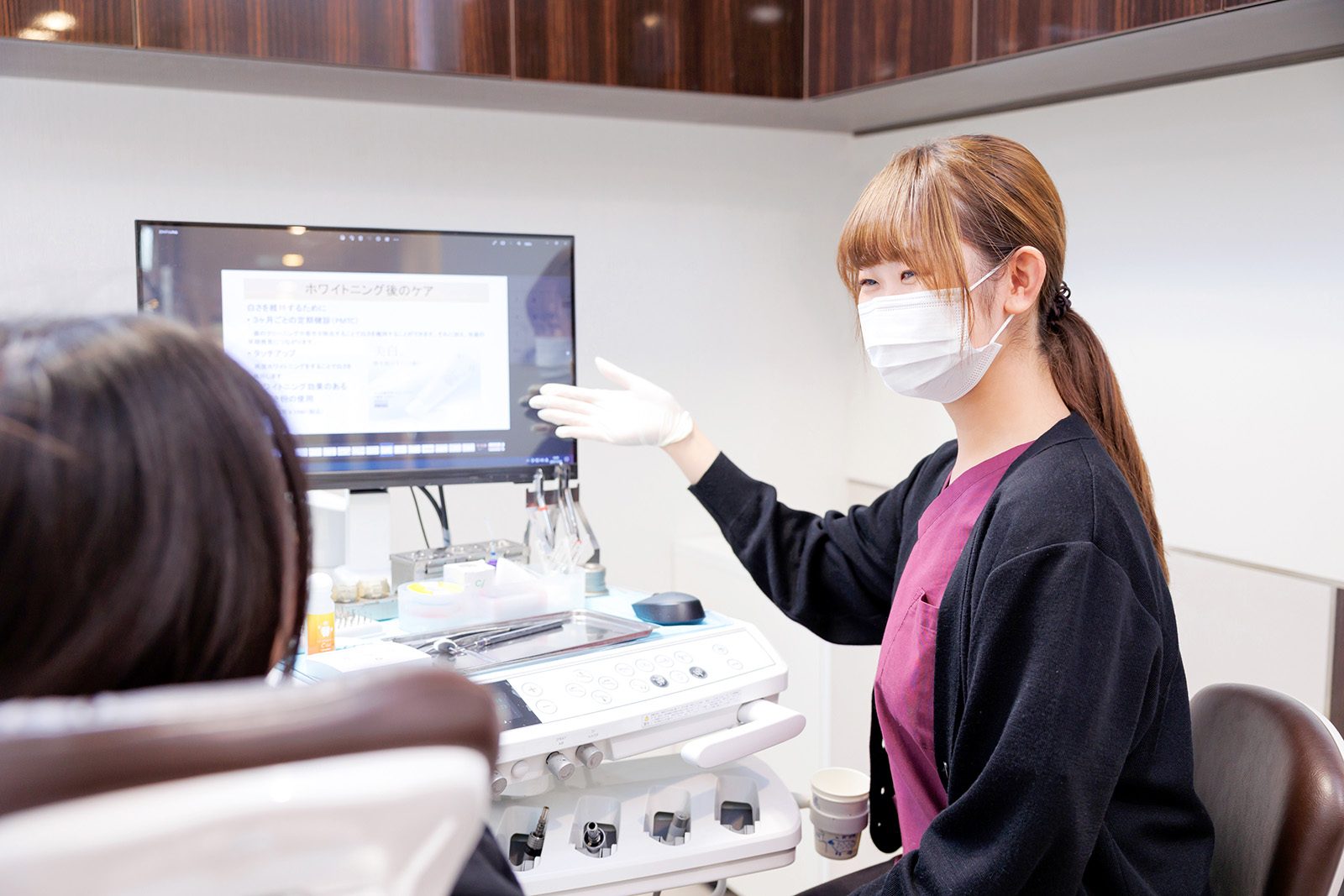
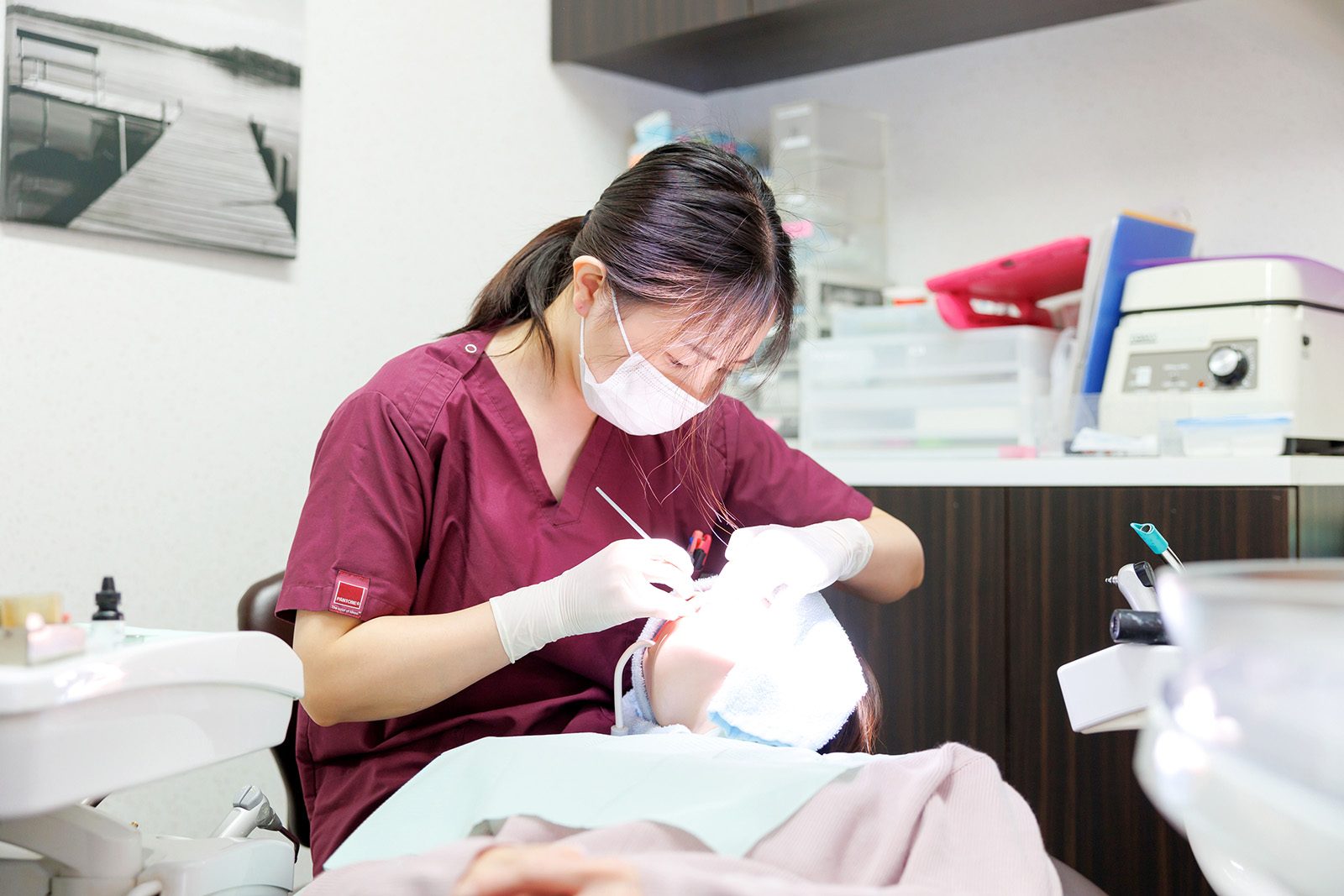
Decay prevention at the dental clinic
- Regular checkups: early decay can be found sooner and sometimes managed at a stage where drilling is not needed
- Professional cleaning: we remove plaque that everyday brushing cannot fully remove
- Fluoride application: we apply high-concentration professional fluoride
- Brushing advice: together we check where plaque tends to be left behind
Tips for how you eat
Even with the same amount of sweets, eating them as dessert after a meal is easier on your mouth than snacking continuously. Chewing well produces more saliva, so it is also a good idea to include foods that need chewing. Choosing products with sweeteners that are less likely to cause decay, such as xylitol gum, is another option.
Summary: knowing your own risk is the first step in prevention
The risk of tooth decay differs from person to person. Know your own risk and protect your teeth by combining daily brushing, diet and regular checkups. If you are troubled by frequent cavities, please feel free to consult us.
ESCA Dental & Orthodontic Clinic is in the ESCA underground shopping mall, a 1-minute walk from the Shinkansen exit of JR Nagoya Station. Appointments by phone (+81-52-452-1255), online booking (Japanese) or LINE.
Main risks and side effects
- Treating tooth decay requires drilling the tooth, and fillings and crowns can deteriorate over time
- Orthodontic treatment is self-paid (not covered by insurance) and can involve pain or discomfort as the teeth move, a higher risk of decay and gum disease, and teeth shifting back
Frequently asked questions
Q. Is a tendency to get cavities inherited?
Inborn factors such as tooth shape and the nature of your saliva are said to play a part. However, diet and brushing habits often have a bigger effect, so you can lower the risk with daily care.
Q. Can cavities increase in adulthood?
Yes. When the gums recede and tooth roots become exposed, root decay is more likely. Medication can also reduce saliva, so prevention suited to your age is important.
Q. Can early decay be treated without drilling?
Very early decay, where the tooth surface is just cloudy white, can sometimes be monitored without drilling, using fluoride and daily care. We check at regular checkups whether it is progressing.
Related pages
Medical review
This article was reviewed by Katsuaki Takeuchi, DDS (Director; Board-certified oral surgeon, Japanese Society of Oral and Maxillofacial Surgeons), ESCA Dental & Orthodontic Clinic. It provides general information; please consult a dentist about your own condition.
Appointments and questions
Mon–Fri 10:00–13:00 / 14:30–19:30 · Sat & Sun 10:00–13:00 / 14:00–18:00 (open every other Sunday) · Closed on national holidays. Our staff mainly speak Japanese.