
Who Gets Tooth Stains Easily? Causes and How to Remove Them
Published: 2026-11-06 · Updated: 2026-11-22 · Medically reviewed by Katsuaki Takeuchi, DDS (Director; Board-certified oral surgeon, Japanese Society of Oral and Maxillofacial Surgeons)
What you will learn
- What causes tooth stains
- Five traits of people prone to tooth stains
- Daily prevention and removal at a dental clinic (Air-Flow vs. whitening)

Do you brush every day but still notice yellowing or brownish stains on your teeth?
Stains that form on the tooth surface are closely linked to everyday food, drinks and lifestyle habits. This article explains the traits of people prone to stains, daily prevention, and how they are removed at a dental clinic.
Why do tooth stains form?
The tooth surface is covered by a thin film of proteins from saliva (the pellicle). Pigments from drinks and food stick to this film and, over time, become stains that are hard to remove.
Because stains sit on the surface of the tooth, they can often be removed by professional cleaning. On the other hand, the yellowing that comes as the inside of the tooth darkens with age is different from surface stains, and is addressed with whitening or other treatments.
Five traits of people prone to tooth stains
1. Drinking a lot of coffee, black tea, green tea or red wine
Polyphenols such as tannins in these drinks cause color to stick to the tooth surface. People who drink several cups a day or sip slowly over a long time are especially prone.
Using a straw reduces contact with your front teeth, so you might try it when drinking iced coffee and similar drinks.
2. Often eating dark-colored foods
Dark-colored foods such as curry, meat sauce, chocolate, soy sauce and other sauces also cause stains.
3. Smoking
Tobacco tar clings to the tooth surface and forms yellow to brown stains that are hard to remove. Smoking is also known to reduce blood flow to the gums and make gum disease progress more easily.
4. Leftover plaque or fine scratches on the tooth surface
Plaque left behind makes it easier for pigments to stick. Also, scrubbing too hard with a firm toothbrush can cause fine scratches on the tooth surface, where stains can settle more easily.
5. A mouth that dries easily
Saliva washes away debris from the tooth surface. People who tend to breathe through the mouth or who have less saliva may be more prone to stains.

Daily prevention of tooth stains
- After dark-colored drinks or foods, drink water or rinse your mouth
- Do not sip coffee or tea for a long time; finish within a set time
- Brush with a soft to medium toothbrush without pressing too hard
- Also remove plaque between teeth with dental floss or interdental brushes
- Avoid smoking
Avoid trying to remove stains by scrubbing hard with toothpaste or a toothbrush. It can damage your teeth and gums, and may even make stains stick more easily.
Removal at a dental clinic: cleaning and whitening
Professional cleaning such as Air-Flow
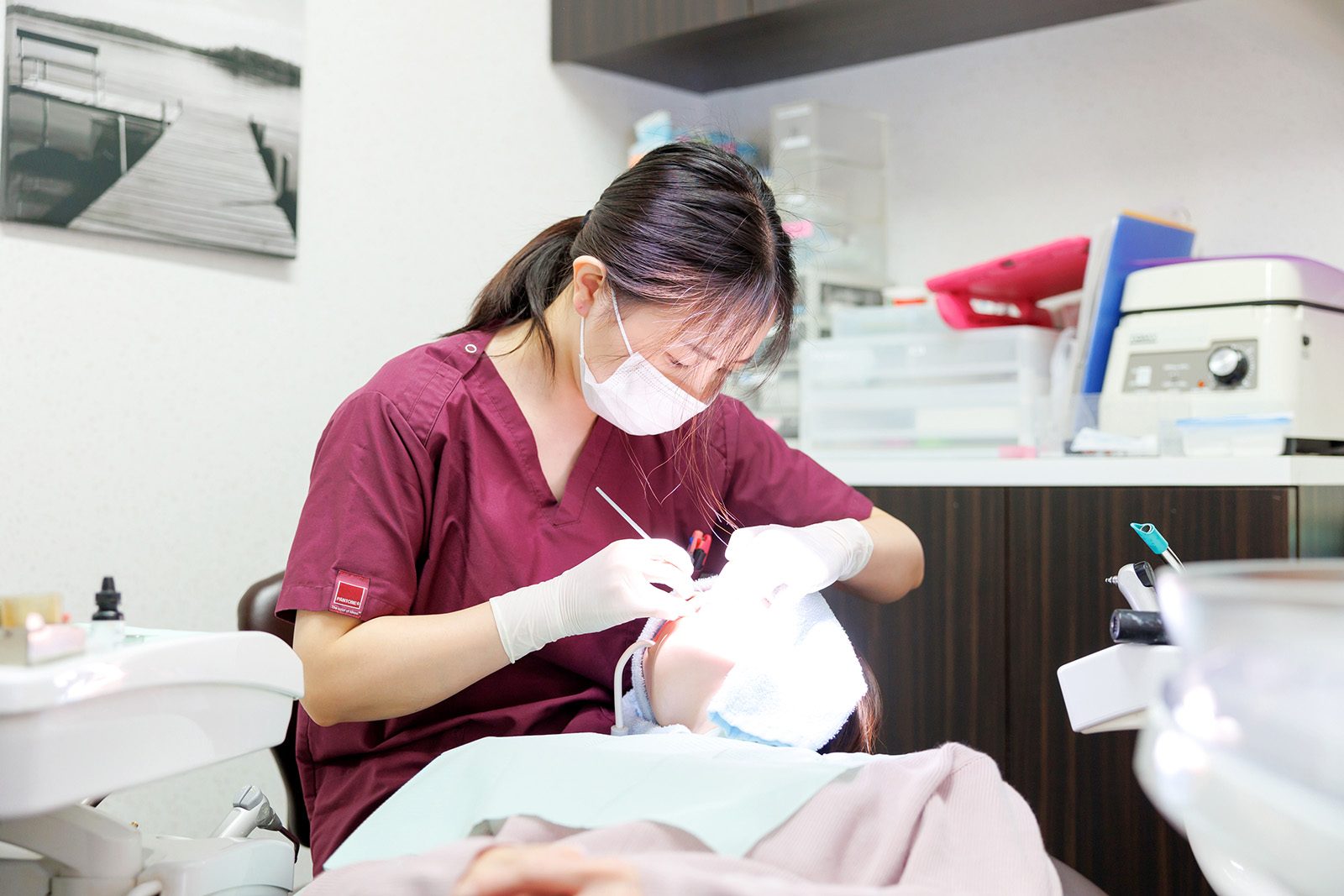
One type of professional cleaning at dental clinics is Air-Flow. A fine powder and water are sprayed onto the teeth to remove surface stains and bacterial film (biofilm). It is good at cleaning small areas that a toothbrush has difficulty reaching.
How it differs from whitening
Cleaning removes deposits from the tooth surface and brings teeth closer to their natural color. If you want to whiten the color of the tooth itself, whitening with agents is needed. Whitening is self-paid (not covered by insurance), and results and how long the whiteness lasts vary from person to person. We will look at your mouth and explain which option suits you.
Summary: if stains bother you, start with a professional cleaning
How easily stains form depends on your daily drinks, foods and lifestyle. In addition to preventive habits, keep your teeth clean with regular professional cleaning.
If tooth stains bother you, please feel free to book an appointment. ESCA Dental & Orthodontic Clinic is in the ESCA underground shopping mall, a 1-minute walk from the Shinkansen exit of JR Nagoya Station. Appointments by phone (+81-52-452-1255), online booking (Japanese) or LINE.
Main risks and side effects
- Whitening can make teeth temporarily sensitive. Results and how long they last vary from person to person, and crowns and fillings do not become whiter
- After professional cleaning such as Air-Flow, the gums may rarely have mild pain or bleeding
Frequently asked questions
Q. Can toothpaste remove tooth stains?
Light stains may become less noticeable with a toothpaste containing stain-removing ingredients. However, scrubbing too much with a highly abrasive toothpaste can damage the tooth surface, so for stubborn stains we recommend professional cleaning at a dental clinic.
Q. How often should I have a professional cleaning?
About every 3-6 months is a guide. For people who drink a lot of coffee or smoke, we may recommend a slightly shorter interval.
Q. Will cleaning make my teeth whiter?
Surface stains are removed, so your teeth get closer to their natural color. If you want to whiten the color of the teeth themselves, please consider whitening.
Related pages
Medical review
This article was reviewed by Katsuaki Takeuchi, DDS (Director; Board-certified oral surgeon, Japanese Society of Oral and Maxillofacial Surgeons), ESCA Dental & Orthodontic Clinic. It provides general information; please consult a dentist about your own condition.
Appointments and questions
Mon–Fri 10:00–13:00 / 14:30–19:30 · Sat & Sun 10:00–13:00 / 14:00–18:00 (open every other Sunday) · Closed on national holidays. Our staff mainly speak Japanese.