
Gummy Smile Surgery: Treatment Options by Cause and Their Risks
Published: 2026-09-08 · Updated: 2026-11-22 · Medically reviewed by Katsuaki Takeuchi, DDS (Director; Board-certified oral surgeon, Japanese Society of Oral and Maxillofacial Surgeons)
What you will learn
- Three causes of a gummy smile
- Main treatments for each cause (surgery, gum contouring, orthodontics) and their features
- The surgical process, and main risks and side effects

Does it bother you that a lot of your upper gums show when you smile? Do you find yourself covering your mouth with your hand in photos?
A condition in which more of the upper gums than usual show when smiling is called a "gummy smile". It generally refers to cases where several millimeters or more of the upper gums show when smiling. This article explains the causes of a gummy smile and treatment options, including surgery.
Three causes of a gummy smile
1. Very active upper lip muscles
If the muscle that lifts the upper lip (the levator labii superioris) moves a lot, the lip rises too far when you smile and the gums become noticeable.
2. The position of the skeleton (upper jawbone)
If the upper jawbone is long vertically or protrudes forward or downward, the teeth and gums sit lower and the gums show more easily.
3. The shape of the gums and teeth
If thick gums cover part of the teeth or the teeth look short, the gums look relatively large. A deep bite (deep overbite) may also be involved.
There is not always just one cause; several may overlap. Examining the cause first is the first step in choosing a treatment.
Main treatments for each cause
Lip muscle surgery (when muscles are the cause)
A small incision is made inside the upper lip, and part of the muscle that lifts the upper lip is cut or stitched shorter so that the lip does not rise too far. The surgery is relatively short, and because the wound is inside the mouth it is hard to see from outside. On the other hand, results vary from person to person, and the movement of the lip may feel unusual.
Gum contouring and crown lengthening (when the shape of the gums or teeth is the cause)
Excess gum covering the teeth is removed and, if needed, the bone is reshaped to balance the teeth and gums. The teeth look longer and the overall impression changes. The result depends on how much and how widely tissue is removed, so careful planning is needed.
Orthodontic treatment (when tooth position is the cause)
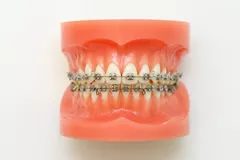
When the front teeth sit too low, orthodontic treatment can correct their position. One method uses anchor screws (small screws) to move the front teeth upward. Combining orthodontic correction of tooth position with gum treatment lowers the risk of relapse.
Jaw surgery (when the skeleton is the cause)
If the position of the upper jawbone is a major cause, surgery to cut the bone and reposition it (surgical orthodontics) may be considered. This requires hospitalization and general anesthesia, so it is done in cooperation with oral surgery departments at university hospitals and similar institutions.
The surgical process (an example for lip muscle surgery)
- Consultation and examination: we take photos and check how the muscles move when you smile
- Explanation of the treatment plan: we explain the method, period, cost and risks, and proceed only once you are satisfied
- Surgery: done under local anesthesia (or IV sedation, depending on your wishes and the procedure)
- After surgery: swelling may occur for about 1-2 weeks and gradually settles
- Follow-up: we check how the wound is healing and how the lip moves
Example fees
As an example at our clinic, improving a gummy smile with half-lingual orthodontics using anchor screws costs 165,000 yen and takes about 2-3 months. Results vary from person to person, and the period and cost change depending on your condition. Surgical fees differ by method, so we provide an estimate after the examination.
When choosing a treatment, the change in appearance is not the only consideration; the number of visits, the physical burden, the cost and how long the result lasts are also important. At our clinic, we explain both the advantages and the points to note for each method, and proceed with treatment only once you are satisfied.
Summary: start by examining the cause
The right treatment for a gummy smile differs by cause. First, have an examination to find out the cause, such as whether surgery is needed or whether orthodontics can improve it. If you are concerned, please feel free to consult us.
ESCA Dental & Orthodontic Clinic is in the ESCA underground shopping mall, a 1-minute walk from the Shinkansen exit of JR Nagoya Station. Appointments by phone (+81-52-452-1255), online booking (Japanese) or LINE.
Main risks and side effects
- After surgery, swelling, pain and bruising may occur
- Rarely, the surgical wound may become infected or bleed
- The movement of the upper lip or facial expression may change, and discomfort or numbness may occur
- After gum treatment, tooth roots may be exposed and become sensitive to cold
- Results vary from person to person and may relapse over time
Gummy smile treatment is self-paid (not covered by insurance). The fee above is an example of a standard fee and varies depending on your condition.
Frequently asked questions
Q. Is gummy smile surgery painful?
The surgery is done under local anesthesia, so pain during surgery is kept under control. Pain may occur after the anesthesia wears off, so we prescribe painkillers.
Q. When can I go back to work after surgery?
It depends on the method, but in many cases you can do desk work from the next day. We recommend not scheduling important events for the few days when swelling is most likely.
Q. Can it be treated without surgery?
Depending on the cause, orthodontic treatment alone may improve it. We examine you and explain whether surgery is needed.
Related pages
Medical review
This article was reviewed by Katsuaki Takeuchi, DDS (Director; Board-certified oral surgeon, Japanese Society of Oral and Maxillofacial Surgeons), ESCA Dental & Orthodontic Clinic. It provides general information; please consult a dentist about your own condition.
Appointments and questions
Mon–Fri 10:00–13:00 / 14:30–19:30 · Sat & Sun 10:00–13:00 / 14:00–18:00 (open every other Sunday) · Closed on national holidays. Our staff mainly speak Japanese.