
What Is the iTero Intraoral Scanner? Why Impressions Get Easier
Published: 2026-11-13 · Updated: 2026-11-22 · Medically reviewed by Katsuaki Takeuchi, DDS (Director; Board-certified oral surgeon, Japanese Society of Oral and Maxillofacial Surgeons)
What you will learn
- What kind of device iTero is
- What becomes easier compared with putty impressions
- Clear aligner simulations and points to note
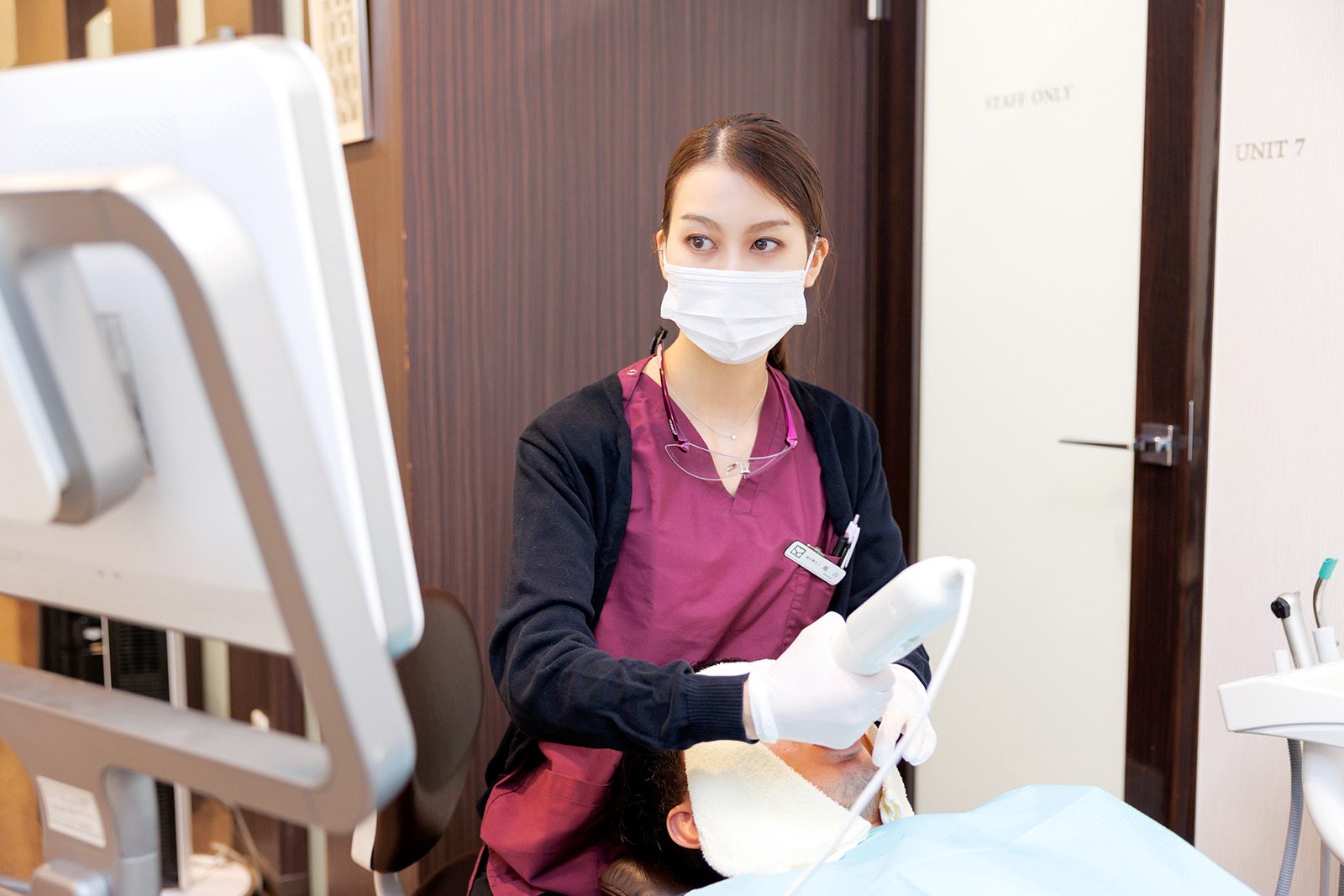
When people think of dental impressions, many imagine having a mouthful of putty-like material and waiting for it to set. For people with a strong gag reflex, it may have been an unpleasant experience.
At ESCA Dental & Orthodontic Clinic, we use the iTero intraoral scanner to reduce the burden of impressions. This article explains how iTero works and its advantages and points to note for patients.
What is iTero?
iTero is a device that records your tooth alignment and tooth shapes as digital data by moving a small pen-like camera over the surfaces of your teeth inside your mouth. The data is shown on a monitor right away as a three-dimensional (3D) image.
You can look at your own tooth alignment on screen together with us, which makes it easier to understand the condition of each tooth.
Main uses
- Impressions for clear aligner orthodontic appliances (such as Invisalign)
- Impressions for lingual (behind-the-teeth) braces
- Impressions for making fillings and crowns
- Recording the condition of your mouth (to see changes in bite, wear, etc.)
Why iTero makes impressions easier
With conventional impressions, impression material was loaded onto a tray, placed in the mouth, and you had to wait still for several minutes until it set. With iTero, the scanner is simply moved over your teeth.
- No putty-like material is used, so gagging is less likely
- Less of the taste and smell of materials and the discomfort of a full mouth
- The scanned images can be checked on the spot, and parts can be rescanned
- The data is saved, making it easier to compare changes before and after treatment
If you gag easily or find impressions difficult, please feel free to tell us when booking or at your consultation.
Treatment simulation for clear aligner orthodontics
Using data scanned with iTero, you can see an on-screen simulation of how your tooth alignment will change with clear aligner treatment. A benefit is that it helps you picture the goal before starting treatment.
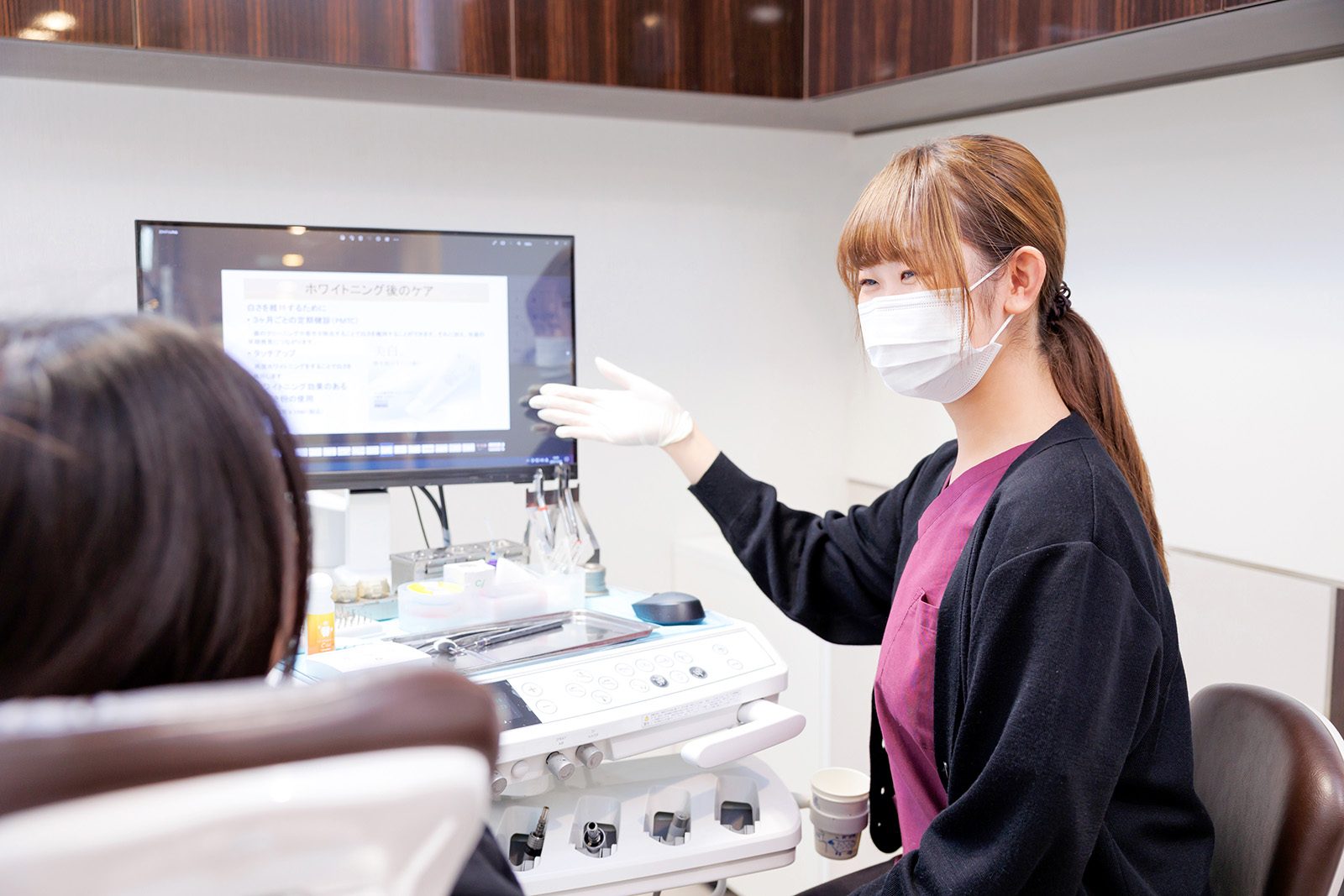
However, the simulation is only a guide to the plan. Tooth movement varies from person to person, and there is no promise that the actual result or treatment period will match the simulation. To keep treatment on plan, it is important to wear the aligners for the set time (at least 20 hours a day as a guide).
Invisalign aligners are medical devices that have not been approved under Japan's Pharmaceutical and Medical Device Act. Our clinic obtains the devices from Align Technology, Inc. (USA) under the responsibility of our dentists. Some aligner-type orthodontic devices have been approved in Japan. Invisalign is cleared by the U.S. FDA and used in many countries. Because it is an unapproved device, serious side effects are not covered by Japan's relief system for adverse drug reactions.
Cases where iTero cannot be used
Depending on the condition of your mouth and the type of filling or crown being made (such as those using metal), conventional impression material may be used. We may also change the method when there is a lot of bleeding or when a record is needed deep below the gumline. We will explain which impression method we use after examining you.
Summary: if you find impressions difficult, please consult us
With iTero, the burden of impressions is reduced and you can hear explanations of treatment while checking your own tooth alignment on screen. If you are considering clear aligner treatment or find impressions difficult, please feel free to consult us.
Orthodontic consultations can also be booked. ESCA Dental & Orthodontic Clinic is in the ESCA underground shopping mall, a 1-minute walk from the Shinkansen exit of JR Nagoya Station. Appointments by phone (+81-52-452-1255), online booking (Japanese) or LINE.
Main risks and side effects
- During orthodontic treatment, you may feel pain or discomfort as the teeth move
- If you do not wear the aligners for the set time, your teeth may not move as planned
- The tooth roots may become shorter or the gums may recede. After treatment, teeth may shift back if you do not use a retainer
Orthodontic treatment is self-paid (not covered by insurance). Fees vary depending on the appliance and treatment period, so we explain them after a detailed examination (see our fee list for standard fees).
Frequently asked questions
Q. How long does an iTero scan take?
It depends on your mouth, but a guide is a few minutes to about 10 minutes for the upper and lower teeth. You can also take breaks along the way.
Q. Does an iTero scan hurt?
The camera is only moved over the tooth surfaces, so most people do not find it painful. If keeping your mouth open is difficult, please let us know.
Q. Can I just see the simulation?
We can show it on request during a free orthodontic consultation. Please ask when you book.
Related pages
Medical review
This article was reviewed by Katsuaki Takeuchi, DDS (Director; Board-certified oral surgeon, Japanese Society of Oral and Maxillofacial Surgeons), ESCA Dental & Orthodontic Clinic. It provides general information; please consult a dentist about your own condition.
Appointments and questions
Mon–Fri 10:00–13:00 / 14:30–19:30 · Sat & Sun 10:00–13:00 / 14:00–18:00 (open every other Sunday) · Closed on national holidays. Our staff mainly speak Japanese.