
Why Teeth Are Removed for Orthodontics, and Non-Extraction Options
Published: 2025-11-11 · Updated: 2026-11-22 · Medically reviewed by Katsuaki Takeuchi, DDS (Director; Board-certified oral surgeon, Japanese Society of Oral and Maxillofacial Surgeons)
What you will learn
- Three reasons teeth are removed for orthodontics (space, mouth profile, bite)
- Teeth often removed (premolars, wisdom teeth) and how the choice is made
- Comparing with non-extraction orthodontics, and ways to make the gap less noticeable

At orthodontic consultations, we often hear people say they are worried after hearing teeth may need to be removed. It is very natural to feel reluctant about removing healthy teeth.
However, there are sound reasons for removing teeth in orthodontics. This article explains as clearly as possible why teeth are removed, which teeth are often removed, how the teeth are chosen, and how this compares with treatment without extraction.
Three reasons teeth are removed for orthodontics
1. To make space to align the teeth
A major cause of crooked teeth is teeth that are large for the size of the jaw, or a jaw that is small for the number of teeth. Because there is not enough room, the teeth overlap or are pushed forward or outward. In such cases, removing a few teeth to make room allows the remaining teeth to be aligned neatly.
2. To reduce a protruding mouth
For people with protruding front teeth or a mouth that looks pushed forward, using the space from extracted teeth to move the front teeth back is expected to give a neater mouth profile. The "E-line" (esthetic line) is often used as a guide for the side profile. It is a line connecting the tip of the nose and the tip of the chin, and lips touching this line or sitting slightly inside it are said to be a guide for a balanced profile. Because Japanese people tend to have lower noses, lips slightly inside the line often look natural.
3. To improve the bite
If the size of the upper and lower teeth or the position of the jaws is out of balance, the load tends to concentrate on certain teeth. Removing teeth only in the upper or lower jaw to balance them aims for a bite where all the teeth share the work of chewing. If the jawbones are significantly misaligned, "surgical orthodontics", which combines orthodontics with jaw surgery, may be considered.
Teeth often removed and how they are chosen
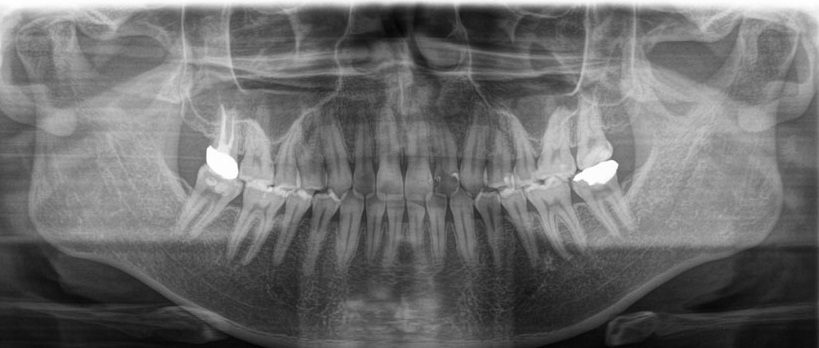
The teeth most often removed in orthodontics are the premolars, the fourth or fifth teeth from the front. The front teeth are important for appearance and the molars at the back for chewing force, so removing the premolars in between minimizes the effect on appearance and chewing. Premolars are also similar in shape, so having one fewer makes little visible difference after alignment.
However, it is not always the fourth tooth that is removed. In the detailed examination, we check the condition of each tooth in addition to the skeleton and the amount of space needed. For example, if there is a tooth whose nerve has been removed, a tooth with a large crown, or a tooth whose gums have receded and is not expected to last long, we may consider removing that tooth instead of a healthy one. Which tooth to remove is decided by considering appearance, bite and the lifespan of the teeth together.
When wisdom teeth are removed
With methods that create space by moving the back teeth backward, wisdom teeth may prevent the teeth from moving, so they may be removed first. Removal is also considered if wisdom teeth are pushing on the teeth in front and causing crowding. Wisdom tooth extraction can be done at our clinic.
Comparing with non-extraction orthodontics
Depending on the method, it may be possible to create space without removing teeth. Methods include very slightly reducing the sides of the teeth, widening the dental arch, and moving the back teeth backward. A non-extraction plan may suit people with mild crowding or who are not concerned about a protruding mouth.
On the other hand, if space is severely lacking and the teeth are forced into line without extraction, the teeth may be pushed forward so the mouth looks protruding, or the teeth may move outside the bone and the gums may recede. It is important not to decide only on "extraction or not", but to compare including the final mouth profile and the effect on the gums.
Ways to deal with a noticeable gap after extraction
Some people are concerned about the gap visible from the front after extraction, until it closes. Depending on the treatment method, a temporary (dummy) tooth may be attached in the gap to make it less noticeable. You can also choose less visible lingual appliances or clear aligner appliances. Please discuss any concerns before starting treatment.
Summary
Teeth are removed in orthodontics to make space to align the teeth, reduce a protruding mouth and improve the bite. Which teeth and how many are removed, and whether a non-extraction method can be chosen, depend on each person's tooth alignment and the result they want. Based on the results of a detailed examination, we also explain the difference between treatment with and without extraction, so please ask us anything.
ESCA Dental & Orthodontic Clinic is in the ESCA underground shopping mall, a 1-minute walk from the Shinkansen exit of JR Nagoya Station. Appointments by phone (+81-52-452-1255), online booking (Japanese) or LINE.
Main risks and side effects
- During orthodontic treatment, you may feel pain or discomfort as the teeth move
- If brushing is not thorough, the risk of tooth decay and gum disease increases
- The tooth roots may become shorter (root resorption) or the gums may recede. After treatment, teeth may shift back if you do not use a retainer
- After an extraction, swelling, pain and bleeding may occur
Orthodontic treatment is self-paid (not covered by insurance). Fees vary depending on the appliance and treatment period, so we explain them after a detailed examination (see our fee list for standard fees).
Frequently asked questions
Q. Do teeth always have to be removed for orthodontics?
No. Depending on the amount of space and the condition of the mouth, treatment without extraction may be possible. Based on the examination results, we explain the difference between treatment with and without extraction.
Q. Will the gap from the extracted tooth remain at the end?
The gap is closed by moving the teeth during orthodontic treatment. If treatment proceeds as planned, it is normally closed by the end of treatment.
Q. Do wisdom teeth also need to be removed?
They may be removed when moving the back teeth backward or when they are disturbing the tooth alignment. It depends on how they have grown in and the treatment method.
Related pages
Medical review
This article was reviewed by Katsuaki Takeuchi, DDS (Director; Board-certified oral surgeon, Japanese Society of Oral and Maxillofacial Surgeons), ESCA Dental & Orthodontic Clinic. It provides general information; please consult a dentist about your own condition.
Appointments and questions
Mon–Fri 10:00–13:00 / 14:30–19:30 · Sat & Sun 10:00–13:00 / 14:00–18:00 (open every other Sunday) · Closed on national holidays. Our staff mainly speak Japanese.