
Why Do Dentists Take Intraoral Photos? How and 5 Benefits
Published: 2026-09-16 · Updated: 2026-11-22 · Medically reviewed by Katsuaki Takeuchi, DDS (Director; Board-certified oral surgeon, Japanese Society of Oral and Maxillofacial Surgeons)
What you will learn
- When our clinic takes intraoral photos
- How the 5-6 photos are taken and what each one shows
- The benefits of intraoral photos
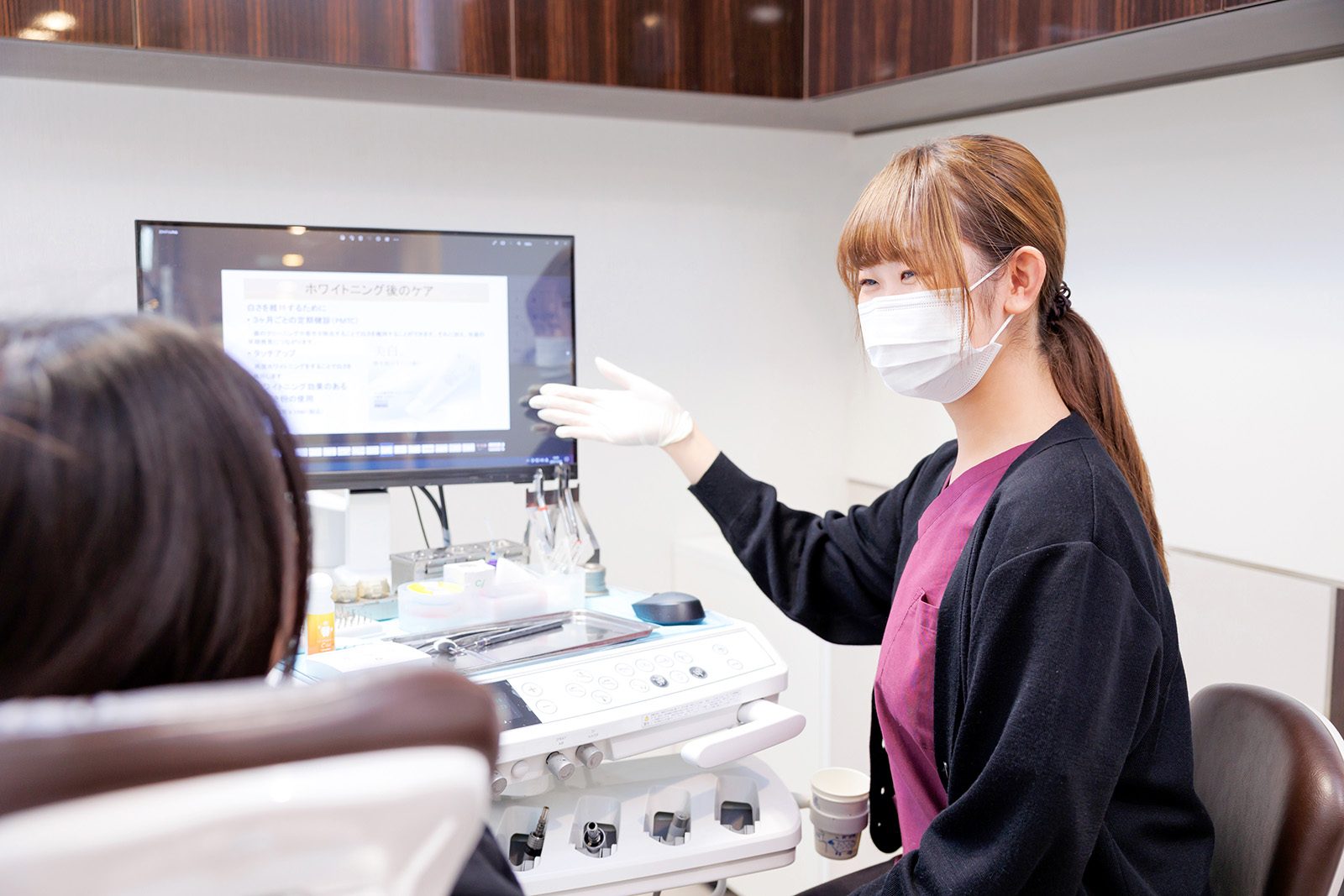
Have you ever had photos taken at a dental clinic with a device holding your mouth open? You may have wondered why.
This article explains the intraoral photos (photos of the inside of the mouth) we take at our clinic: when we take them, how, and the benefits for patients.
When we take intraoral photos
- At your first visit
- At regular checkups (for example, every 3 months)
- For patients in orthodontic treatment, at adjustment visits about once a month
Taking photos at the same angles and in the same number each time makes it easier to see what has changed since last time.
How are they taken? What 5-6 photos show
Intraoral photos are taken using a device that holds the mouth open (a cheek retractor) and special mirrors, for a total of 5-6 photos. At our clinic, we use a single-lens reflex (SLR) camera to record finer details.
1. Front view with the mouth closed
Taken while biting firmly on the back teeth. It shows where you usually bite and how the upper and lower front teeth overlap.
2 and 3. Right and left views with the mouth closed
We check the bite of the back teeth on each side, where plaque builds up, and the condition of the gums.
4 and 5. Biting surfaces of the upper and lower teeth, using a mirror
With the mouth wide open, we photograph the biting surfaces of the upper and lower teeth reflected in a mirror. These show decay, the condition of fillings and tooth alignment.
6. For orthodontic patients, a photo from below as well
A photo is taken looking up from below while biting, to check how the front teeth overlap and how the teeth are moving.
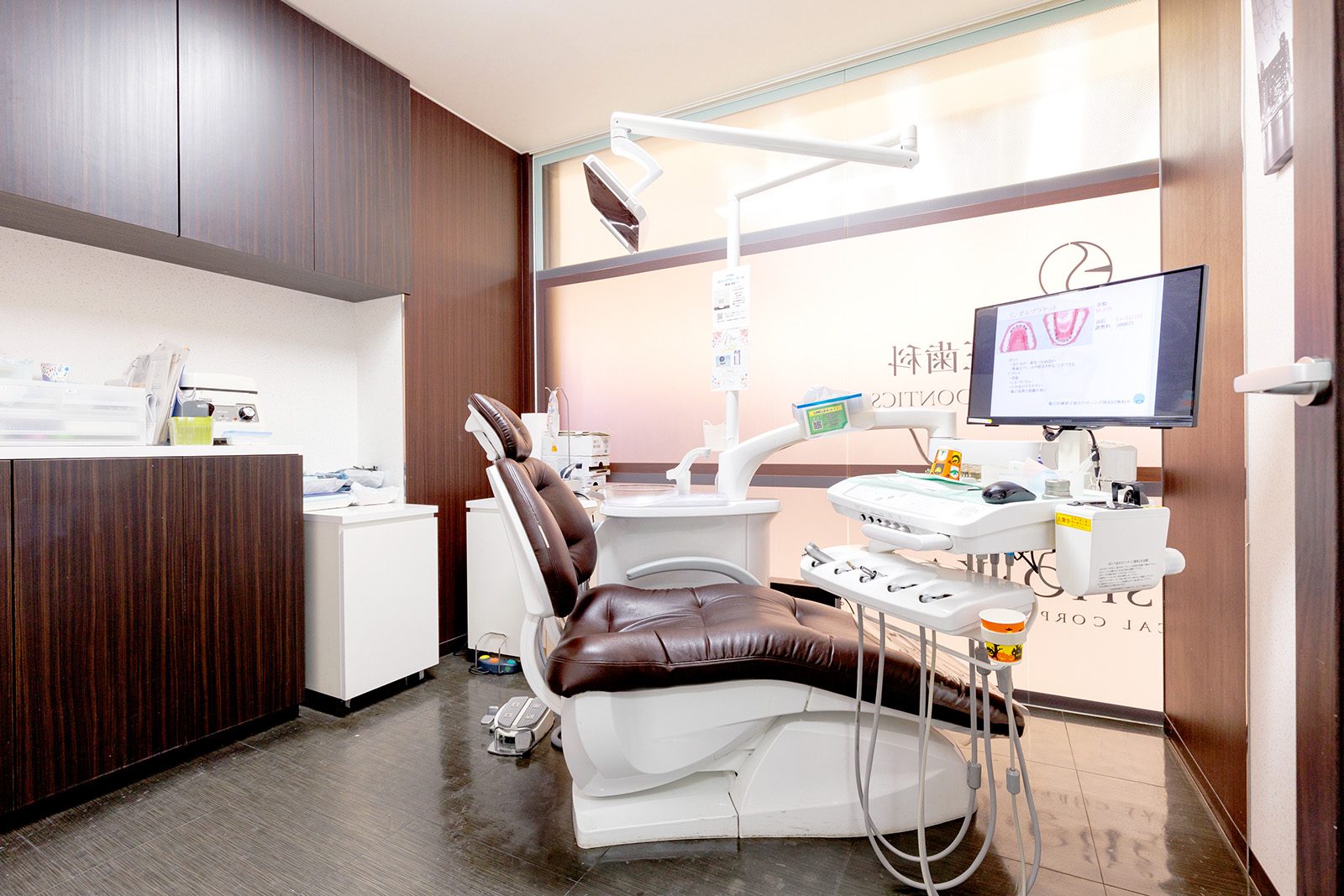
Five benefits of intraoral photos
1. You can see areas you cannot see yourself
Areas that are hard to see even with a mirror, such as back teeth and the backs of teeth, can be explained while we look at them together on a monitor.
2. Explanations are easier to understand, and treatment decisions easier to make
Because we explain while showing you the actual photos, such as "this is decay" or "there is gum inflammation here", it is easier to understand why treatment is needed and how it will be done.
3. The condition of decay and gum disease can be recorded
Keeping photos of your teeth and gums makes it easier to notice small changes.
4. Helpful for monitoring areas not treated right away
For areas that are monitored rather than drilled right away, such as early decay, comparing photos lets us check whether they are progressing.
5. Helpful for sharing information between dentists and hygienists
Your dentist and dental hygienist can share the condition of your mouth through the same photos, which supports consistent treatment and care.
Photos are used only for treatment and records, and are never shared outside without the patient's consent.
Why we take photos during orthodontic treatment
In orthodontic treatment, teeth move little by little, so by comparing photos at each visit we check whether the teeth are moving as planned and whether the bite is changing. Photos also make it easier to check for plaque left around appliances and for swollen gums. Patients can also see how their tooth alignment has changed in the photos, which makes it easier to feel the progress of treatment.
At regular checkups, we also do the following along with photos
- Examination for tooth decay and gum disease (such as the depth of gum pockets)
- X-rays as needed
- Tartar removal and professional cleaning
- Checking where plaque tends to be left behind, and brushing advice
Comparing photos with last time, we check together where plaque tends to be left and how the gums have changed. Knowing the habits of your own mouth makes daily brushing easier.
Summary: seeing your mouth in photos makes care easier
Intraoral photos are an important record for understanding the condition of your mouth correctly and proceeding with treatment and care that you are satisfied with. Taking the photos takes only a few minutes. If keeping your mouth open is difficult, please let us know.
ESCA Dental & Orthodontic Clinic is in the ESCA underground shopping mall, a 1-minute walk from the Shinkansen exit of JR Nagoya Station. Appointments by phone (+81-52-452-1255), online booking (Japanese) or LINE.
Main risks and side effects
- During orthodontic treatment, you may feel pain or discomfort as the teeth move
- If brushing is not thorough, the risk of tooth decay and gum disease increases
- The tooth roots may become shorter (root resorption) or the gums may recede. After treatment, teeth may shift back if you do not use a retainer
Orthodontic treatment is self-paid (not covered by insurance). Fees vary depending on the appliance and treatment period, so we explain them after a detailed examination (see our fee list for standard fees).
Frequently asked questions
Q. Does taking intraoral photos hurt?
Because a device is used to hold the mouth open, you may feel your lips and cheeks being stretched, but we take care to avoid pain and take the photos quickly. If it is uncomfortable, please raise your hand to let us know.
Q. Can I see the photos?
Yes. We show them on a monitor and explain while you look at them with us.
Q. How are they different from X-rays?
Intraoral photos record the color, shape and plaque on the surface of the teeth and gums. X-rays examine parts that cannot be seen, such as the inside of the teeth and the bone. They have different purposes, so we use them together.
Related pages
Medical review
This article was reviewed by Katsuaki Takeuchi, DDS (Director; Board-certified oral surgeon, Japanese Society of Oral and Maxillofacial Surgeons), ESCA Dental & Orthodontic Clinic. It provides general information; please consult a dentist about your own condition.
Appointments and questions
Mon–Fri 10:00–13:00 / 14:30–19:30 · Sat & Sun 10:00–13:00 / 14:00–18:00 (open every other Sunday) · Closed on national holidays. Our staff mainly speak Japanese.