
When Should Children First See a Dentist? First Visits and Check-Ups
Published: 2024-03-05 · Updated: 2026-11-22 · Medically reviewed by Katsuaki Takeuchi, DDS (Director; Board-certified oral surgeon, Japanese Society of Oral and Maxillofacial Surgeons)
What you will learn
- When children should have their first dental visit
- What is done at regular check-ups, and how often to come
- How to help children not be afraid of the dentist, and what you can do at home
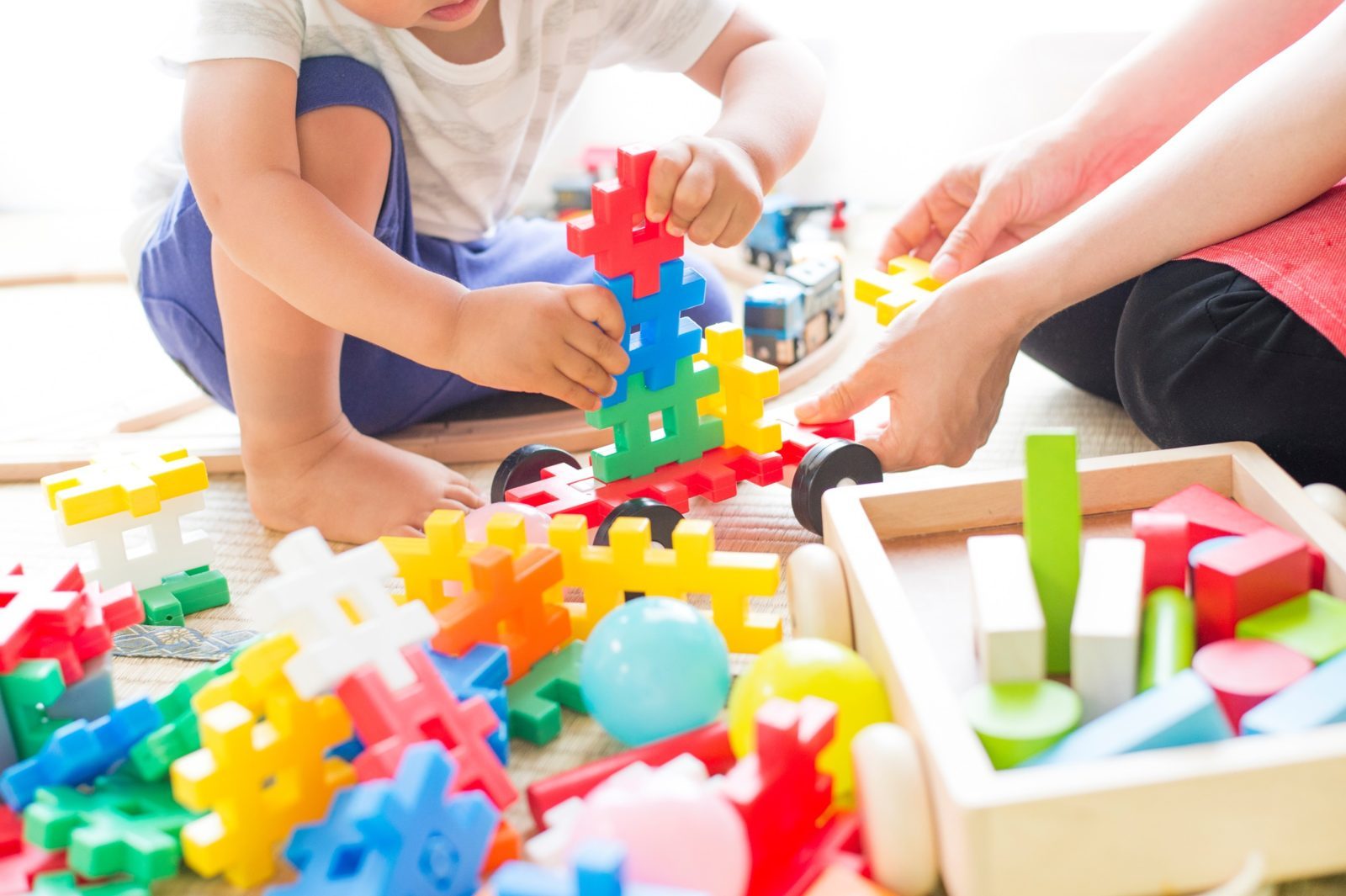
Do you think you only need to take your child to the dentist once they have a cavity? Oral health in childhood also leads to healthy teeth in adulthood. Visiting a dental clinic before any cavities appear helps prevent tooth decay and lets children get used to the dentist.
In this article, we explain when children should first see a dentist, what is done at regular check-ups, and tips to help children not be afraid of the dentist.
When should the first visit be?
We recommend a child's first dental check-up when the first tooth comes in, or around age 1. Coming to the dental clinic from this age lets us watch how the teeth come in and grow from early on, making it easier to find problems while they are still small.
Local governments in Japan also offer dental check-ups, such as at 18 months and 3 years, but these are far apart, so regular check-ups at your family dental clinic in addition give peace of mind. When the first visit happens while the child has no cavities and nothing hurts, it is easier for them to feel that the dentist is "not a scary place."
What we do at the first check-up
- Checking how the teeth are coming in, the number of teeth, alignment and bite
- Checking for tooth decay and the condition of the gums
- Advice on brushing at home and finishing brushing by parents
- Dietary advice, such as how to use fluoride and how to give snacks and drinks
- Consultation about habits of concern, such as thumb-sucking or pacifier use
With small children, we sometimes look inside the mouth while they sit on a parent's lap. It is fine if they cry. We never force treatment, and we place importance on helping them get used to us first.
Cavity-causing bacteria and how decay forms
It is said that a newborn baby's mouth has almost no bacteria that cause tooth decay. Cavity-causing bacteria are passed on gradually, mainly through family members' saliva. However, being infected with the bacteria does not mean decay forms right away. Tooth decay occurs when three conditions overlap: cavity-causing bacteria, sugar and teeth.
Baby teeth and newly erupted permanent teeth have enamel that is still soft, so they decay more easily and faster than adult teeth. Along with daily brushing, fluoride applications at the dental clinic can be expected to strengthen the tooth surface and weaken the action of cavity-causing bacteria.
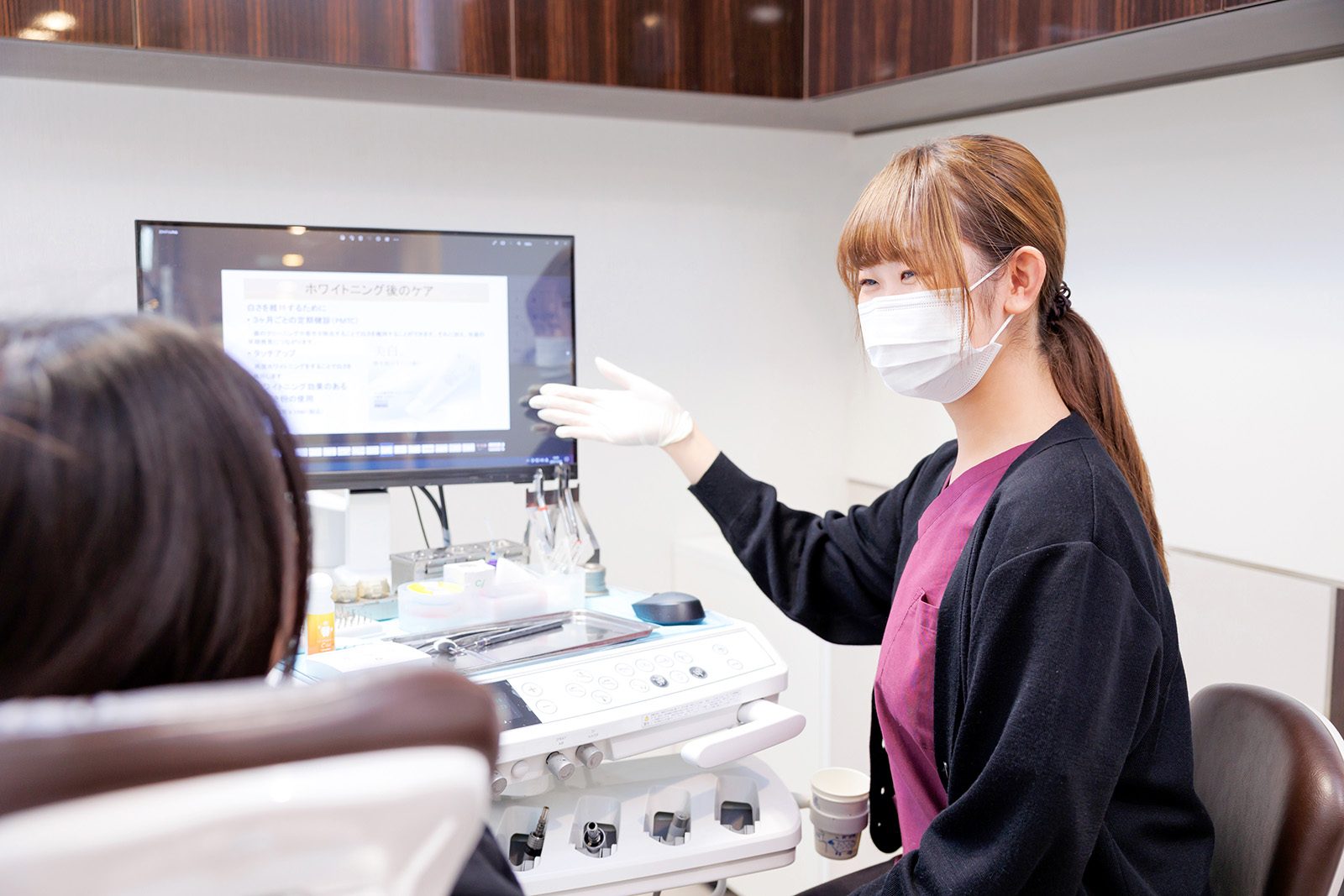
How often to have check-ups and what they include
For children, regular check-ups about once every 3 to 6 months are a general guide. Depending on the child, such as when they are prone to decay or their teeth are changing, we may shorten the interval.
At check-ups, along with checking for decay, we clean the teeth, apply fluoride, check for plaque left after brushing and practice brushing, and check alignment and how the teeth are changing. If small cavities are found early, treatment often involves less drilling and less burden on the child. Coming regularly helps the dental clinic become a familiar place for children, "a place to go to protect your teeth."
Preparing so your child is not afraid of the dentist
Many children are afraid of the dentist. Before the first visit, gently explaining what will happen, such as "Let's go and have your teeth counted" or "Let's get your teeth nice and shiny," helps them feel at ease. Avoid phrases like "They will do something that hurts" or "If you don't behave, I'll take you to the dentist," because these strengthen their fear.
After the visit, praise them a lot: "You did a great job." Building up fun, positive experiences is the quickest way to reduce reluctance toward the dentist. Parents going for regular check-ups themselves and letting children see them brush also sets a good example.
For children who play sports
For children who play contact sports, consider using a mouthguard to prevent injuries to the teeth and lips. If your child hits a tooth, see a dentist early even if it looks unchanged.
Summary
We recommend starting dental visits when the first tooth comes in or around age 1, and then continuing regular check-ups about once every 3 to 6 months. Coming before any cavities appear helps both prevent tooth decay and let children get used to the dentist. If you have any concerns about your child's mouth, please feel free to consult us.
ESCA Dental & Orthodontic Clinic is in the ESCA underground shopping mall, a 1-minute walk from the Shinkansen exit of JR Nagoya Station. Appointments by phone (+81-52-452-1255), online booking (Japanese) or LINE.
Frequently asked questions
Q. I am worried my child will cry at the dentist.
It is natural for young children to cry. We never force treatment and place importance on helping them get used to us first, so please come with peace of mind.
Q. How often should my child have check-ups?
About once every 3 to 6 months is a general guide. We adjust the interval depending on how prone your child is to decay and when their teeth are changing.
Q. Are local government dental check-ups not enough?
Local government check-ups are spaced far apart, so having regular check-ups and fluoride applications at your family dental clinic in addition makes it easier to find decay early.
Medical review
This article was reviewed by Katsuaki Takeuchi, DDS (Director; Board-certified oral surgeon, Japanese Society of Oral and Maxillofacial Surgeons), ESCA Dental & Orthodontic Clinic. It provides general information; please consult a dentist about your own condition.
Appointments and questions
Mon–Fri 10:00–13:00 / 14:30–19:30 · Sat & Sun 10:00–13:00 / 14:00–18:00 (open every other Sunday) · Closed on national holidays. Our staff mainly speak Japanese.