
What Is Invisalign? How Clear Aligners Work, Steps and Cautions
Published: 2025-01-30 · Updated: 2026-11-22 · Medically reviewed by Katsuaki Takeuchi, DDS (Director; Board-certified oral surgeon, Japanese Society of Oral and Maxillofacial Surgeons)
What you will learn
- How Invisalign (clear aligner orthodontics) works and the steps of treatment
- Advantages and cautions, and who it does and does not suit
- Using aligners in daily life: school, sports and musical instruments
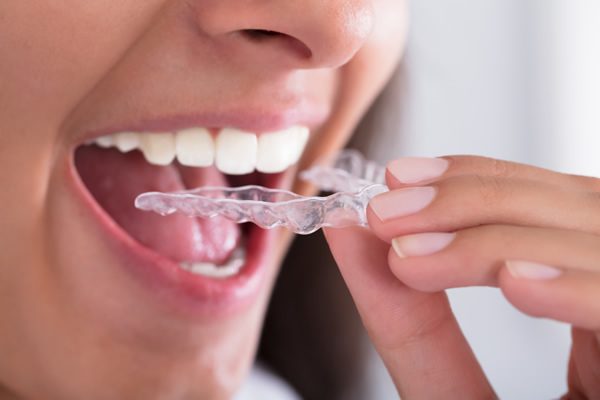
"I'd like orthodontic treatment, but I don't want braces to be noticeable." Patients with this concern often ask us about Invisalign, a clear aligner system. Teeth are moved little by little by switching clear aligners in a set order.
In this article, we explain how Invisalign works, the steps of treatment, its advantages and cautions, and how to use aligners in daily life.
Invisalign aligners are medical devices that have not been approved under Japan's Pharmaceutical and Medical Device Act. Our clinic obtains the devices from Align Technology, Inc. (USA) under the responsibility of our dentists. Some aligner-type orthodontic devices have been approved in Japan. Invisalign is cleared by the U.S. FDA and used in many countries. Because it is an unapproved device, serious side effects are not covered by Japan's relief system for adverse drug reactions.
How Invisalign works
Before treatment begins, we scan the inside of your mouth to create data on your teeth, and plan the tooth movements up to the goal on a computer. Following this plan, a series of aligners, each slightly different in shape, is made, and you switch to a new one roughly every 1 to 2 weeks. Each aligner is shaped slightly ahead of your current tooth position, so wearing it applies force to the teeth and moves them gradually.
Small tooth-colored bumps called "attachments" may be placed on the tooth surface. They act like handles that the aligner can grip, making it easier to move teeth in the intended direction. Aligners can move teeth from the front to the back, and depending on the case, they can also be used for orthodontics involving tooth extraction.
ClinCheck (treatment simulation)
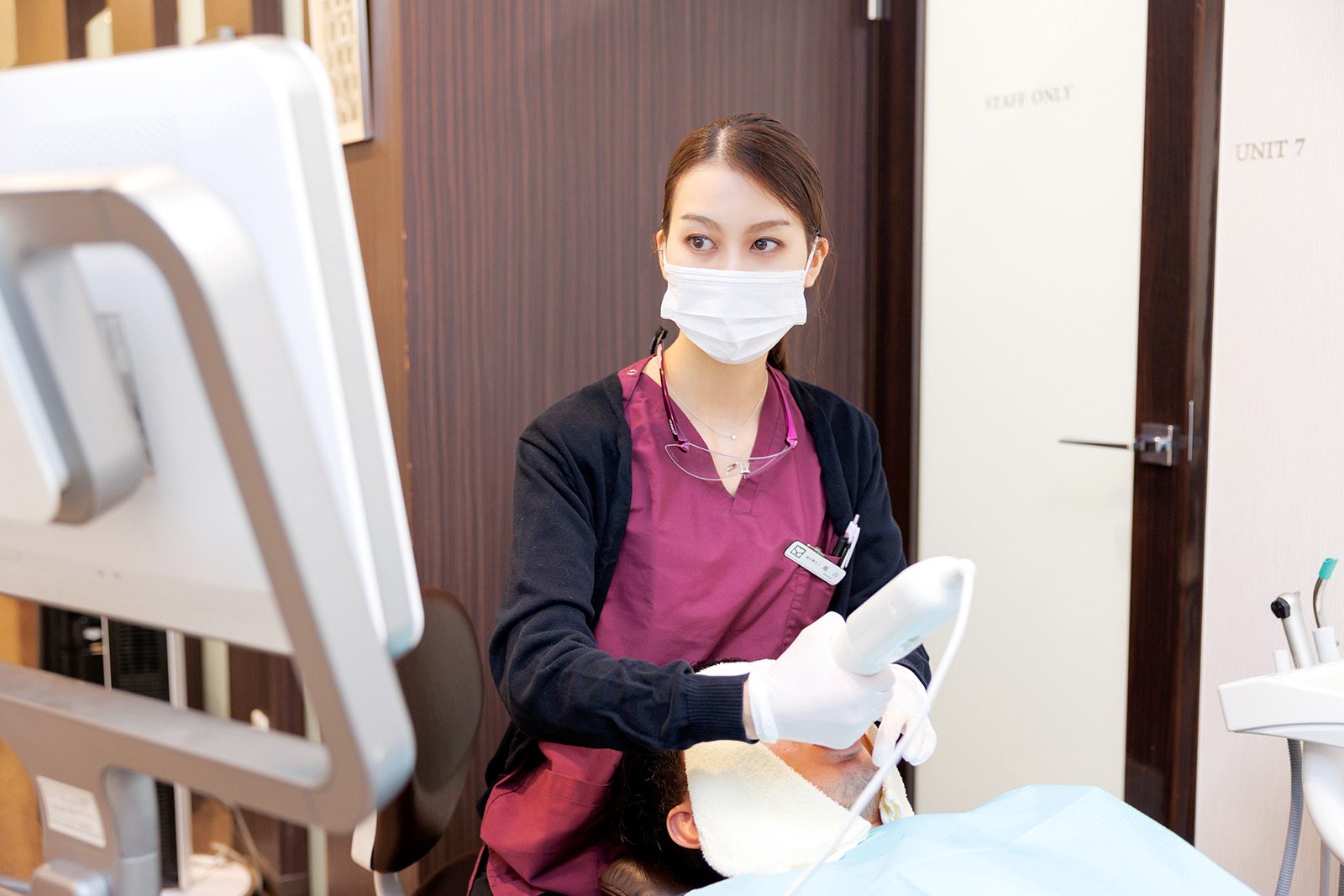
ClinCheck is a 3D simulation, based on the scan data, that shows which teeth will move, in what order and how far. You can also see how many aligners are planned, which teeth will have attachments, and whether small amounts of enamel will be polished between teeth to make space (IPR). Before treatment starts, you and the dentist look at the screen together and agree on the expected result. However, the simulation is a plan, and actual tooth movement differs from person to person.
Steps of treatment
- Orthodontic consultation: we listen to your concerns and explain the options and the approximate length and cost
- Detailed examination: X-rays, photos and an intraoral scan for a thorough assessment
- Diagnosis and plan: we explain the results and the treatment plan (ClinCheck)
- Start of treatment: we hand over your aligners and show you how to put them in, take them out and clean them
- Check-ups: about once every 1 to 3 months to check how the teeth are moving
- Retention: after the teeth are aligned, you wear a retainer to prevent them from moving back
If you have cavities or gum disease, these are treated or cleaned first. If teeth need to be extracted, this is done according to the plan. If the actual tooth movement drifts from the plan during treatment, new aligners may be made to adjust it (additional aligners).
Advantages and cautions
Advantages of Invisalign include that the clear aligners are hard to notice, and that you can take them out to eat and brush, so you can eat as usual and clean every corner more easily. Because no metal is used, it is also an option for people concerned about metal allergies. It is said that mouth sores from appliances rubbing the inside of the cheeks or lips, as can happen with wire braces, are less common. Right after switching to a new aligner, you may feel a tight, aching pressure or discomfort, but this usually settles within a few days.
There are also points to be careful about. The most important is to wear the aligners about 20 to 22 hours a day, removing them only to eat and brush. Because you can take them out yourself, wearing them for too short a time can keep teeth from moving as planned and make treatment take longer. If you snack often or drink a lot of sweet drinks, you tend to remove the aligners more often, so take care. In addition, when teeth are severely misaligned, aligners alone may not be enough, and we may recommend wire braces or a combination of methods.
What about minor correction of the front teeth only?
For people who only want to straighten slightly crooked front teeth, an option that limits the teeth to be moved and the number of aligners may be chosen. However, it is difficult to correct the bite including the back teeth this way, so we explain which method suits you after an examination.
What about school, sports and musical instruments?
The aligners are only about 0.5 mm thick, so you can talk and exercise while wearing them. Wind instruments may feel harder to play at first, but most people get used to it. As a rule, the only drink you should have with aligners in is water. Sports drinks and juice can collect sugar and acid inside the aligner and cause cavities, so take the aligners out to drink them.
At school or work, ideally brush your teeth after eating before putting the aligners back in. If you cannot brush, rinse your mouth well with water first. Keep removed aligners in their case rather than wrapping them in a tissue, so they don't get lost or thrown away by mistake.
Summary
Invisalign moves teeth by switching clear aligners in order. The aligners are hard to notice and can be removed for eating and brushing, while keeping to the wearing time is the key to progressing as planned. The method that suits you depends on your teeth. If you would like to know whether clear aligners suit you, please feel free to ask at an orthodontic consultation.
ESCA Dental & Orthodontic Clinic is in the ESCA underground shopping mall, a 1-minute walk from the Shinkansen exit of JR Nagoya Station. Appointments by phone (+81-52-452-1255), online booking (Japanese) or LINE.
Main risks and side effects
- During orthodontic treatment, you may feel pain or discomfort as teeth move
- If brushing is insufficient, the risk of cavities and gum disease increases
- Tooth roots may shorten (root resorption) or gums may recede. After treatment, teeth may move back if a retainer is not used
- If aligners are worn for too short a time, teeth may not move as planned and treatment may take longer
- Depending on the teeth, aligners alone may not be enough, and other appliances may be combined
Orthodontic treatment is self-paid (not covered by insurance). Costs vary with the appliance and treatment length, so we explain them after the detailed examination (see our fee table for standard costs).
Frequently asked questions
Q. How many hours a day do I wear Invisalign?
The guideline is about 20 to 22 hours a day, removing the aligners only to eat and brush. If they are worn for too short a time, teeth may not move as planned.
Q. Can any kind of misalignment be treated with Invisalign?
For some teeth, aligners alone may not be enough. In that case, we may recommend wire braces or a combination of methods. We explain this after an examination.
Q. Can I drink with the aligners in?
As a rule, only water. Sweet or hot drinks can cause cavities or warp and stain the aligners, so take them out to drink.
Medical review
This article was reviewed by Katsuaki Takeuchi, DDS (Director; Board-certified oral surgeon, Japanese Society of Oral and Maxillofacial Surgeons), ESCA Dental & Orthodontic Clinic. It provides general information; please consult a dentist about your own condition.
Appointments and questions
Mon–Fri 10:00–13:00 / 14:30–19:30 · Sat & Sun 10:00–13:00 / 14:00–18:00 (open every other Sunday) · Closed on national holidays. Our staff mainly speak Japanese.