
What Is Lingual Orthodontics? Pros and Cons of Hidden Braces
Published: 2018-09-09 · Updated: 2026-11-22 · Medically reviewed by Katsuaki Takeuchi, DDS (Director; Board-certified oral surgeon, Japanese Society of Oral and Maxillofacial Surgeons)
What you will learn
- How lingual (behind-the-teeth) orthodontics works, and full vs. upper-only lingual
- Advantages such as being hard to see and less prone to cavities, and drawbacks such as speech difficulty
- Tips for getting used to speaking and the feel on your tongue

For people who want orthodontic treatment but are very concerned about the appliance being seen, lingual orthodontics, in which the appliance is fitted on the back of the teeth, is one option. It is also called behind-the-teeth or inside braces.
The appliance is barely visible from the front, but there are points to know, such as difficulty speaking and cost. In this article, we explain how lingual orthodontics works, its advantages and drawbacks, and who it suits.
How lingual orthodontics works
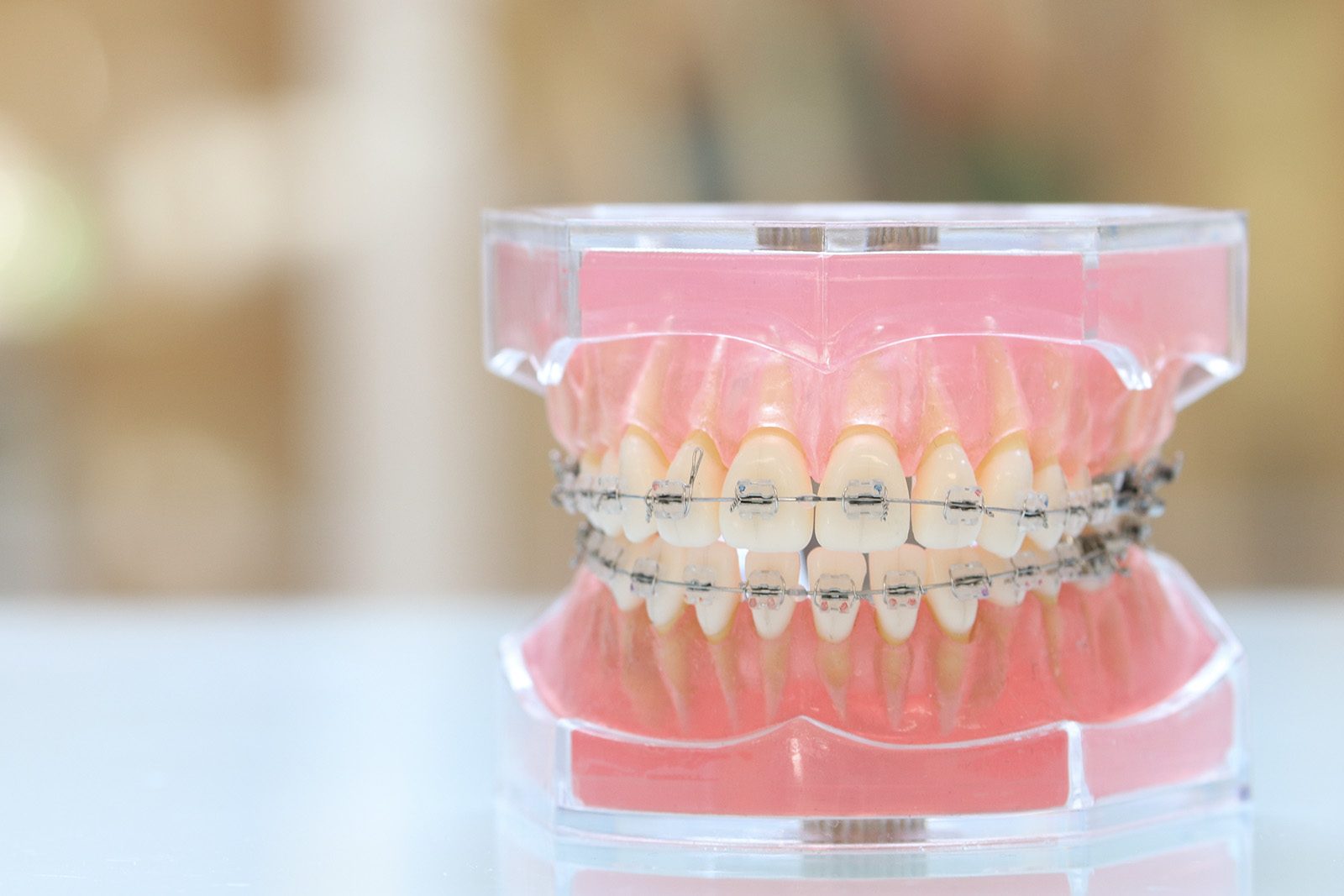
In lingual orthodontics, small parts called brackets are bonded to the back (tongue side) of the teeth, and a wire is passed through them to move the teeth. The mechanism is the same as for front-side braces, but because the backs of the teeth have a more complex shape than the fronts, the appliance is often custom-made to fit each person's teeth. At our clinic, we scan the shape of your teeth and aim to make an appliance that is as thin as possible and follows your teeth.
Both upper and lower teeth, or upper teeth only?
There is a method with lingual braces on both upper and lower teeth (full lingual), and a method with lingual braces only on the more visible upper teeth and front-side braces on the lower teeth (half lingual). The lower front teeth are often less visible than the upper front teeth when speaking, so people who want to balance appearance with cost and ease of speaking sometimes choose upper-only lingual. White, less noticeable appliances can also be used on the front of the lower teeth.
Advantages of lingual orthodontics
The biggest advantage is that the appliance is barely visible from the front. Even people who speak in front of others at work, work in customer service, or are often photographed are less likely to have others notice they are in treatment. It is also chosen by people with important events coming up, such as a wedding.
In addition, saliva flows easily over the backs of the teeth, so lingual braces are said to be less prone to cavities in some respects than front-side braces. Unlike clear aligners, there is no need to manage putting them in and taking them out, so you do not have to keep track of wearing time yourself.
Drawbacks of lingual orthodontics
Difficulty speaking and a strange feeling on the tongue
Because the appliance touches the tongue, at first some sounds such as s and t may be hard to say, and the tongue may rub and become sore. Most people get used to it within a few weeks. A thin appliance can be expected to reduce the discomfort. If your tongue gets a sore, covering the appliance with orthodontic wax makes it more comfortable.
Cost, brushing and technique
Because the appliance is often custom-made for your teeth, it generally costs more than front-side braces. The backs of the teeth are also hard to see in a mirror and plaque is easily missed, so careful brushing with tools such as a single-tuft brush is needed. Positioning and adjusting the appliance also requires fine technique, so we recommend consulting a clinic experienced in lingual orthodontics.
Who lingual orthodontics suits
- People who don't want others to see their appliance
- People who find it hard to manage putting aligners in and taking them out
- People with teeth that are difficult to treat with clear aligners, such as severe crowding or cases needing extraction
On the other hand, lingual appliances can be difficult to fit for people with very small teeth, or with a deep bite in which the lower teeth easily hit the appliance. People who play wind instruments or speak a lot at work may also be bothered by the difficulty speaking until they get used to it. We will consider together, based on examination results, whether it suits your teeth and lifestyle.
Summary
Lingual orthodontics leaves the appliance barely visible from the front and suits people concerned about their appearance during treatment. On the other hand, there are drawbacks such as difficulty speaking, cost and harder brushing. At the consultation, we explain the options, including upper-only lingual and comparison with other less noticeable appliances.
ESCA Dental & Orthodontic Clinic is in the ESCA underground shopping mall, a 1-minute walk from the Shinkansen exit of JR Nagoya Station. Appointments by phone (+81-52-452-1255), online booking (Japanese) or LINE.
Main risks and side effects
- During orthodontic treatment, you may feel pain or discomfort as teeth move
- If brushing is insufficient, the risk of cavities and gum disease increases
- Tooth roots may shorten (root resorption) or gums may recede. After treatment, teeth may move back if a retainer is not used
- Lingual appliances touch the tongue, so speaking may be difficult and the tongue may become sore
Orthodontic treatment is self-paid (not covered by insurance). Costs vary with the appliance and treatment length, so we explain them after the detailed examination (see our fee table for standard costs).
Frequently asked questions
Q. Does lingual orthodontics take longer than front-side braces?
It depends on the teeth, but being lingual does not necessarily make it much longer. We explain the treatment length after the examination.
Q. How long does it take to get used to speaking?
It varies, but many people get used to it within a few weeks. Practicing speaking, for example by reading aloud, helps you adjust faster.
Q. Can I whiten my teeth during lingual orthodontics?
Because the fronts of the teeth are free, in-office whitening at a dental clinic may be possible.
Medical review
This article was reviewed by Katsuaki Takeuchi, DDS (Director; Board-certified oral surgeon, Japanese Society of Oral and Maxillofacial Surgeons), ESCA Dental & Orthodontic Clinic. It provides general information; please consult a dentist about your own condition.
Appointments and questions
Mon–Fri 10:00–13:00 / 14:30–19:30 · Sat & Sun 10:00–13:00 / 14:00–18:00 (open every other Sunday) · Closed on national holidays. Our staff mainly speak Japanese.