
Why Do My Gums Hurt When Pressed? 5 Causes and When to See Us
Published: 2025-12-22 · Updated: 2026-11-22 · Medically reviewed by Katsuaki Takeuchi, DDS (Director; Board-certified oral surgeon, Japanese Society of Oral and Maxillofacial Surgeons)
What you will learn
- Five possible causes of gums that hurt when pressed
- Signs that you should see a dental clinic soon
- Daily care and lifestyle points to prevent pain

Have you ever felt a sharp pain when pressing your gums with a finger, or when your toothbrush touches them? Many people have. When the pain is mild and goes away quickly, it is easy to leave it alone.
However, gum pain has several possible causes, and some of them gradually get worse if left untreated. In this article, we introduce possible causes of gums that hurt when pressed, signs that you should see us soon, and prevention you can do every day.
Five possible causes of gums that hurt when pressed
1. Gingivitis and periodontitis (gum disease)
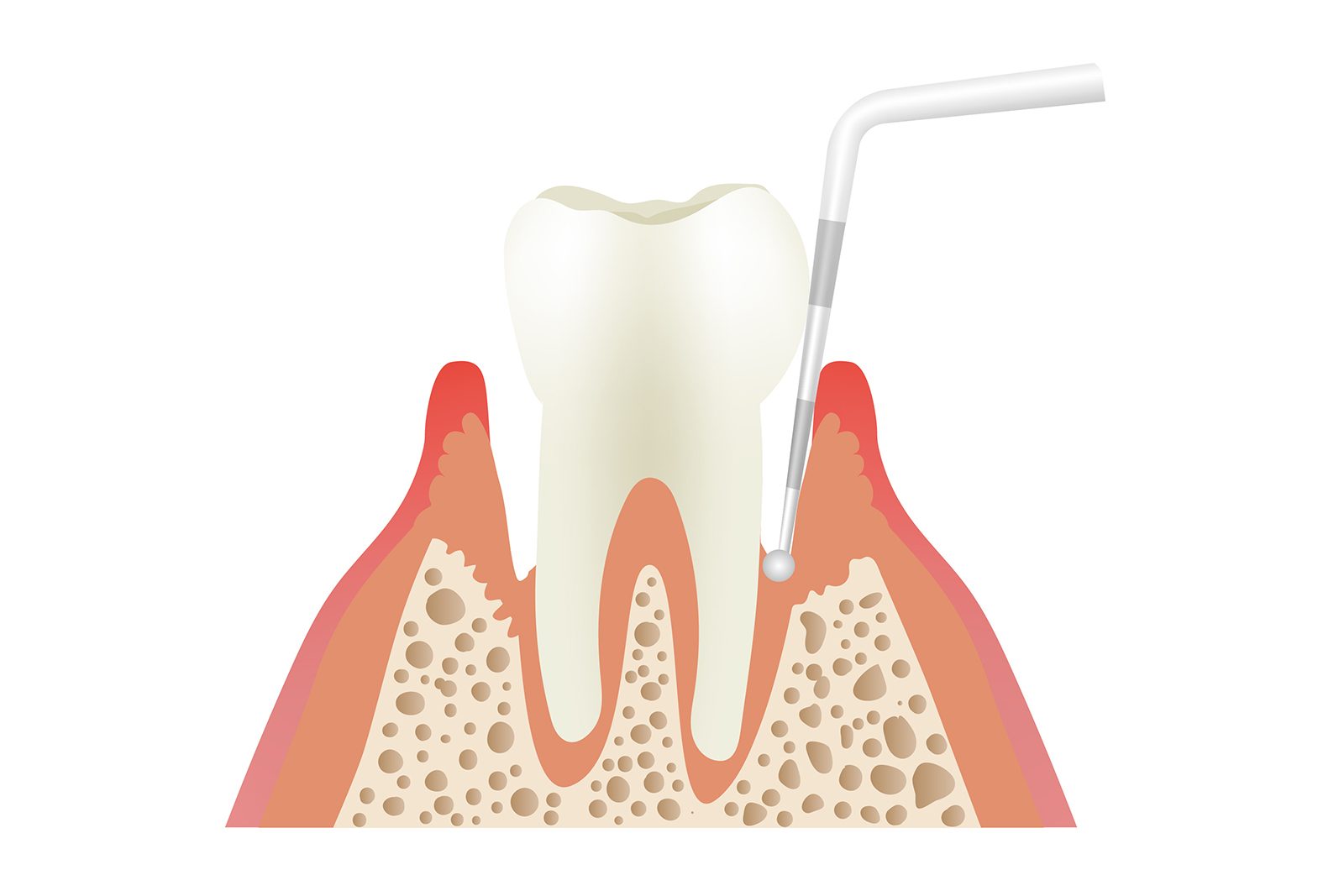
The most common cause is gum inflammation. When plaque builds up where the teeth meet the gums, bacteria in it inflame the gums. This is gingivitis. At this stage, the gums may be red and swollen or bleed when brushed, but often there is not much pain.
If left untreated, it progresses to periodontitis, where the inflammation spreads to the bone that supports the teeth. With periodontitis, in addition to swelling and bleeding, there may be pain when pressed, and pus may come out.
2. Gum injuries
Small cuts can form in the gums from hard foods such as rice crackers, a fish bone, or brushing too hard. The cut itself often heals in a few days, but if bacteria get in, the inflammation can become stronger and the pain can last longer.
3. Debris in the gum pockets
When debris and tartar build up in the gap between the teeth and gums (periodontal pocket), bacteria increase, the gums swell, and they may hurt when pressed. Back teeth and places where teeth overlap are hard to reach with a toothbrush, so debris is easily left there. Even food stuck between the teeth can press on the gums and cause pain.
4. Inflammation around a wisdom tooth (pericoronitis)
When a wisdom tooth at the very back grows in at an angle or only partly comes through, debris collects in the gap with the surrounding gum, and inflammation occurs easily. This is called pericoronitis. Besides swelling and pain, there may be difficulty opening the mouth or pain when swallowing.
5. Infection at the root tip (apical periodontitis)
When decay goes deep and the tooth nerve dies, bacteria can spread to the tip of the root and inflame the surrounding bone and gums. In this case, pressing the gum near the root tip may hurt a lot, or a pimple-like bump (an outlet for pus) may form on the gum. It can also occur in a tooth that had its nerve removed before.
See a dental clinic soon in these cases
If gum pain is temporary and goes away quickly, it may heal on its own. However, in the following cases inflammation or disease may be hidden, so see us soon.
- Pain when pressed lasts for more than a few days
- The gums are swollen or there is pus
- You have a fever, or the swelling has spread to your face
- Your gums bleed every time you brush or eat
- A tooth is loose, or it hurts to bite
Especially if you have a fever or facial swelling, the inflammation may have spread beyond the gums. Do not put up with it; please consult us as soon as possible. At the clinic, we check the condition of your gums and the depth of the gum pockets, take X-rays of the roots and bone if needed, and give treatment that matches the cause.
What to be careful of until your visit
Touching the painful spot repeatedly with your finger or tongue, or poking it with a toothpick, can make the inflammation worse. Do not stop brushing; brush gently with a soft toothbrush to keep your mouth clean. While the gums are swollen, avoid long hot baths, drinking alcohol and hard exercise as much as possible, because better blood flow can make the pain worse. Even if over-the-counter painkillers relieve the pain, the cause has not been treated, so please still see a dentist.
Daily care to prevent gum pain
Most gum problems can be prevented with daily care. Place the toothbrush lightly where the teeth meet the gums, and brush with small movements. There is no need to scrub hard. Using floss or interdental brushes between the teeth makes it much easier to remove debris.
In addition, have a regular checkup every 3–6 months, with tartar removal and cleaning. In your diet, it is also important to get a good balance of nutrients that support gum health, such as vitamin C and protein.
Summary
Pain when pressing the gums is easy to dismiss, but it may be a sign of gum disease, a wisdom tooth problem, or a disease at the root of a tooth. Treatment differs depending on the cause, so if the pain continues, do not judge it yourself; it is important to have it checked at a dental clinic early. Keep your gums healthy with careful daily care and regular checkups.
ESCA Dental & Orthodontic Clinic is in the ESCA underground shopping mall, a 1-minute walk from the Shinkansen exit of JR Nagoya Station. Appointments by phone (+81-52-452-1255), online booking (Japanese) or LINE.
Frequently asked questions
Q. Should I see a dentist if my gums only hurt when pressed and are not swollen?
If the pain continues for several days, we recommend a visit. There may be causes that are hard to see, such as inflammation at the root tip.
Q. Should I stop brushing when my gums hurt?
If you stop, debris builds up and the inflammation can get worse. Use a soft toothbrush and brush the painful area especially gently.
Q. Is it fine if over-the-counter painkillers relieve the pain?
Painkillers only relieve the pain temporarily; they do not treat the cause. Even after the pain goes away, have the cause checked at a dental clinic.
Medical review
This article was reviewed by Katsuaki Takeuchi, DDS (Director; Board-certified oral surgeon, Japanese Society of Oral and Maxillofacial Surgeons), ESCA Dental & Orthodontic Clinic. It provides general information; please consult a dentist about your own condition.
Appointments and questions
Mon–Fri 10:00–13:00 / 14:30–19:30 · Sat & Sun 10:00–13:00 / 14:00–18:00 (open every other Sunday) · Closed on national holidays. Our staff mainly speak Japanese.