
Bleeding Gums: Should You Stop Brushing? Causes and What to Do
Published: 2026-09-01 · Updated: 2026-11-22 · Medically reviewed by Katsuaki Takeuchi, DDS (Director; Board-certified oral surgeon, Japanese Society of Oral and Maxillofacial Surgeons)
What you will learn
- Main causes of bleeding gums
- Why not brushing makes things worse, and how to brush gently
- Other warning signs besides bleeding, and when to see a dentist

Have your gums ever bled when you brushed or flossed? Many people think, "It bleeds, so maybe I should not brush there."
In this article, we explain the causes of bleeding gums and the right way to deal with bleeding.
Main causes of bleeding gums
Most bleeding from the gums is caused by gum inflammation due to plaque that has built up where the teeth meet the gums. Bacteria in plaque left behind after brushing make the gums red and swollen, so they bleed easily with even slight stimulation. This condition is called gingivitis, and if it progresses further, it becomes gum disease (periodontitis), which affects even the bone supporting the teeth.
Other possible causes
- Brushing hard with a stiff toothbrush
- Hormonal changes (during pregnancy, puberty and so on) making the gums more prone to swelling
- Plaque building up around ill-fitting fillings or crowns
- Feeling unwell, or the effects of blood-thinning medications
Not brushing when your gums bleed makes things worse
Bleeding is a sign that plaque remains in that spot and inflammation has developed. If you avoid brushing there, even more plaque builds up and the inflammation gets worse. There is no need to scrub hard, but it is important to brush carefully with gentle pressure.
When plaque is removed properly, bleeding often starts to decrease in as little as 1 to 2 weeks.
How to brush gently when your gums bleed easily
- Use a soft toothbrush
- Hold the toothbrush lightly, like a pen
- Place the bristle tips where the teeth meet the gums and move them with small strokes
- Do not push floss hard into the gums; move it up and down along the side of the tooth
- After brushing, check in a mirror that no plaque remains

Bleeding is a cue to review your care early. If bleeding continues after about 2 weeks of careful brushing, tartar may have formed. Tartar cannot be removed by brushing, so have it removed at a dental clinic.
Other warning signs besides bleeding
- The gums are swollen, red or puffy
- Something like pus comes out when you press the gums
- Bad breath is a concern
- Teeth are loose or hurt when you bite
- The gums have receded and the teeth look longer
If you have these signs, gum disease may be progressing. Have your gums checked at a dental clinic early.
What we do at the dental clinic
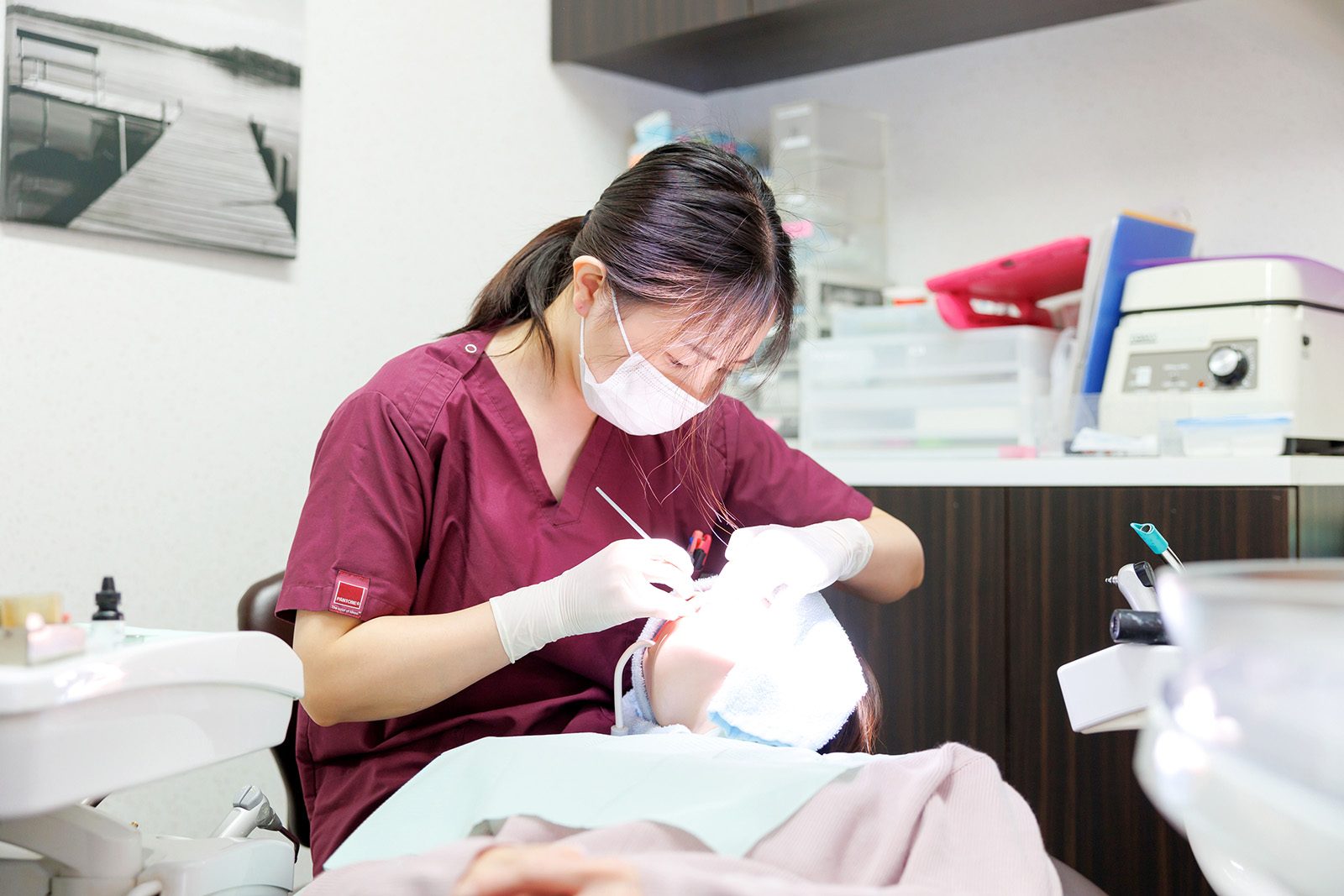
At the dental clinic, we check the condition of your gums and bone by measuring periodontal pocket depth and taking X-rays, and we remove tartar and clean your teeth. We also advise you on how to brush the areas that bleed easily.
Daily habits to prevent bleeding gums
- Once a day, take your time and brush carefully (before bed is recommended)
- Use floss or interdental brushes every day
- Cut down on smoking (it reduces blood flow to the gums and makes inflammation harder to notice)
- Sleep well and avoid building up stress
- Have a checkup and cleaning about once every 3 to 6 months
In people who smoke, blood flow to the gums is reduced, so the gums may not bleed easily even when inflamed, and gum disease may be noticed late. Do not assume all is well just because there is no bleeding; have regular checkups.
Also, people with diabetes are more prone to gum disease, and gum disease treatment is said to have a good effect on blood sugar control. If you have a medical condition, please feel free to consult us as well.
Summary: if your gums bleed, keep brushing gently and carefully
Bleeding gums are almost always a sign of gum inflammation. Do not stop brushing; keep caring for your gums carefully with gentle pressure. If bleeding continues, or you have swelling or pain, please feel free to consult us.
ESCA Dental & Orthodontic Clinic is in the ESCA underground shopping mall, a 1-minute walk from the Shinkansen exit of JR Nagoya Station. Appointments by phone (+81-52-452-1255), online booking (Japanese) or LINE.
Main risks and side effects
- After tartar removal, teeth may be sensitive for a while, or the gums may tighten so that gaps between teeth become more noticeable
- Advanced gum disease may require gum surgery, which can cause swelling, pain and bleeding
Frequently asked questions
Q. My gums bleed more easily since I became pregnant. Is that all right?
During pregnancy, hormones make the gums more prone to swelling (pregnancy gingivitis). Brush gently and carefully when you feel well. During the stable middle period of pregnancy, you can also have cleaning at a dental clinic.
Q. Should I use a medicated mouthwash if my gums bleed?
A mouthwash with antibacterial ingredients can be used as a supplement, but plaque can only be removed by brushing. The basis is first removing plaque with brushing and flossing.
Q. My gums take a long time to stop bleeding. Is it a disease?
It is usually due to gum inflammation, but if bleeding is hard to stop or you bruise easily, a general medical condition or medication may be involved. If you are concerned, please consult a dental clinic or a physician.
Related pages
Medical review
This article was reviewed by Katsuaki Takeuchi, DDS (Director; Board-certified oral surgeon, Japanese Society of Oral and Maxillofacial Surgeons), ESCA Dental & Orthodontic Clinic. It provides general information; please consult a dentist about your own condition.
Appointments and questions
Mon–Fri 10:00–13:00 / 14:30–19:30 · Sat & Sun 10:00–13:00 / 14:00–18:00 (open every other Sunday) · Closed on national holidays. Our staff mainly speak Japanese.