
What Is Tooth Sensitivity? Causes, Self-Care and Treatment
Published: 2026-02-24 · Updated: 2026-11-22 · Medically reviewed by Katsuaki Takeuchi, DDS (Director; Board-certified oral surgeon, Japanese Society of Oral and Maxillofacial Surgeons)
What you will learn
- How tooth sensitivity happens
- Main causes of tooth sensitivity, and how to tell it apart from decay
- Self-care, and treatment at the dental clinic

A sharp twinge when you drink something cold or brush your teeth. This may not be tooth decay but tooth sensitivity (dentin hypersensitivity).
Tooth sensitivity is a common symptom said to be experienced by many adults. In this article, we explain how it happens and its causes, self-care, and treatment at the dental clinic.
How tooth sensitivity happens
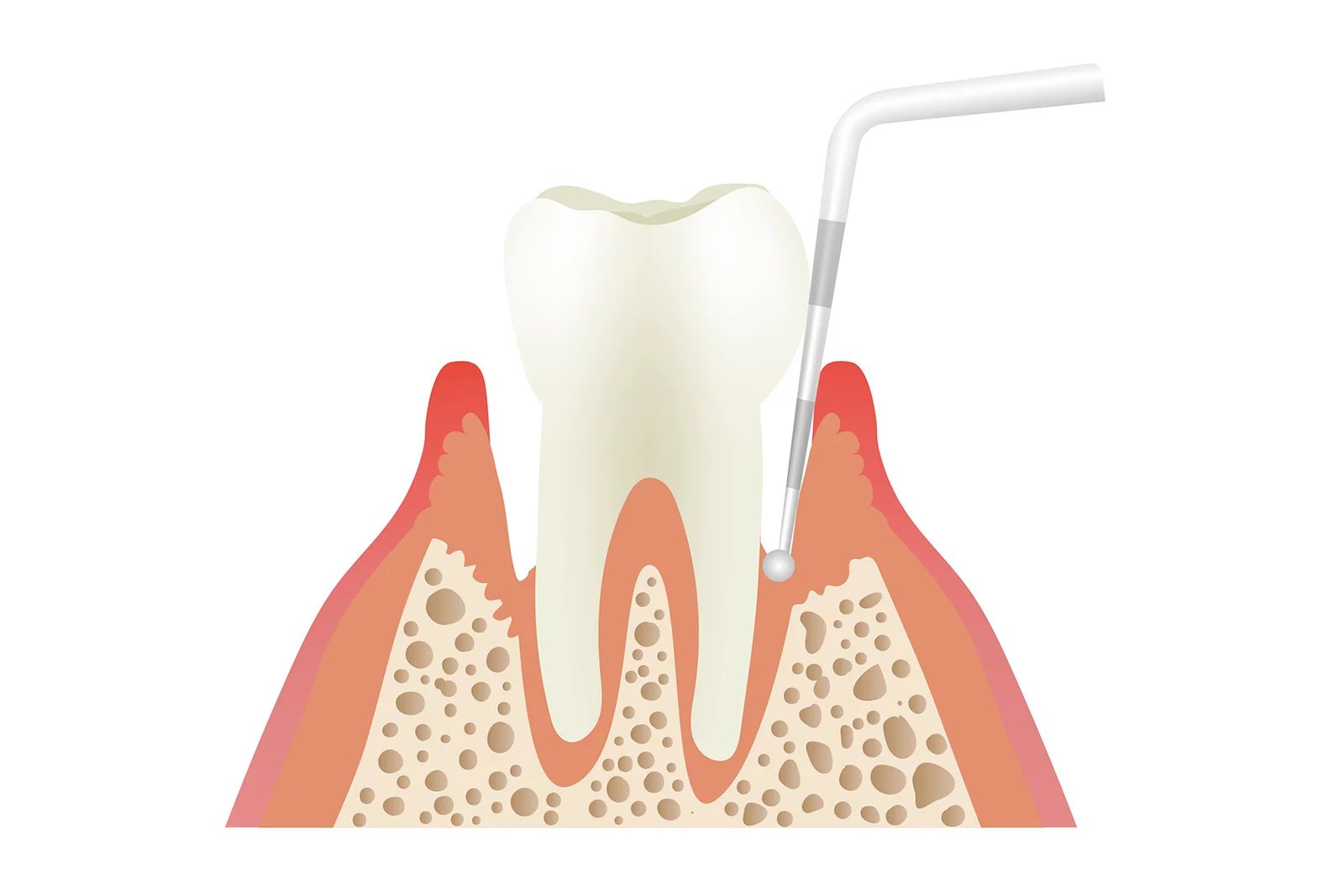
The surface of the tooth is covered with hard enamel. The dentin inside has many tiny tubes (dentinal tubules) that connect to the nerve.
When the enamel wears down, or the gums recede and the base of the tooth is exposed, the dentin is laid bare. Then stimuli such as cold, hot or sweet things, or toothbrush bristles, travel through the tiny tubes to the nerve, and you feel a twinge. A key feature is that the twinge lasts only a moment and goes away as soon as the stimulus is gone.
Main causes of tooth sensitivity
- Brushing with strong pressure (worn enamel and receding gums)
- Grinding and clenching (chipping or wear at the base of the teeth)
- Receding gums due to gum disease
- Too much acidic food and drink (the tooth surface dissolves)
- Temporary sensitivity after whitening or tartar removal
In fact, people who brush very hard to take care of their teeth can be more likely to get tooth sensitivity. Brushing hard with a stiff toothbrush gradually wears away the base of the teeth.
How to tell it apart from tooth decay
With tooth sensitivity, the twinge usually lasts only a moment and goes away as soon as the stimulus is gone. With tooth decay, on the other hand, the sensitivity may last longer, the tooth may hurt even without any stimulus, or sweet things may cause a sharp pain. However, it is hard to tell them apart yourself, and sensitivity and decay may occur at the same time. If sensitivity continues, have it checked at a dental clinic.
When tooth sensitivity tends to occur
Tooth sensitivity may feel stronger depending on the season or your condition. Teeth are more likely to be sensitive when you breathe in cold air in winter, have cold drinks or ice cream, or when the toothbrush touches the base of a tooth.
Teeth may also be temporarily sensitive after tartar removal or whitening. This usually settles in a few days to a few weeks, but please consult us if it lasts a long time. After gum disease treatment, when swelling goes down, the base of the teeth may be exposed and become more sensitive.
Self-care you can do
- Use a toothpaste for sensitive teeth (ingredients such as potassium nitrate help stop stimuli from reaching the nerve)
- Brush with a soft toothbrush without pressing hard
- Do not sip acidic drinks (soda, sports drinks, vinegar and so on) over a long time
- Right after acidic food or drinks, do not brush hard; rinse your mouth with water
- If you notice grinding or clenching, consult a dental clinic
Toothpaste for sensitive teeth does not work right away; with continued daily use, symptoms can be expected to ease gradually. If nothing changes after about 2 weeks of use, we recommend a visit.
Treatment at the dental clinic
- Applying medicine or a coating to the sensitive area
- Filling worn areas at the base of the teeth with white resin
- Making a mouthpiece for sleep (night guard) if you grind or clench
- Adjusting the bite
- Treating gum disease
If symptoms are strong and do not settle with other methods, we may consider removing the nerve. However, removing the nerve makes the tooth more brittle, so we start with methods that keep the nerve as much as possible.
Summary
Tooth sensitivity occurs when several causes overlap, such as how you brush, grinding, gum disease and diet. It is a symptom that can often be eased with measures suited to the cause. If sensitivity continues, or you are wondering whether it is tooth decay, please feel free to consult us.
ESCA Dental & Orthodontic Clinic is in the ESCA underground shopping mall, a 1-minute walk from the Shinkansen exit of JR Nagoya Station. Appointments by phone (+81-52-452-1255), online booking (Japanese) or LINE.
Main risks and side effects
- If a sensitive area is filled with resin, the resin may wear or come off
- The effect of medicine or coatings may weaken over time, and repeated treatment may be needed
- Removing the nerve makes the tooth brittle and more likely to crack
Frequently asked questions
Q. Does tooth sensitivity go away on its own?
The surface of the dentin may seal up and the symptoms may settle naturally. However, if the cause (hard brushing, grinding and so on) remains, it may come back.
Q. How long does toothpaste for sensitive teeth take to work?
With continued daily use, symptoms can be expected to ease gradually. If nothing changes after about 2 weeks, see a dentist to check for other causes such as decay.
Q. Should I avoid brushing sensitive areas?
If you do not brush, debris builds up and causes decay and gum disease. Brush gently with a soft toothbrush without pressing hard.
Medical review
This article was reviewed by Katsuaki Takeuchi, DDS (Director; Board-certified oral surgeon, Japanese Society of Oral and Maxillofacial Surgeons), ESCA Dental & Orthodontic Clinic. It provides general information; please consult a dentist about your own condition.
Appointments and questions
Mon–Fri 10:00–13:00 / 14:30–19:30 · Sat & Sun 10:00–13:00 / 14:00–18:00 (open every other Sunday) · Closed on national holidays. Our staff mainly speak Japanese.