
At What Age Do People Start Losing Teeth? Trends by Age Group
Published: 2026-04-24 · Updated: 2026-11-22 · Medically reviewed by Katsuaki Takeuchi, DDS (Director; Board-certified oral surgeon, Japanese Society of Oral and Maxillofacial Surgeons)
What you will learn
- A guide to the age people start losing teeth, and trends by age group
- The two main causes of tooth loss
- Habits to keep your own teeth in the future

"At what age do people start losing teeth?" This is a question we are often asked at the clinic. Many people vaguely think, "It can't be helped when you get older," but that is not necessarily true.
The number of people who start losing teeth is said to increase from around their 40s. However, this does not mean it happens to everyone; lifestyle and care make a big difference. In this article, we introduce trends by age group and habits to protect your teeth.
Tooth trends by age group
20s–30s: when the paths for the future are set
People in this age group rarely lose teeth suddenly. However, the seeds of tooth decay and gum disease are often growing during this time. If you have not seen a dentist for years, brush without much care, or eat a lot of sweets and snacks, you need to be careful.
40s: more people start losing teeth to gum disease
This is the age when people start to say, "My tooth might be a bit loose." The cause is most often gum disease. Because it progresses with hardly any pain, there are many cases where, by the time it is noticed, the tooth is hard to save.
50s–60s: differences in past care become visible
From around this age, differences in the number of remaining teeth appear. People who have taken good care of their teeth have kept almost all of them, while others may have lost several. Problems with teeth treated long ago (such as decay recurring under a crown) also increase.
70s and beyond: still a turning point
People tend to think, "It can't be helped at my age," but this is also a turning point. Recently, more people have 20 or more of their own teeth at age 80 (achieving the 8020 goal). By continuing care, you increase the chance of keeping your teeth regardless of age.
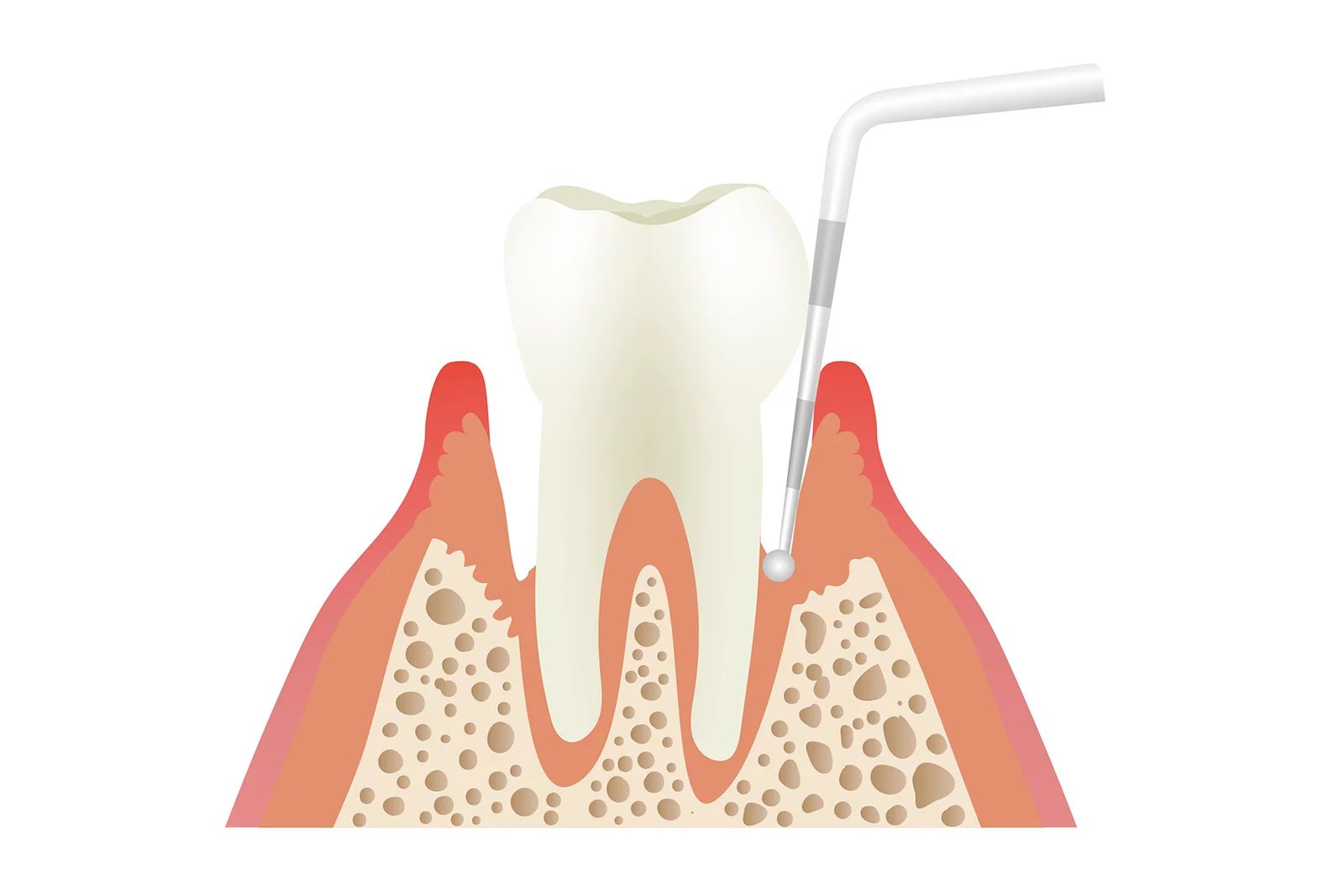
Two main causes of tooth loss
1. Gum disease
Gum disease is a particularly common cause of tooth loss in adults. The bone supporting the teeth gradually dissolves, and it is a "silent disease" with few symptoms until it has progressed considerably. It is important to notice signs early, such as bleeding or swollen gums, bad breath, or feeling that your teeth have become longer.
2. Tooth decay
When decay progresses a lot, the tooth may not be saved. In particular, teeth that have been treated once tend to have decay recur through gaps around fillings and crowns. If found and treated while small, less of the tooth needs to be drilled.
Simple things people who keep their teeth do
- Brush carefully, not carelessly (where teeth meet gums, and between teeth)
- Use floss or interdental brushes every day
- Have checkups and cleaning at a dental clinic about every 3–6 months
- Do not ignore anything that feels off
- If you grind or clench, protect your teeth with a night guard
- Cut back on smoking
Building up the basics matters more than anything special. The earlier you start, the easier it is to protect your teeth for the future.
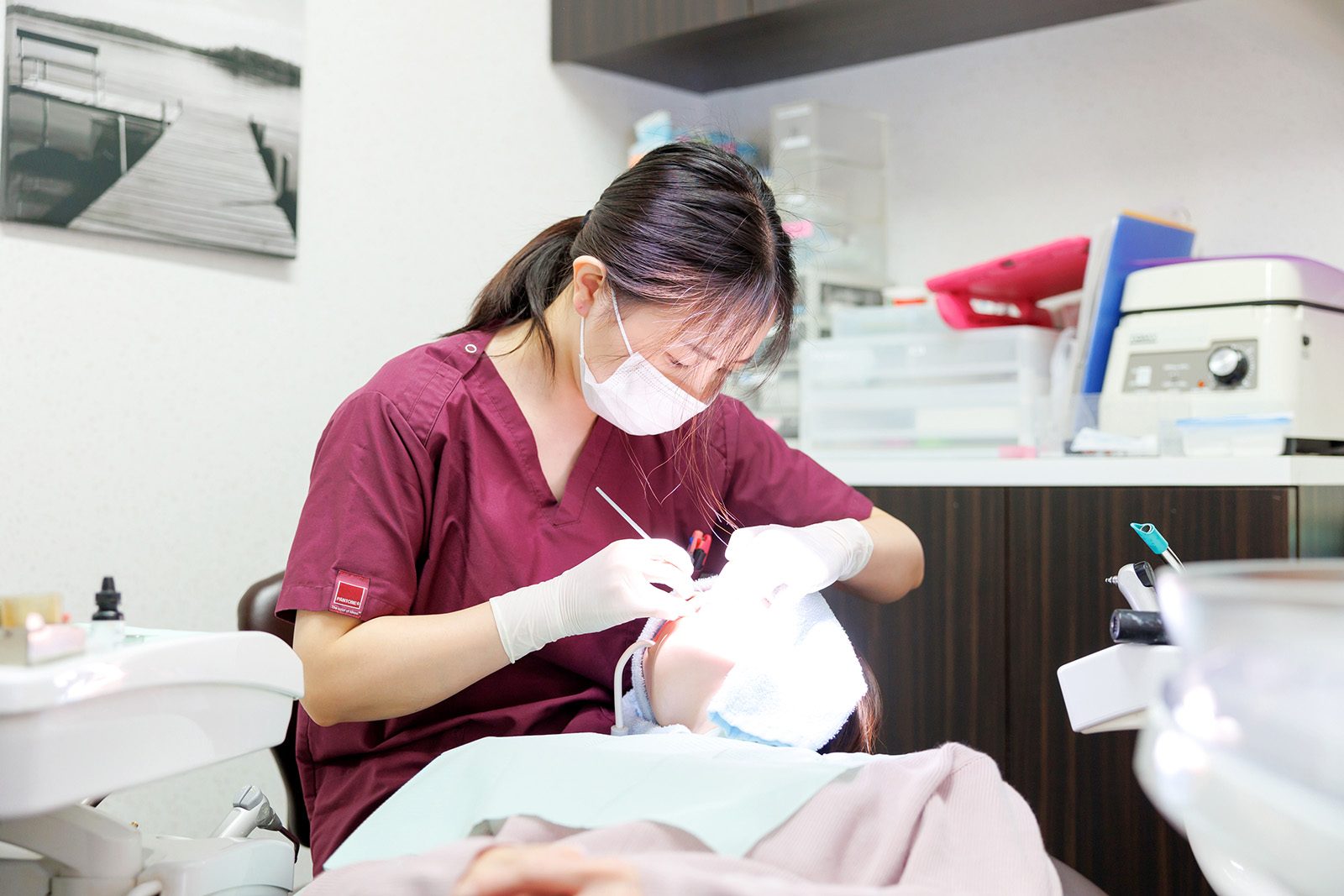
Women should also watch for changes in life stages
During pregnancy, hormone changes and morning sickness make brushing harder, and gum inflammation and tooth decay occur more easily. After menopause, changes in bone and saliva can also make gum disease progress more easily. It is important to review your oral care and checkup intervals as your body changes.
Summary: the real turning point comes before your 40s
The 40s are a guide for when tooth loss begins, but the real turning point starts much earlier. How you spend your 20s and 30s makes a big difference to the state of your mouth in your 50s and 60s. Rather than thinking "I'm still young, so I'm fine," think of now as the easiest time to protect your teeth, and start with a regular checkup.
ESCA Dental & Orthodontic Clinic is in the ESCA underground shopping mall, a 1-minute walk from the Shinkansen exit of JR Nagoya Station. Appointments by phone (+81-52-452-1255), online booking (Japanese) or LINE.
Frequently asked questions
Q. What is 8020?
It is a campaign in Japan that encourages people to keep 20 or more of their own teeth at age 80. With 20 or more teeth, it is said to be easier to chew most foods.
Q. I have already lost several teeth. Is it too late?
It is not too late. With care to protect your remaining teeth and treatment to replace lost ones, you can maintain oral function. First, let us check the condition of your mouth.
Q. From what age should I watch out for gum disease?
Gum inflammation (gingivitis) can be seen from the teens. Regardless of age, it is important to continue daily care and regular checkups.
Related pages
Medical review
This article was reviewed by Katsuaki Takeuchi, DDS (Director; Board-certified oral surgeon, Japanese Society of Oral and Maxillofacial Surgeons), ESCA Dental & Orthodontic Clinic. It provides general information; please consult a dentist about your own condition.
Appointments and questions
Mon–Fri 10:00–13:00 / 14:30–19:30 · Sat & Sun 10:00–13:00 / 14:00–18:00 (open every other Sunday) · Closed on national holidays. Our staff mainly speak Japanese.