
Could Your Stiff Shoulders Be Linked to Your Bite or Clenching?
Published: 2026-05-18 · Updated: 2026-11-22 · Medically reviewed by Katsuaki Takeuchi, DDS (Director; Board-certified oral surgeon, Japanese Society of Oral and Maxillofacial Surgeons)
What you will learn
- How the bite and stiff shoulders are connected
- Signs of clenching and grinding (checklist)
- Daily measures, and what a dental clinic can do

"My stiff shoulders never get better." "Even after a massage, they come right back." Many people may have this kind of problem.
When people think of the causes of stiff shoulders, many think of posture, desk work or lack of exercise. Of course these are major causes, but in fact the state of your mouth may also be involved. In this article, we explain the relationship between the bite or clenching and stiff shoulders.
How are the bite and stiff shoulders connected?
We use our jaw muscles a lot every time we eat or talk. If the bite is misaligned, an uneven load is easily placed on the muscles around the jaw. It is thought that this tension can spread to the neck and shoulder muscles and lead to stiff shoulders and neck.
An adult's head is said to weigh about 4–6 kg. The neck and shoulder muscles support this heavy head, so when the balance of the jaw is upset, the whole body is easily affected.
Clenching and grinding can also cause stiff shoulders
Clenching and grinding are closely related to stiff shoulders. If you have a habit of unconsciously biting hard, the jaw muscles stay tense, and the neck and shoulders also tend to tense up.
Do you have any of these symptoms?
- Your jaw feels tired when you wake up
- Your teeth are worn or chip easily
- Your cheek muscles (around the angle of the jaw) feel tight
- You have headaches
- Your shoulders and neck always feel heavy
- You tend to clench hard when concentrating
It is also said that clenching is increasing due to poor posture and stress from smartphone and computer work.
Does poor teeth alignment always cause stiff shoulders?
Poor teeth alignment does not automatically mean stiff shoulders. Stiff shoulders have many causes, such as posture, lack of exercise, stress and eye strain. Think of it as: the bite or clenching may be one of those causes in some cases.
If your stiff shoulders do not improve wherever you go, or you are also concerned about jaw fatigue or headaches, we recommend having your mouth checked once.
Daily measures
- Keep your upper and lower teeth apart: normally they do not touch except when chewing. When you notice, separate them and relax
- Bring your computer monitor and smartphone closer to eye level to reduce looking down
- Slowly roll your neck and shoulders between tasks
- Gently massage the muscles of your cheeks and temples
- Avoid your smartphone before bed and make time to relax
Writing "teeth apart" on a sticky note and putting it on your computer or desk makes it easier to notice when you clench.
What a dental clinic can do
- Checking your bite
- Checking for grinding and clenching (this can sometimes be judged from how the teeth are worn)
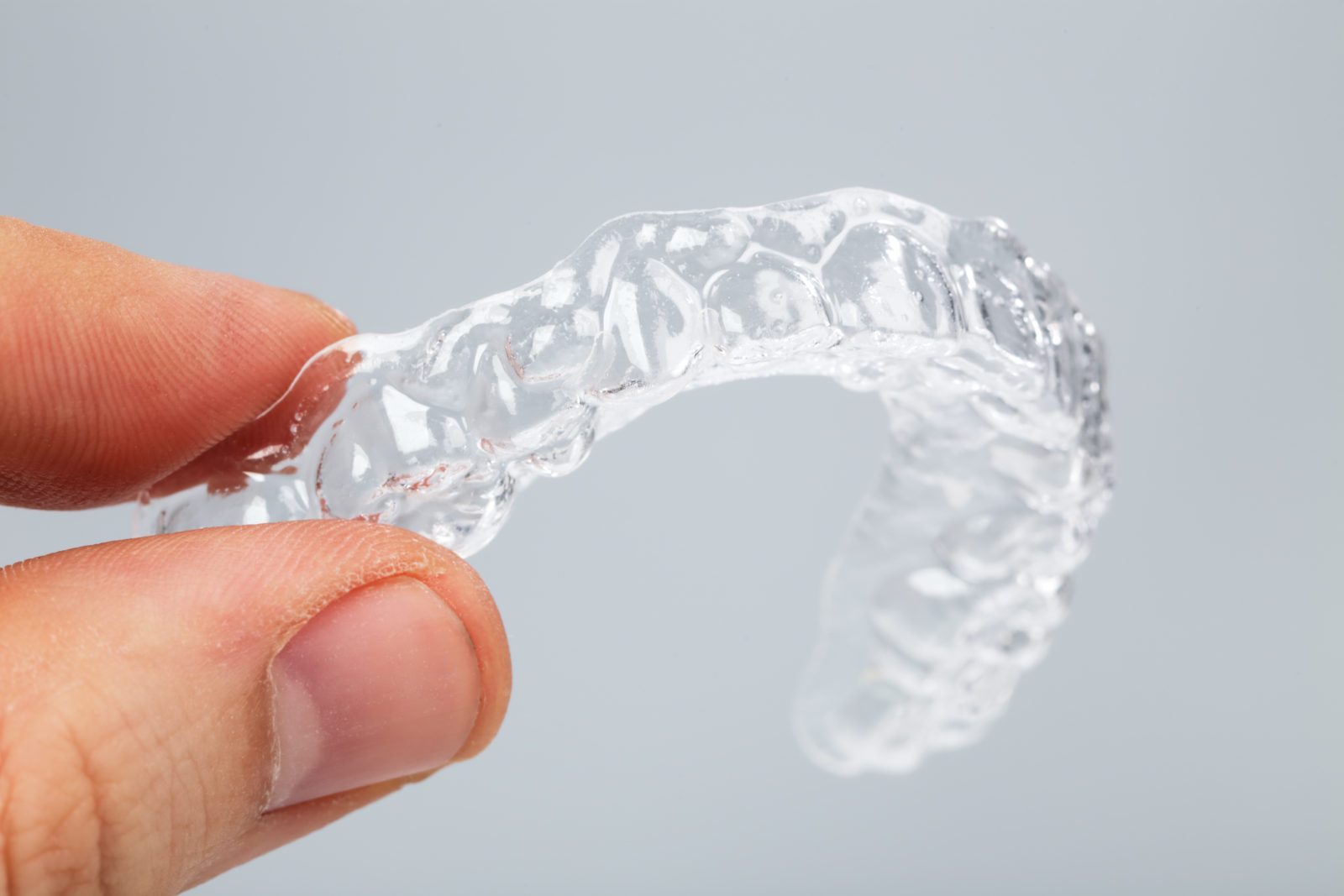
- Making a night guard (mouthpiece for night use)
- Consultation about teeth alignment
- Checking strain on the jaw joints
Grinding during sleep is hard to notice yourself. How forces are applied can sometimes be seen from how the teeth are worn, or from tooth marks on the inside of the cheeks or the edges of the tongue. Treatment of stiff shoulders themselves belongs to medicine (such as orthopedics), but we will think together about what can be done from the mouth side.
Summary: the state of your mouth may be involved in long-lasting discomfort
Stiff shoulders are a symptom people tend to put up with as "common." However, the bite or clenching may be behind long-lasting discomfort. If you suffer from chronic stiff shoulders, have been told you clench, or are concerned about jaw fatigue or headaches, please feel free to consult us.
ESCA Dental & Orthodontic Clinic is in the ESCA underground shopping mall, a 1-minute walk from the Shinkansen exit of JR Nagoya Station. Appointments by phone (+81-52-452-1255), online booking (Japanese) or LINE.
Frequently asked questions
Q. Will correcting my bite improve my stiff shoulders?
Stiff shoulders have many causes, so correcting the bite alone may not improve them. While doing what can be done from the mouth side (such as measures against clenching), we also recommend seeing a medical doctor if needed.
Q. Can a night guard be made under insurance?
If you are diagnosed as needing to protect your teeth from grinding or clenching, it can be made under Japanese public health insurance.
Q. How can I stop clenching during the day?
First, it is important to notice the habit by being conscious of keeping your teeth apart. Try ways to remind yourself now and then, such as sticky notes or smartphone notifications.
Related pages
Medical review
This article was reviewed by Katsuaki Takeuchi, DDS (Director; Board-certified oral surgeon, Japanese Society of Oral and Maxillofacial Surgeons), ESCA Dental & Orthodontic Clinic. It provides general information; please consult a dentist about your own condition.
Appointments and questions
Mon–Fri 10:00–13:00 / 14:30–19:30 · Sat & Sun 10:00–13:00 / 14:00–18:00 (open every other Sunday) · Closed on national holidays. Our staff mainly speak Japanese.