
Cavity Prevention Day (June 4): Habits That Protect Your Teeth
Published: 2026-06-01 · Updated: 2026-11-22 · Medically reviewed by Katsuaki Takeuchi, DDS (Director; Board-certified oral surgeon, Japanese Society of Oral and Maxillofacial Surgeons)
What you will learn
- Cavity Prevention Day and Dental and Oral Health Week
- How cavities form, and habits to watch out for
- Three habits you can start today to protect your teeth

June 4 is Cavity Prevention Day in Japan. The date comes from a Japanese wordplay: 6 (mu) and 4 (shi) make "mushi," as in mushiba (cavity). Today, June 4 to 10 is also Dental and Oral Health Week, a time to take a fresh look at the health of your teeth.
Even if you brush every day, are you just going through the motions? In this article, we look at habits that help prevent cavities and the points worth reviewing.
How do cavities form?
Cavities are caused by bacteria in the mouth. When you eat, bacteria feed on sugar and produce acid, and that acid slowly dissolves the teeth and causes cavities.
Cavities and gum disease often progress without you noticing, and by the time pain appears, treatment is frequently needed. That is why prevention matters so much. Teeth can recover from acid with the help of saliva (remineralization), but if they are exposed to acid for too long, this recovery cannot keep up.
Habits to watch out for
- Snacking throughout the day (frequent between-meal snacks)
- Sipping sweet drinks slowly and often
- Leaving plaque behind when brushing
- Eating or drinking before bed
- Not visiting a dentist for a long time

Three habits you can start today
1. Brushing: quality over quantity
It is important not just to brush, but to pay attention to places where plaque builds up. The grooves of back teeth, the spaces between teeth, and the line where teeth meet the gums are areas that are often missed. Look in a mirror and brush one or two teeth at a time with small strokes. Use a fluoride toothpaste, and after brushing, rinse just once with a small amount of water to get more of its cavity-preventing effect.
2. Use floss or interdental brushes
A toothbrush alone cannot remove all the plaque between teeth, and cavities and gum disease often start there. Adding floss once a day, even just before bed, can make a real difference to the condition of your mouth.
3. Get regular checkups
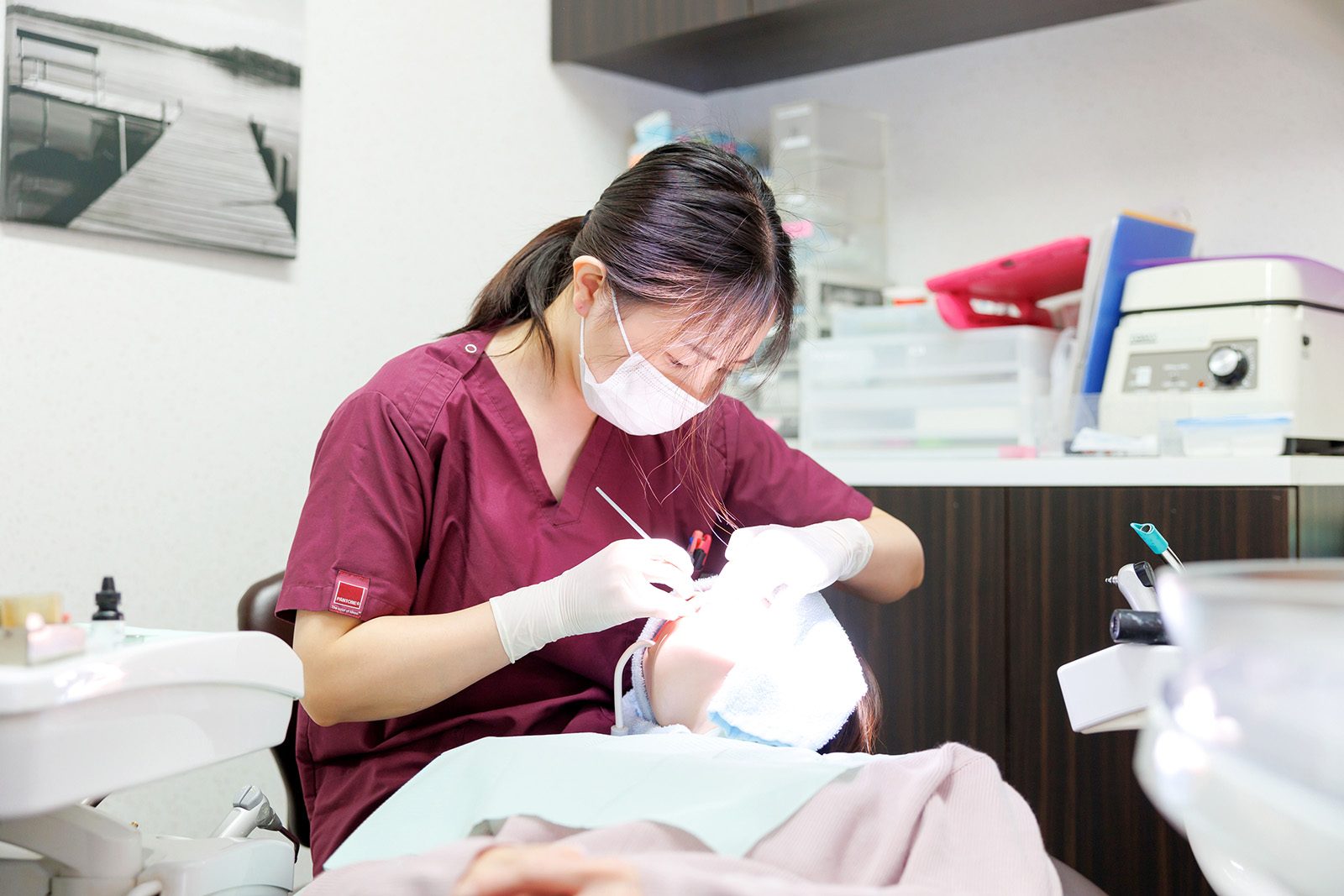
Ideally, visit the dentist before problems develop, rather than waiting until something hurts. Regular cleanings remove plaque you cannot remove yourself, check for early cavities and help prevent gum disease. Very early cavities can sometimes be monitored without drilling.
What to watch for at each age
- Children: newly erupted teeth are weak against acid, so parents should finish brushing for them and make use of fluoride
- Teens and 20s: club activities, exams or work can make daily routines irregular, so watch snacks and sweet drinks
- 30s to 50s: gum disease becomes more common; if you notice bleeding gums, get checked early
- 60s and over: gums recede and cavities at the roots of teeth become more common; caring for dentures is also important
If it has been a while since your last visit, let Dental and Oral Health Week be your reason to book a checkup.
Points to keep in mind about your diet
You do not need to give up sweets completely to prevent cavities. What matters is how you have them. Set fixed times for snacks, once or twice a day; have sweet drinks with meals; and have nothing but water before bed.
Chewing well produces plenty of saliva, which neutralizes acid in the mouth and helps protect your teeth. Choosing snacks made with sweeteners that are less likely to cause cavities, such as xylitol, is another option.
Summary: small changes protect your teeth for the future
Healthy teeth matter for eating, talking, appearance and your overall health. Because you use them every day, a small change in awareness can help protect your teeth for years to come. Why not use Cavity Prevention Day as a chance to review how you care for your mouth?
ESCA Dental & Orthodontic Clinic is in the ESCA underground shopping mall, a 1-minute walk from the Shinkansen exit of JR Nagoya Station. Appointments by phone (+81-52-452-1255), online booking (Japanese) or LINE.
Frequently asked questions
Q. Once a cavity forms, can it heal on its own?
A cavity that has formed a hole will not heal on its own. However, a very early cavity (at the stage where the tooth looks cloudy white) can sometimes be kept from progressing with fluoride and careful care, while we monitor it.
Q. Until what age do children need a parent to finish brushing their teeth?
We recommend that parents finish brushing until around the middle years of elementary school (about age 9 to 10). Take special care while the back teeth are being replaced by adult teeth.
Q. How often should I have a checkup?
About once every 3 to 6 months is a general guide. We will suggest an interval at your checkup based on your risk of cavities and gum disease.
Related pages
Medical review
This article was reviewed by Katsuaki Takeuchi, DDS (Director; Board-certified oral surgeon, Japanese Society of Oral and Maxillofacial Surgeons), ESCA Dental & Orthodontic Clinic. It provides general information; please consult a dentist about your own condition.
Appointments and questions
Mon–Fri 10:00–13:00 / 14:30–19:30 · Sat & Sun 10:00–13:00 / 14:00–18:00 (open every other Sunday) · Closed on national holidays. Our staff mainly speak Japanese.