
What Is Airflow? Dental Cleaning for Stains and Biofilm
Published: 2026-07-15 · Updated: 2026-11-22 · Medically reviewed by Katsuaki Takeuchi, DDS (Director; Board-certified oral surgeon, Japanese Society of Oral and Maxillofacial Surgeons)
What you will learn
- What kind of cleaning Airflow is
- How it differs from regular cleaning and from whitening
- Who Airflow suits, and points to note
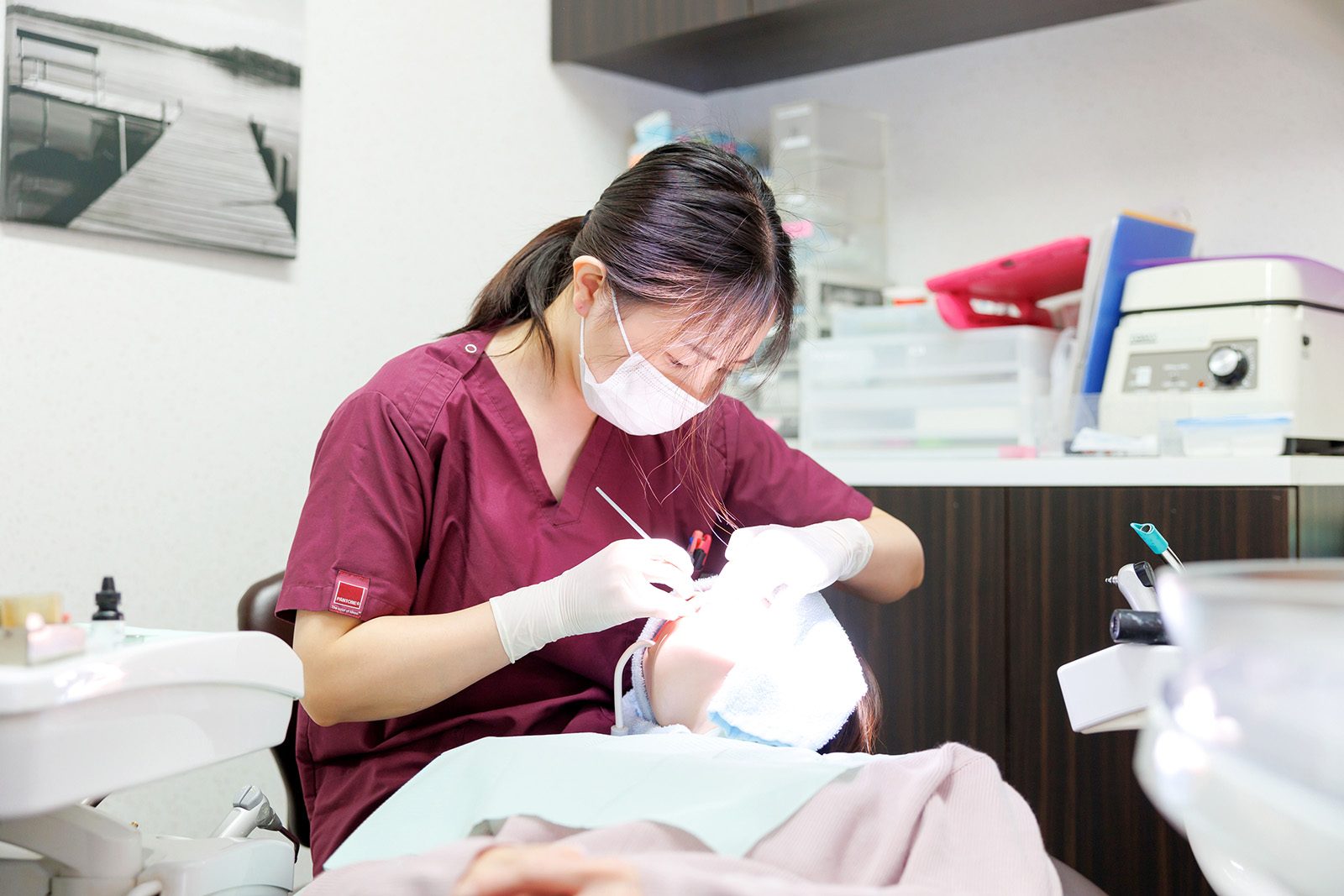
If yellowing or stains on your teeth bother you, or you often drink coffee or tea, we would like you to know about a cleaning method called Airflow.
In this article, we explain how Airflow works, how it differs from regular cleaning and whitening, and who it suits.
What is Airflow?
Airflow is a cleaning method that uses a dedicated device to spray fine powder and water onto the tooth surface, removing stains that are hard to remove with a toothbrush and biofilm (a film of bacteria that sticks to the tooth surface).
It helps remove stains caused by coffee, tea, red wine, curry, tobacco and so on. It is also suited to cleaning areas instruments have trouble reaching, such as between teeth, around the gums and around orthodontic appliances.
How it differs from regular cleaning
In regular cleaning, tartar and debris are removed with special instruments (scalers) or a rotating brush and paste. Airflow lifts debris off by spraying powder, so it is gentle on the tooth surface and makes it easier to clean a wide area in a short time.
Hard, firmly attached tartar cannot be fully removed by Airflow alone, so it is combined with cleaning using instruments.
How it differs from whitening
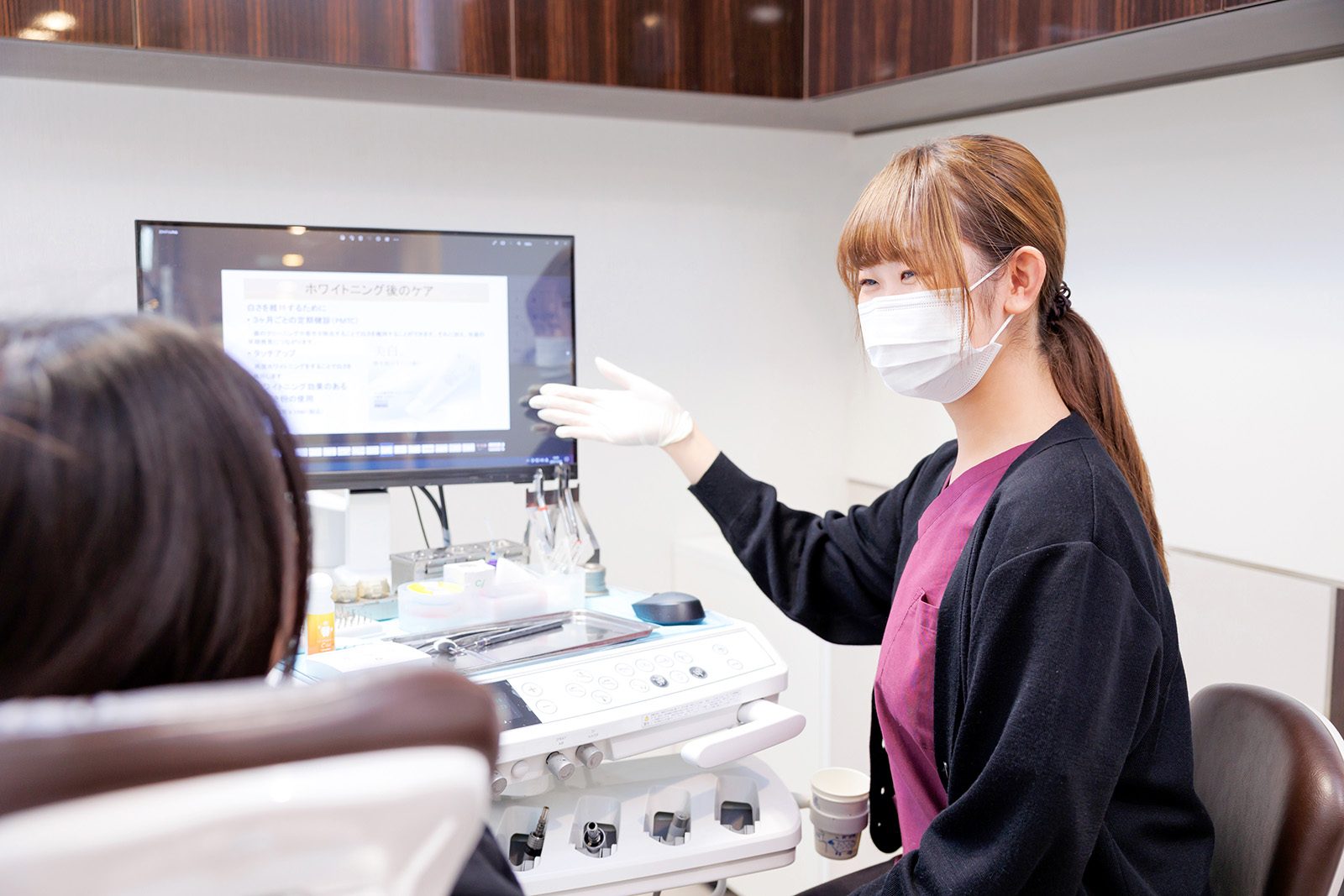
Airflow is a cleaning that removes stains on the tooth surface, bringing teeth closer to their natural color. It is different from whitening, which lightens the color of the tooth itself. If you want your teeth whiter than their natural color, please consider whitening. Removing surface debris with Airflow before whitening helps the whitening gel work more effectively.
Who Airflow suits
- People who often drink coffee, tea or wine
- People who smoke
- People concerned about stains or dullness on the tooth surface
- People concerned about debris around orthodontic appliances
- People who want to keep the area around dental implants clean
- People in gum disease prevention or maintenance
If your teeth stain easily, regular cleaning about once every 3 to 6 months makes it easier to keep them clean.
Points to note
- Areas where the gums are inflamed may sting a little or bleed
- Powder particles may get on the skin around your mouth, so we protect it with a towel or similar during treatment
- For people with respiratory conditions or on a salt-restricted diet, we may choose a different type of powder. Please let us know in advance
- Avoiding dark-colored drinks for a while after treatment helps the clean result last longer
Keeping your teeth clean after cleaning
Even after Airflow removes debris, stains and biofilm will gradually build up again if daily care is not sufficient. Keep up careful brushing with a soft toothbrush, use floss or interdental brushes, and make a habit of rinsing your mouth after dark-colored drinks.

A typical Airflow visit (example)
- Checking the condition of your mouth (cavities, gums, tartar)
- Removing tartar with instruments if necessary
- Removing stains and biofilm with Airflow
- Polishing the tooth surface to finish, and applying fluoride if necessary
- Advice on brushing
The time needed depends on the condition of your mouth, but about 30 minutes to 1 hour is a guide. If there is a lot of staining, the treatment may be split over several visits.
Summary: if stains bother you, start with a cleaning
Airflow is a cleaning method that is gentle on the tooth surface and makes it easier to remove stains and biofilm. If stains on your teeth bother you or you want to keep your mouth clean with regular care, please feel free to consult us. We will suggest a cleaning suited to the condition of your mouth.
ESCA Dental & Orthodontic Clinic is in the ESCA underground shopping mall, a 1-minute walk from the Shinkansen exit of JR Nagoya Station. Appointments by phone (+81-52-452-1255), online booking (Japanese) or LINE.
Main risks and side effects
- After Airflow, the gums may be slightly sore or bleed
- Whitening may make teeth temporarily sensitive, and results vary from person to person (self-paid treatment, not covered by insurance)
Airflow is self-paid (not covered by insurance); please ask at reception for the standard fee. We explain the details and fee beforehand. (Examinations for cavities and gum disease and scaling are covered by Japanese public health insurance.)
Frequently asked questions
Q. Does Airflow hurt?
Most people feel very little discomfort during treatment. Areas with inflamed gums or exposed tooth roots may sting a little.
Q. Is Airflow covered by insurance?
The cost of cleaning with Airflow depends on what is done. For details, including how it can be combined with insurance-covered cleaning, please ask at reception.
Q. How often should I have it?
We recommend about once every 3 to 6 months, together with your regular checkup. If your teeth stain easily, we may recommend a slightly shorter interval.
Related pages
Medical review
This article was reviewed by Katsuaki Takeuchi, DDS (Director; Board-certified oral surgeon, Japanese Society of Oral and Maxillofacial Surgeons), ESCA Dental & Orthodontic Clinic. It provides general information; please consult a dentist about your own condition.
Appointments and questions
Mon–Fri 10:00–13:00 / 14:30–19:30 · Sat & Sun 10:00–13:00 / 14:00–18:00 (open every other Sunday) · Closed on national holidays. Our staff mainly speak Japanese.