
August 21 Is White Teeth Day: Habits for White Teeth and Whitening
Published: 2026-08-21 · Updated: 2026-11-22 · Medically reviewed by Katsuaki Takeuchi, DDS (Director; Board-certified oral surgeon, Japanese Society of Oral and Maxillofacial Surgeons)
What you will learn
- Two reasons teeth look yellow
- Daily habits to keep your teeth white
- The difference between cleaning and whitening, types of whitening and points to note

In Japan, August 21 is "White Teeth Day". The name comes from a play on words: 8-21 can be read as ha ni ii, meaning "good for your teeth". It is a day to think about white, healthy teeth.
This article explains why teeth look yellow, habits for keeping them white, and whitening.
Two reasons teeth look yellow
1. Surface stains
Pigments in coffee, black tea, green tea, red wine and curry, as well as tar from tobacco, stick to the tooth surface and cause stains. Because these are surface stains, they can often be removed by professional cleaning at a dental clinic.
2. The color inside the tooth
Beneath the enamel on the tooth surface is yellowish dentin. As enamel becomes thinner and dentin darkens with age, teeth look more yellow. This is the color of the tooth itself, so cleaning will not make it whiter. If you want to whiten the tooth color, whitening is an option to consider.
Daily habits to keep your teeth white
- After dark-colored drinks or foods, drink water or rinse your mouth
- Brush carefully every day (without scrubbing too hard)
- Also remove plaque between teeth with floss or interdental brushes
- Avoid smoking
- Have a professional cleaning about every 3-6 months
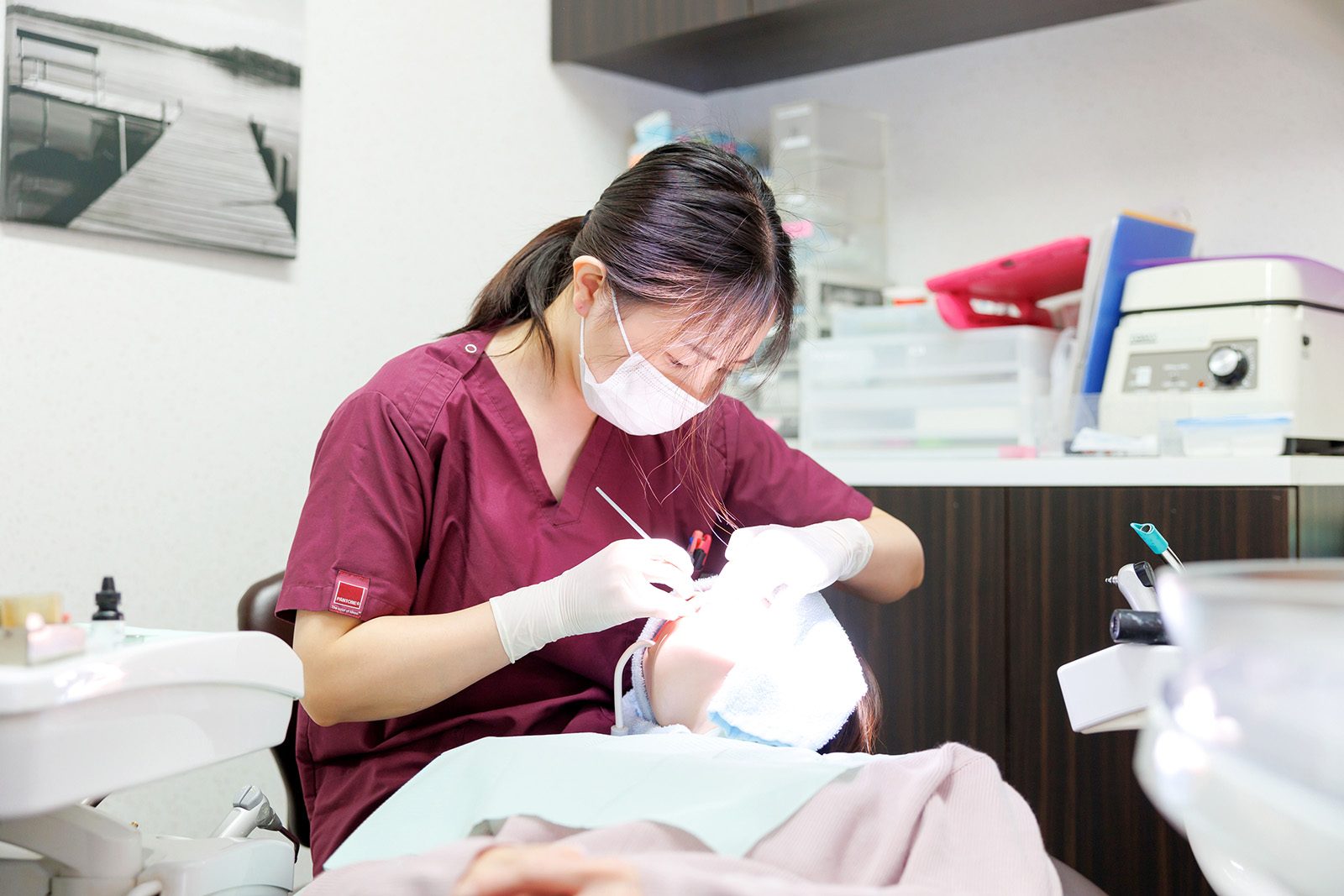
The difference between cleaning and whitening
Cleaning removes stains and plaque from the tooth surface, bringing teeth closer to their natural color. Whitening uses agents to lighten the color of the tooth itself. Because the agents work less well if surface plaque remains, cleaning is usually done before whitening.
Two types of whitening at our clinic
In-office whitening (done at the clinic)
A high-concentration agent is applied to the teeth at the clinic and activated with light. You are more likely to notice a difference in a relatively short time.
Home whitening (done at home)
You put the agent into custom-made trays fitted to your mouth and wear them at home for a set time each day. It takes longer, but the result tends to look natural and is said to last longer.
Which method suits you depends on the condition of your teeth, your wishes and your daily routine. We explain the features of each at a consultation.
What to know before whitening
- Artificial teeth such as crowns, fillings and dentures do not become whiter
- If you have tooth decay or gum disease, it is treated first
- We do not recommend whitening for people under 18 or during pregnancy or breastfeeding
- Results and how long the whiteness lasts vary from person to person

The whitening process (an example)
- Consultation: we ask about your tooth color, the shade you want, and your daily routine
- Oral check: we check for decay and gum disease and where you have crowns
- Cleaning: we remove surface plaque so the agent works well
- Whitening: in-office whitening is done at the clinic; for home whitening we give you trays and agent
- Maintenance: we suggest how often to visit to keep teeth white
If you have crowns on your front teeth, one option is to replace them after whitening to match the new tooth color. It is a good idea to plan the whole treatment first. To keep teeth white after whitening, small daily habits also help, such as cutting down on dark drinks, using a straw, and rinsing after drinking.
Summary: use White Teeth Day as a chance to care for your tooth color
Daily care and regular professional cleaning are the basis of keeping teeth white. If you are concerned about the color of the teeth themselves, please ask us about whitening. Why not use White Teeth Day as a chance to aim for white, healthy teeth?
ESCA Dental & Orthodontic Clinic is in the ESCA underground shopping mall, a 1-minute walk from the Shinkansen exit of JR Nagoya Station. Appointments by phone (+81-52-452-1255), online booking (Japanese) or LINE.
Main risks and side effects
- After whitening, your teeth may be temporarily sensitive
- If the agent touches the gums, they may feel irritated
- Whiteness gradually fades over time, so regular maintenance is needed
Whitening is self-paid (not covered by insurance). For standard fees, please see the whitening page and our fee list.
Frequently asked questions
Q. How long do whitening results last?
It depends on your eating and drinking habits and the method, but the color often gradually returns over several months to about a year. Regular maintenance makes it easier to keep teeth white.
Q. Are there foods to avoid during whitening?
Teeth stain easily right after treatment, so we recommend avoiding dark-colored foods and drinks such as coffee, black tea and curry. We explain details at the time of treatment.
Q. How is it different from whitening toothpaste sold in stores?
Store-bought toothpastes mainly remove stains from the tooth surface. Whitening at a dental clinic uses agents to lighten the color of the tooth itself.
Related pages
Medical review
This article was reviewed by Katsuaki Takeuchi, DDS (Director; Board-certified oral surgeon, Japanese Society of Oral and Maxillofacial Surgeons), ESCA Dental & Orthodontic Clinic. It provides general information; please consult a dentist about your own condition.
Appointments and questions
Mon–Fri 10:00–13:00 / 14:30–19:30 · Sat & Sun 10:00–13:00 / 14:00–18:00 (open every other Sunday) · Closed on national holidays. Our staff mainly speak Japanese.