
Brushing on the Go During Orthodontics: A Kit and Tips When You Can't
Published: 2026-06-17 · Updated: 2026-11-22 · Medically reviewed by Katsuaki Takeuchi, DDS (Director; Board-certified oral surgeon, Japanese Society of Oral and Maxillofacial Surgeons)
What you will learn
- Why care on the go matters during orthodontic treatment
- A brushing kit to carry with you
- What to do when you cannot brush
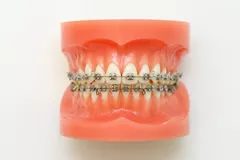
During orthodontic treatment, food debris and plaque tend to build up around the appliances, raising the risk of tooth decay and gum inflammation. Care while you are out is important in addition to brushing at home.
This article explains how people in orthodontic treatment can brush while out and what to do when they cannot.
Why care on the go matters during orthodontic treatment
With wire braces, food easily gets caught around the brackets and wires, and if left there, it causes tooth decay, swollen gums and bad breath. With clear aligners, putting the aligners back in without brushing after a meal traps debris against the tooth surface.
If you often eat out, for example at lunch, it is reassuring to be prepared to care for your teeth while out. If plaque stays around the appliances, the tooth surface may turn cloudy white (early decay), which may become noticeable after the appliances are removed.
A brushing kit to carry with you
- A compact toothbrush (one with a cap or case is convenient)
- Fluoride toothpaste (a small size)
- Interdental brushes and a single-tuft brush (for plaque around appliances and under the wire)
- A small mirror (to check that plaque has been removed)
- An aligner case (for clear aligner treatment)
A portable oral irrigator (water flosser) that washes away debris with a water jet is another option. However, it is not a substitute for a toothbrush that scrubs off plaque, so use it as a supplement.
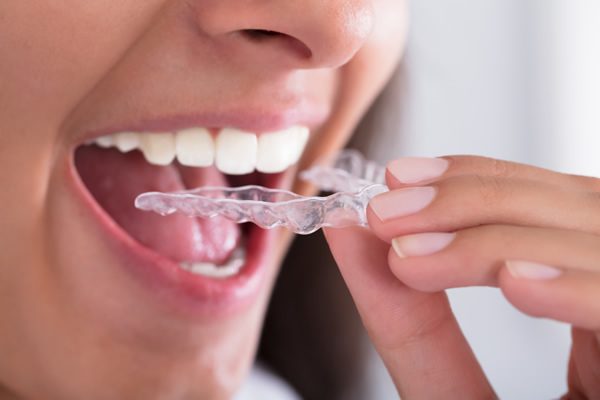
Tips for cleaning quickly while out
- First, rinse your mouth well with water to wash away trapped food
- Move the toothbrush in small strokes, focusing on around the appliances (above and below the brackets)
- Use a single-tuft or interdental brush under the wire
- When short on time, at least clean around the appliances on your front teeth
- When you get home, brush carefully and take your time
What to do when you cannot brush
Rinse your mouth
Just swishing water vigorously after eating reduces food debris around the appliances to some extent. After rinsing, check in a mirror that no food is left around the appliances.
Be careful what you eat
Sticky foods such as caramel and chocolate, and sugary snacks, tend to cling to appliances and cause decay, so go easy on them while out. During wire treatment, it is safer to avoid foods that stick to appliances, such as gum and mochi (rice cakes).
Sugar-free xylitol gum (for clear aligner treatment)
While your aligners are out, chewing sugar-free xylitol gum stimulates saliva and helps neutralize acid in the mouth. If you have wire braces, gum can stick to the appliances, so check with your dentist.
If you have clear aligners and cannot brush after a meal, rinse your mouth with water before putting the aligners back in.
Brushing tips at home
Care while out is only a stopgap. Once a day, brush carefully and take your time. The trick is to place the toothbrush above the brackets, below the brackets and along the gumline. Use a single-tuft brush, interdental brushes or orthodontic floss under the wire and between teeth.
Using fluoride toothpaste and rinsing just once with a small amount of water after brushing increases the decay-prevention effect.
Summary: a little care on the go keeps your mouth clean during orthodontics
During orthodontic treatment, small bits of care while out add up to prevent tooth decay and gum problems. If you have trouble brushing around your appliances, please feel free to ask at your adjustment appointment.
ESCA Dental & Orthodontic Clinic is in the ESCA underground shopping mall, a 1-minute walk from the Shinkansen exit of JR Nagoya Station. Appointments by phone (+81-52-452-1255), online booking (Japanese) or LINE.
Main risks and side effects
- During orthodontic treatment, you may feel pain or discomfort as the teeth move
- If brushing is not thorough, the risk of tooth decay and gum disease increases
- The tooth roots may become shorter (root resorption) or the gums may recede. After treatment, teeth may shift back if you do not use a retainer
Orthodontic treatment is self-paid (not covered by insurance). Fees vary depending on the appliance and treatment period, so we explain them after a detailed examination (see our fee list for standard fees).
Frequently asked questions
Q. What should I do on days when it is hard to brush while out?
Rinse your mouth well with water and go easy on sticky and sweet foods. When you get home, take more time than usual to brush carefully.
Q. What kind of toothbrush is good during orthodontic treatment?
We recommend a toothbrush with a small head and soft to medium bristles, combined with a single-tuft brush or interdental brushes that make it easier to clean around the appliances.
Q. The area around my appliances is turning white.
This may be a sign that the tooth surface is starting to dissolve (early decay). Consult your dentist early, and review your brushing and make use of fluoride.
Medical review
This article was reviewed by Katsuaki Takeuchi, DDS (Director; Board-certified oral surgeon, Japanese Society of Oral and Maxillofacial Surgeons), ESCA Dental & Orthodontic Clinic. It provides general information; please consult a dentist about your own condition.
Appointments and questions
Mon–Fri 10:00–13:00 / 14:30–19:30 · Sat & Sun 10:00–13:00 / 14:00–18:00 (open every other Sunday) · Closed on national holidays. Our staff mainly speak Japanese.