
What Are Orthodontic Anchor Screws (Mini-Implants)? How They Work
Published: 2025-09-26 · Updated: 2026-11-22 · Medically reviewed by Katsuaki Takeuchi, DDS (Director; Board-certified oral surgeon, Japanese Society of Oral and Maxillofacial Surgeons)
What you will learn
- How anchor screws (mini-implants, TADs) work and what they do
- Which tooth alignments they are used for, and the procedure
- Care around the screws, and points to know
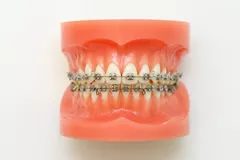
Many people are surprised when they hear at an orthodontic consultation that screws may be used. These screws are called orthodontic anchor screws, also known as mini-implants or TADs (temporary anchorage devices). They are used temporarily during orthodontic treatment as an anchor for moving teeth.
This article explains how anchor screws work, which tooth alignments they are used for, the procedure, daily care and points to know.
What are anchor screws?
Anchor screws are small screws about 1.4-2 mm in diameter and 6-10 mm long. They are made of materials that are well tolerated by the body, such as titanium alloy, and are placed through the gums into the jawbone. Their purpose differs from dental implants placed where a tooth is lost: they are used only during orthodontic treatment and are removed once treatment has progressed.
At our clinic, we use orthodontic anchor screws approved in Japan.
Why is an anchor needed?
In orthodontic treatment, teeth are pulled and moved with the force of wires and elastics. At that time, the teeth on the opposite side of the pulling force receive an equal force (action and reaction). For example, when you want to move the front teeth back, if the back teeth are used as the anchor, they may also move forward slightly.
Anchor screws placed in the jawbone are hard to move with the force of surrounding teeth, so they provide a firm anchor. Their main role is to make it easier to move only the teeth you want to move and keep the other teeth where they are. In the past, anchorage was sometimes provided by devices worn on the head (headgear), but anchor screws are used only inside the mouth, which also reduces the burden on patients of keeping up the required wearing time.
Which tooth alignments are they used for?
Anchor screws are not used for everyone. The dentist suggests them when needed, based on your tooth alignment, bite and treatment plan. They are often used in the following cases.
- Protruding front teeth: when the front teeth need to be moved far back into the space from extracted teeth
- Gummy smile: when the front teeth need to be moved upward because too much gum shows when smiling
- Open bite (front teeth do not meet): when the back teeth need to be pushed in so that the front teeth meet
- When the midline of the upper and lower teeth needs to be aligned
- When the back teeth need to be moved forward or backward to create or close space
Because force can more easily be applied in directions that used to be difficult, treatment planning becomes easier, and shorter treatment periods and more precise results can be expected. Even when the skeletal misalignment is large, the range that can be treated without surgery may widen, but how much can be corrected depends on the tooth alignment.
The procedure
After local anesthesia is given to the gums, the area is disinfected and the screw is placed with a special instrument. Placement takes a few minutes per screw. After the procedure, we prescribe painkillers and other medication. A dull ache or mild swelling may occur after the anesthesia wears off, but it usually settles within a few days.
At our clinic, to allow the screw to settle into the bone, we try to avoid attaching elastics on the same day it is placed. After waiting a while, we start moving teeth by attaching elastics or springs between the screw and the teeth. When the orthodontic appliances are removed, the screws are removed too. Removal often does not require anesthesia, and the screw holes close naturally over time.
Care around the screws
If plaque builds up around the screws, the gums can become red and swollen and the screws can loosen. Every day, keep the area clean by brushing gently with a soft toothbrush or a single-tuft brush with a small head. Scrubbing too hard can loosen a screw that has not yet settled into the bone, so it is important not to press too hard.
Also, a habit of touching or pushing the screws with your fingers or tongue can make them loose. Even if they bother you, try not to touch them.
Points to know
Anchor screws are a useful method, but there are points to be aware of. First, a screw may not settle fully into the bone and may become loose or come out. This is said to happen more often in people with softer bone or when there is inflammation around the screw. If one comes out, it may be placed again in a different position, so do not panic; contact the clinic.
Other possible problems include inflammation of the gums around the screw and the screw rubbing against the cheek or tongue, causing a sore like a mouth ulcer. If you notice any symptoms that concern you, please contact us without waiting for your next appointment.
At our clinic, when anchor screws are used in orthodontic treatment, their cost is included in the monthly adjustment fee. Orthodontic treatment is self-paid (not covered by insurance), so please check our fee list or ask at an orthodontic consultation for details.
Summary
Anchor screws use a small screw placed in the jawbone as an anchor, making it easier to move teeth in the intended direction. They are used for a variety of tooth alignments, such as protruding front teeth, gummy smiles and open bites, and are expected to make treatment planning easier. On the other hand, loosening or inflammation can occur, so it is important to keep the area around the screws clean. The dentist will explain whether anchor screws are needed after an examination. If you have any concerns, please feel free to consult us.
ESCA Dental & Orthodontic Clinic is in the ESCA underground shopping mall, a 1-minute walk from the Shinkansen exit of JR Nagoya Station. Appointments by phone (+81-52-452-1255), online booking (Japanese) or LINE.
Main risks and side effects
- Pain and swelling may occur after anchor screws are placed
- A screw may not settle into the bone and may become loose or come out, requiring it to be placed again
- The gums around the screw may become inflamed, or the screw may rub the lining of the mouth and cause a mouth ulcer
- During orthodontic treatment, you may feel pain or discomfort as the teeth move
- If brushing is not thorough, the risk of tooth decay and gum disease increases
Orthodontic treatment is self-paid (not covered by insurance). Fees vary depending on the appliance and treatment period, so we explain them after a detailed examination (see our fee list for standard fees).
Frequently asked questions
Q. Does it hurt when anchor screws are placed?
They are placed after local anesthesia, so pain during the procedure is kept under control. A dull ache or swelling may occur after the anesthesia wears off, but it usually settles within a few days and is mostly eased by painkillers.
Q. What should I do if a screw comes out?
Do not throw it away; contact the clinic. Screws coming out because they did not settle into the bone happens in a certain proportion of cases, and the screw may be placed again in a different position.
Q. Does everyone use anchor screws?
No. We suggest them only to those who need them, depending on tooth alignment and the treatment plan. Many cases can be treated without them.
Medical review
This article was reviewed by Katsuaki Takeuchi, DDS (Director; Board-certified oral surgeon, Japanese Society of Oral and Maxillofacial Surgeons), ESCA Dental & Orthodontic Clinic. It provides general information; please consult a dentist about your own condition.
Appointments and questions
Mon–Fri 10:00–13:00 / 14:30–19:30 · Sat & Sun 10:00–13:00 / 14:00–18:00 (open every other Sunday) · Closed on national holidays. Our staff mainly speak Japanese.