
What Is Invisalign First? Clear Aligner Orthodontics for Children
Published: 2022-02-15 · Updated: 2026-11-22 · Medically reviewed by Katsuaki Takeuchi, DDS (Director; Board-certified oral surgeon, Japanese Society of Oral and Maxillofacial Surgeons)
What you will learn
- How Invisalign First works and which ages it suits
- Advantages and points to note, and how it differs from removable expansion plates
- What parents and children should keep in mind to keep treatment going

As your child's adult teeth come in, you may have started to notice that the front teeth are becoming crooked or sticking out. In children's orthodontics, appliances different from those for adults are sometimes used.
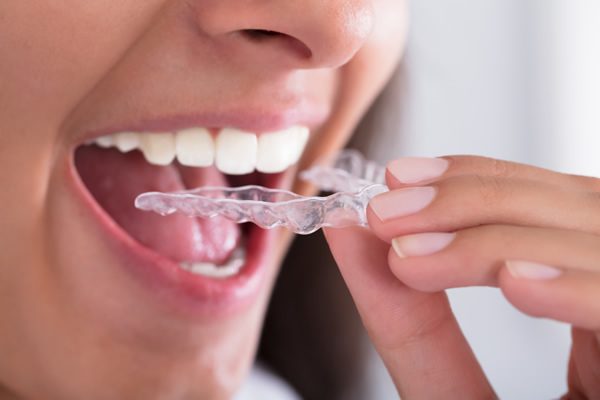
One of these is Invisalign First, a clear aligner-type orthodontic appliance designed for children. In this article we explain how it works, which ages it suits, its advantages and points to note, and how it differs from other appliances.
Invisalign aligners are medical devices that have not been approved under Japan's Pharmaceutical and Medical Device Act. Our clinic obtains the devices from Align Technology, Inc. (USA) under the responsibility of our dentists. Some aligner-type orthodontic devices have been approved in Japan. Invisalign is cleared by the U.S. FDA and used in many countries. Because it is an unapproved device, serious side effects are not covered by Japan's relief system for adverse drug reactions.
What is Invisalign First?
Invisalign First is a clear aligner-type orthodontic appliance for children in the "mixed dentition" stage, when they have both baby teeth and adult teeth. As a guide, it is used at around 6 to 10 years of age, once the upper and lower front teeth and the first permanent molars (the six-year molars at the very back) have come in.
As with adult Invisalign, we scan the mouth, make a plan, and gradually straighten the teeth by switching to a new clear aligner about once a week. With the children's appliance, the plan can include space for the adult teeth still to come in, and teeth can be moved to widen the dental arch. Depending on the bite, a feature that adjusts the bite in line with the growth of the lower jaw may also be built in. The dentist decides which approach to use after an examination.
Advantages
- The aligners are clear, so they are hard to notice even at school
- They can be removed for meals and brushing, so children can eat as usual and brush easily
- No metal wires are used, so the inside of the mouth is less likely to be hurt during sports, playing instruments or play
- If full orthodontic treatment (phase 2) is needed later, it may take less time and be more likely to be done without extracting teeth
Newly erupted adult teeth still have a soft surface and decay easily. Fixed appliances make it easy for plaque to build up around them, but aligners can be taken out for brushing, which is a big advantage.
Points to note
The most important thing is how long the aligners are worn. As with adults, they need to be worn for about 20 to 22 hours a day, except when eating and brushing. Because children can take them out themselves, if they are not worn long enough, the teeth may not move as expected and treatment may take longer. The child's own motivation and the family's support are essential.
Also, if an aligner is lost, treatment stops while a new one is made, and the treatment period may be extended. Get into the habit of putting removed aligners in their special case. Because the timing of tooth replacement and jaw growth varies from child to child, treatment often lasts a year or more, and depending on the condition of the baby teeth, it may not be suitable.
How it differs from removable expansion plates
In children's orthodontics, a "removable expansion plate" is sometimes used to widen the dental arch. This is a removable appliance made of a plastic plate and wires, and the jaw is gradually widened by turning a screw in the middle on set days.
Invisalign First can widen the dental arch and also makes it easier to adjust the angle and position of each individual tooth. An expansion plate, on the other hand, is mainly aimed at widening the dental arch. Which one suits your child depends on the alignment of the teeth, the child's age and personality, and the family's lifestyle.
Not just the appliance: oral habits matter too
A narrow jaw, protruding front teeth or a deep bite can be related to how the muscles of the tongue and lips are used. If habits such as thumb-sucking, pushing the front teeth with the tongue, or keeping the mouth open (mouth breathing) continue, the teeth tend to move back after the appliance is removed, even if they were straightened. At our clinic, we may also provide training to practice using the muscles around the mouth (MFT, myofunctional therapy) along with orthodontic treatment.
Summary
Invisalign First is a clear aligner-type orthodontic appliance for children that makes use of the growth period to straighten the teeth. It is hard to notice and can be removed for meals and brushing, but keeping to the wearing time is important. The right method differs for each child, so if you have any concerns, please come to an orthodontic consultation together with your child.
ESCA Dental & Orthodontic Clinic is in the ESCA underground shopping mall, a 1-minute walk from the Shinkansen exit of JR Nagoya Station. Appointments by phone (+81-52-452-1255), online booking (Japanese) or LINE.
Main risks and side effects
- During orthodontic treatment, you may feel pain or discomfort as the teeth move
- If brushing is not thorough, the risk of cavities and gum disease increases
- The tooth roots may become shorter (root resorption) or the gums may recede. After treatment, teeth may move back if the retainer is not used
- If the aligners are not worn long enough, results are harder to achieve and treatment may take longer. Depending on growth, full orthodontic treatment (phase 2) may be needed later
Orthodontic treatment is self-paid (not covered by insurance). The cost depends on the appliance and treatment period, so we explain it after a detailed examination (see our fee table for standard fees).
Frequently asked questions
Q. From what age can treatment start?
As a guide, at around 6 to 10 years of age, once the upper and lower front teeth and the first permanent molars have come in. The timing of tooth replacement varies, so we decide when to start after an examination.
Q. I am worried my child will not be able to wear them all day.
They feel strange at first, but most children get used to them within a few days to a week. It is easier to keep going if the family makes habits such as recording wearing time on a chart and putting the aligners in the case when they are taken out.
Q. Will Invisalign First alone complete the treatment?
Depending on the teeth, it may be enough on its own, but full orthodontic treatment (phase 2) may be needed after all the adult teeth have come in. We explain the outlook after an examination.
Related pages
Medical review
This article was reviewed by Katsuaki Takeuchi, DDS (Director; Board-certified oral surgeon, Japanese Society of Oral and Maxillofacial Surgeons), ESCA Dental & Orthodontic Clinic. It provides general information; please consult a dentist about your own condition.
Appointments and questions
Mon–Fri 10:00–13:00 / 14:30–19:30 · Sat & Sun 10:00–13:00 / 14:00–18:00 (open every other Sunday) · Closed on national holidays. Our staff mainly speak Japanese.