
Orthodontic Elastics: What They Do, Wear Time and Tips
Published: 2025-12-11 · Updated: 2026-11-22 · Medically reviewed by Katsuaki Takeuchi, DDS (Director; Board-certified oral surgeon, Japanese Society of Oral and Maxillofacial Surgeons)
What you will learn
- What orthodontic elastics do, and why they are needed
- How long to wear them, when to change them, and tips for putting them on
- What to do if speaking is hard, they hurt, or they break
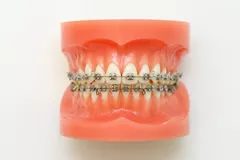
Once orthodontic treatment has progressed to a certain point, the dentist may ask you to start wearing rubber bands. These are called interarch elastics (orthodontic elastics). They look like small rubber bands, but they play a very important role in the final result of orthodontic treatment.
In this article, we explain what elastics do, how long to wear them, tips for putting them on, and what to do when you have trouble.
What are orthodontic elastics?
Orthodontic elastics are small rubber bands hooked onto hooks or buttons on the appliances of the upper and lower teeth. With wire braces, they go on the hooks of the brackets; with clear aligners, they go on small buttons attached to the teeth or on cutouts in the aligners.
There are several types of elastics in different sizes and strengths, and where and in what shape they are hooked (front-back, up-down, side-to-side and so on) differs for each person, depending on the teeth alignment and stage of treatment. Your dentist or dental hygienist will explain which elastics to use and where to hook them.
Why are they needed?
Adjusting the braces or changing aligners straightens the teeth. However, just because the teeth line up does not mean the upper and lower bite will come together naturally at the same time. Wires and aligners mainly move teeth within the upper arch or within the lower arch, so they are not good at adjusting the relationship between the upper and lower teeth.
So the upper and lower appliances are connected with elastics, and their force is used to make adjustments such as the following.
- Correcting front-back misalignment between upper and lower teeth (tendency toward protruding teeth or underbite)
- Aligning the center lines (midlines) of the upper and lower teeth
- Adjusting the depth of the front-teeth bite and closing gaps
- Pulling teeth together so the upper and lower teeth bite firmly
The goal of orthodontic treatment is not only straight-looking teeth but also upper and lower teeth that bite together properly. Elastics can be thought of as the final push toward that goal.
Wear time and when to change them
When instructed, as a rule you wear them all day except while eating and brushing (20 hours or more a day is a guide). With elastics, the time you wear them translates directly into results. If you spend long periods taking them on and off, the teeth may not move in the intended direction, treatment may take longer, and the final bite may be off. If you go for hours without them, the force that had been applied is lost, and the teeth may try to move back to their original positions.
Elastics stretch with use and lose force. Change to new elastics at least once a day, for example after a meal. If an elastic breaks or comes off, put on a new one right away.
Tips for putting them on
At first, practice slowly while looking in the mirror. Using your fingertip or nail, hook the elastic onto one hook first, then stretch it and hook it onto the other. Once you are used to it, you will be able to put them on in a few seconds without a mirror.
For people whose fingers do not reach well or who find it difficult because of nail art, there is a special tool for placing elastics. We will show you how to use it, so please feel free to ask if you find them hard to put on. It is a good idea to carry elastics in small portions so you can change them when you are out.
When you have trouble
Wearing elastics makes it a little harder to open your mouth, so you may find it harder to speak, or notice that the elastics show when you smile. For the first few days, the teeth are pulled, so there may be pain or discomfort, but in most cases it eases as you get used to them.
There may be days when work or school makes it impossible to wear them all day. In that case, keep the time without them as short as possible, and be sure to wear them while at home and while sleeping. If the pain is strong, or you worry a hook may come off when you place the elastic, do not stop on your own; please consult the clinic.
Summary
Elastics are an important appliance for aligning the upper and lower bite, which is hard to adjust with wires or aligners alone. Wear them at all times except while eating and brushing, change to new elastics at least once a day, and put them back on right away if they come off. This treatment depends on the patient's own cooperation, but the more consistently you wear them, the closer you can expect to get to the planned final bite. Please ask our staff any time if you have questions.
ESCA Dental & Orthodontic Clinic is in the ESCA underground shopping mall, a 1-minute walk from the Shinkansen exit of JR Nagoya Station. Appointments by phone (+81-52-452-1255), online booking (Japanese) or LINE.
Main risks and side effects
- During orthodontic treatment, there may be pain or discomfort as the teeth move
- If brushing is not thorough, the risk of tooth decay and gum disease increases
- Tooth roots may become shorter (root resorption) or gums may recede. After treatment, teeth may shift back if a retainer is not used
- When you first start wearing elastics, there may be tooth pain, discomfort or difficulty speaking. If wear time is short, treatment may take longer
Orthodontic treatment is self-paid (not covered by insurance). The cost depends on the appliance and treatment period, so we explain it after a detailed examination (see the fee table for standard costs).
Frequently asked questions
Q. Do I wear elastics while sleeping too?
When instructed, yes, wear them while sleeping too. The basic rule is to wear them all day except while eating and brushing.
Q. How often should I change the elastics?
Elastics stretch and lose force, so change to new ones at least once a day, for example after a meal. If one breaks or comes off, put on a new one right away.
Q. My teeth hurt when I wear elastics. Is it OK to continue?
Pain or discomfort may occur for the first few days, but it usually eases as you get used to them. If the pain is strong or continues, do not stop on your own; please consult us.
Related pages
Medical review
This article was reviewed by Katsuaki Takeuchi, DDS (Director; Board-certified oral surgeon, Japanese Society of Oral and Maxillofacial Surgeons), ESCA Dental & Orthodontic Clinic. It provides general information; please consult a dentist about your own condition.
Appointments and questions
Mon–Fri 10:00–13:00 / 14:30–19:30 · Sat & Sun 10:00–13:00 / 14:00–18:00 (open every other Sunday) · Closed on national holidays. Our staff mainly speak Japanese.